Clear Sky Science · en
Influence of CuSO4 concentration on microstructures and properties of electroless deposited Ni/Cu-P coatings
Why tougher metal surfaces matter
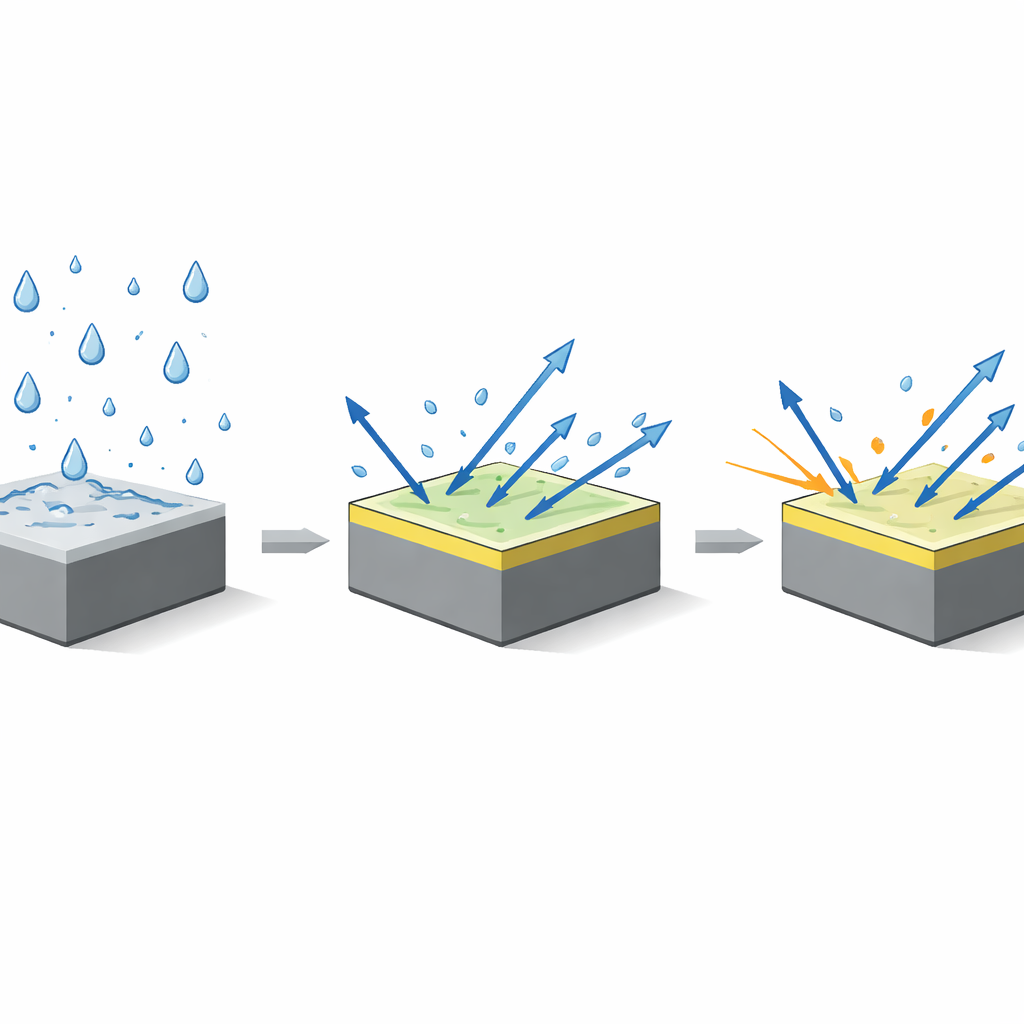
From tractor parts to oil pipelines, many workhorses of modern life fail not because the bulk metal breaks, but because the surface slowly grinds away or corrodes. This study looks at a promising way to armor those surfaces with a thin, carefully engineered metallic skin. By fine-tuning how much copper salt is added during a chemical plating process, the researchers show they can make coatings that are harder, more wear‑resistant and better at shrugging off corrosive acid, all while keeping useful magnetic behavior.
Building a protective metal skin without electricity
The team worked with a widely used technique called electroless deposition, where metal atoms settle out of a solution and coat a part without any external power source. They plated a common structural steel with a nickel‑phosphorus coating, then introduced small amounts of copper by adding different concentrations of copper sulfate to the plating bath. Each bath produced a coating with its own code name, from pure nickel‑phosphorus (no copper) up to versions containing over seven percent copper by weight. The goal was to see how these changes altered the coating’s internal structure and surface, and how that in turn affected its strength, wear, corrosion, and magnetic behavior.
How a pinch of copper reshapes the surface
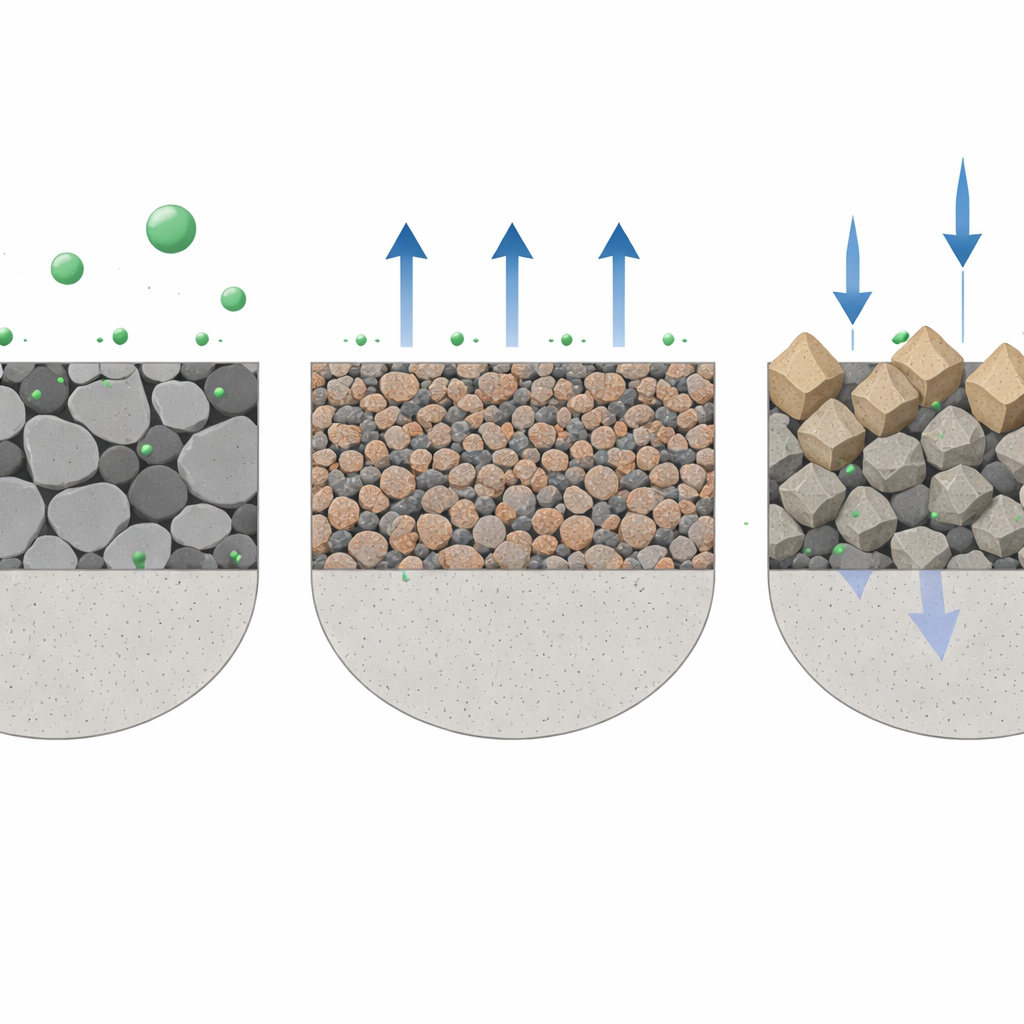
Microscope images revealed that the pure nickel‑phosphorus layer formed a relatively coarse, nodular surface with some pores. Adding a modest amount of copper—corresponding to 0.15 grams of copper sulfate per liter of solution—transformed this landscape into a far finer, more tightly packed layer. At this level, copper atoms help create many tiny starting points for nickel to deposit, leading to smaller, more uniform grains and a dense cross‑section about 69 micrometers thick. When the copper content was pushed higher, however, the surface evolved into sharp, pyramid‑like crystals and the internal grains grew larger again, introducing more gaps and irregularities that can act as weak spots.
Harder coating, smoother ride
These structural changes translated directly into mechanical performance. The optimized copper level boosted the coating’s hardness from about 450 to over 700 on the Vickers scale, a substantial jump. In wear tests where coated steel blocks slid against a hardened steel ring for hundreds of meters, every sample lost some mass, but the copper‑tuned coating with the finest structure lost the least. Its worn surface showed only shallow grooves, indicating mainly mild abrasive action. By contrast, the copper‑free coating suffered deeper furrows and more debris, while coatings with too much copper, despite being hard, developed local stress points at their faceted grains that encouraged micro‑cracking and slightly higher wear.
Balancing corrosion and magnetism
The researchers also immersed the samples in a strong nitric acid solution to mimic harsh industrial environments. Here again, the coating produced with the moderate copper dose performed best. It displayed the most favorable corrosion potential, the lowest corrosion current, and the largest resistance to charge transfer, all signs that corrosive reactions proceed more slowly. A smoother, defect‑poor surface and a mostly amorphous, glass‑like internal structure leave few pathways for the acid to attack. At high copper levels, the more crystalline, rougher surface formed tiny local cells that sped up corrosion. Meanwhile, the coatings remained soft magnetic materials—easy to magnetize and demagnetize—but their maximum magnetization dropped steadily as non‑magnetic copper diluted the nickel, offering a way to tune magnetic response for different applications.
Finding the “just right” recipe
For engineers, the key message is that there is a sweet spot in copper content: too little and the nickel‑phosphorus layer stays relatively soft and coarse; too much and the surface becomes rough and more vulnerable to corrosion, even if hardness stays high. At around 0.15 grams of copper sulfate per liter, the coating develops ultra‑fine grains embedded in a smooth, dense matrix. This structure delivers a rare combination of high hardness, low wear, improved corrosion resistance, and controllable magnetism. Such tailored coatings could extend the working life of parts in agriculture, chemical processing, and energy systems, providing durable, protective skins formed by a simple, scalable chemical bath.
Citation: Li, Q., Li, H., Zhang, Q. et al. Influence of CuSO4 concentration on microstructures and properties of electroless deposited Ni/Cu-P coatings. Sci Rep 16, 12335 (2026). https://doi.org/10.1038/s41598-026-42256-x
Keywords: electroless nickel coatings, copper modified Ni-P, wear resistant surfaces, corrosion protection, engineering coatings