Clear Sky Science · en
In Vitro regeneration of bio-immunized banana cv. Grand Naine using a novel double-decker temporary immersion bioreactor
Bananas in Trouble
Bananas are a daily food for hundreds of millions of people, yet a soil-borne fungus is silently wiping out plantations around the world. The popular Grand Naine banana, a mainstay in India and many other countries, is especially at risk. This study describes a new way to grow young banana plants in the lab so they are both healthier and better prepared to resist this devastating disease—offering hope for farmers and consumers alike.
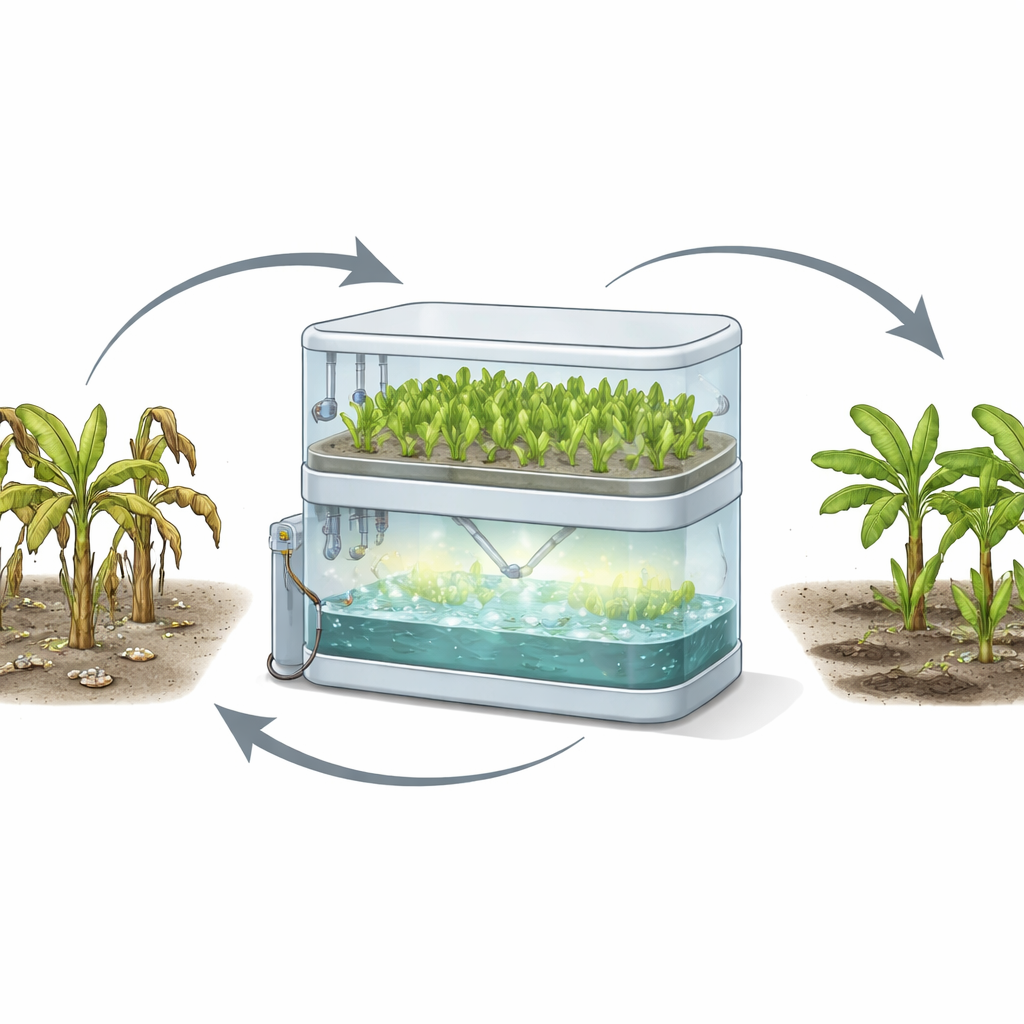
A New Way to Grow Banana Seedlings
Most commercial bananas are not grown from seeds but from small pieces of plant tissue multiplied in glass jars. While this tissue-culture method can produce many plants, it is relatively slow and expensive, especially when scientists also add protective natural chemicals that help the plants fight disease. The researchers set out to redesign this process so nurseries could produce large numbers of “bio-immunized” Grand Naine plantlets—young plants that have been exposed in vitro to antifungal compounds—at lower cost and with less labor.
The Double-Decker Growing Chamber
To achieve this, the team built a clear plastic device called a Double Decker Temporary Immersion Bioreactor. It has two stacked chambers: the lower one stores liquid nutrient medium, and the upper one holds clusters of tiny banana shoots. At set intervals, air pressure gently pushes the nutrient solution up to bathe the shoots for a few minutes before it drains back down. This repeated “dipping” gives the plants excellent access to food and air without drowning them. An LED light panel built into the lid shines directly onto the upper chamber, allowing several units to be stacked vertically without needing bright lights in the entire room.
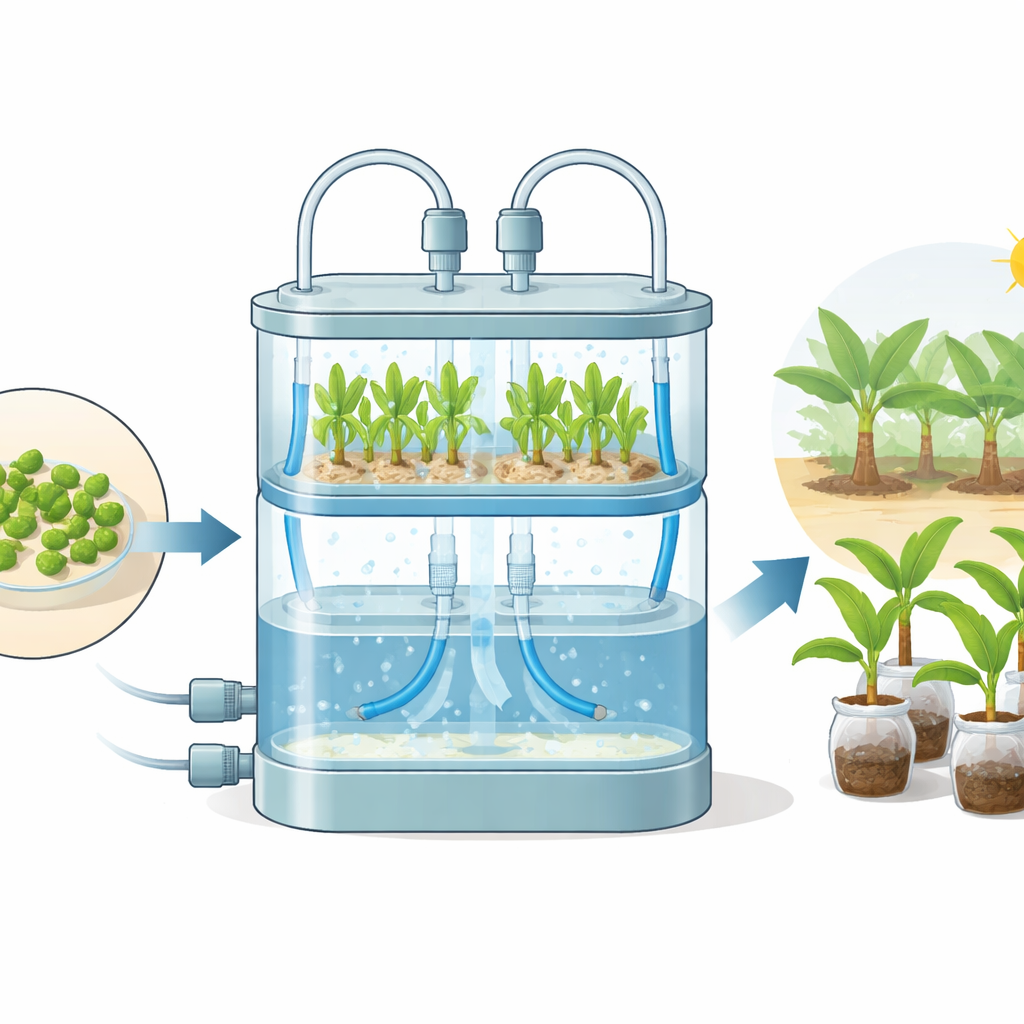
Faster Growth and Stronger Starts
By carefully tuning how often and how long the shoots were immersed, the scientists found a sweet spot: a three-minute dip every six hours. Under these conditions, each clump of starting tissue produced about three times more shoots than in the usual semi-solid medium in jars, and the plantlets were taller, thicker, and heavier. After three multiplication cycles, plants from the new system had clearly greater biomass than those from the older method. When moved out of the bioreactor into a special hardening setup using sterilized cocopeat and controlled humidity, more than 91% of these bio-immunized plantlets survived—slightly better than the conventional plants and with stronger roots and leaves.
Healthy Plants Without Hidden Changes
Any new way of growing plants must be checked to be sure it does not quietly change them. The researchers tested the DNA of plants from the double-decker bioreactor, plants from the traditional jars, and the original field mother plants. A fingerprinting method showed that all matched, confirming the new method produces true copies. They also compared key natural chemicals in the leaves and found the same set of compounds in both groups, including several linked to growth and defense. In field trials, plants from both systems grew to similar size and yielded comparable bunch weights, showing that the new lab method does not sacrifice performance in farmers’ fields.
What This Means for Banana Lovers
In simple terms, the study shows that a cleverly designed, two-level growing chamber can mass-produce clean, disease-primed Grand Naine banana plants more efficiently than the standard bottle-based approach, without altering their genetics or field yield. Because the bioreactor uses space and light more efficiently and allows easy handling of the liquid medium, it offers nurseries a practical, affordable tool for supplying large numbers of robust, fungus-tolerant plantlets. If adopted widely, this technology could help stabilize banana supplies and protect farmers’ livelihoods in regions threatened by Fusarium wilt.
Citation: Mishra, M., Debnath, P., Verma, A.K. et al. In Vitro regeneration of bio-immunized banana cv. Grand Naine using a novel double-decker temporary immersion bioreactor. Sci Rep 16, 11691 (2026). https://doi.org/10.1038/s41598-026-42254-z
Keywords: banana tissue culture, bioreactor propagation, Fusarium wilt resistance, plant micropropagation, Grand Naine banana