Clear Sky Science · en
Hunyuan zhuang improves interoception: evidence from an expert-novice study and a pilot randomized controlled trial
Listening to the Body from the Inside
Most of us notice our bodies only when something feels wrong—a racing heart, a tight chest, a knot in the stomach. Yet our brains are constantly reading these quiet signals to keep us healthy and guide our emotions. This hidden sense, called awareness of internal bodily signals, is often disrupted in conditions ranging from anxiety to chronic pain. The study examined whether a traditional Chinese standing practice known as Hunyuan Zhuang can sharpen this inner listening, offering a simple, drug-free way to improve both physical and emotional well‑being. 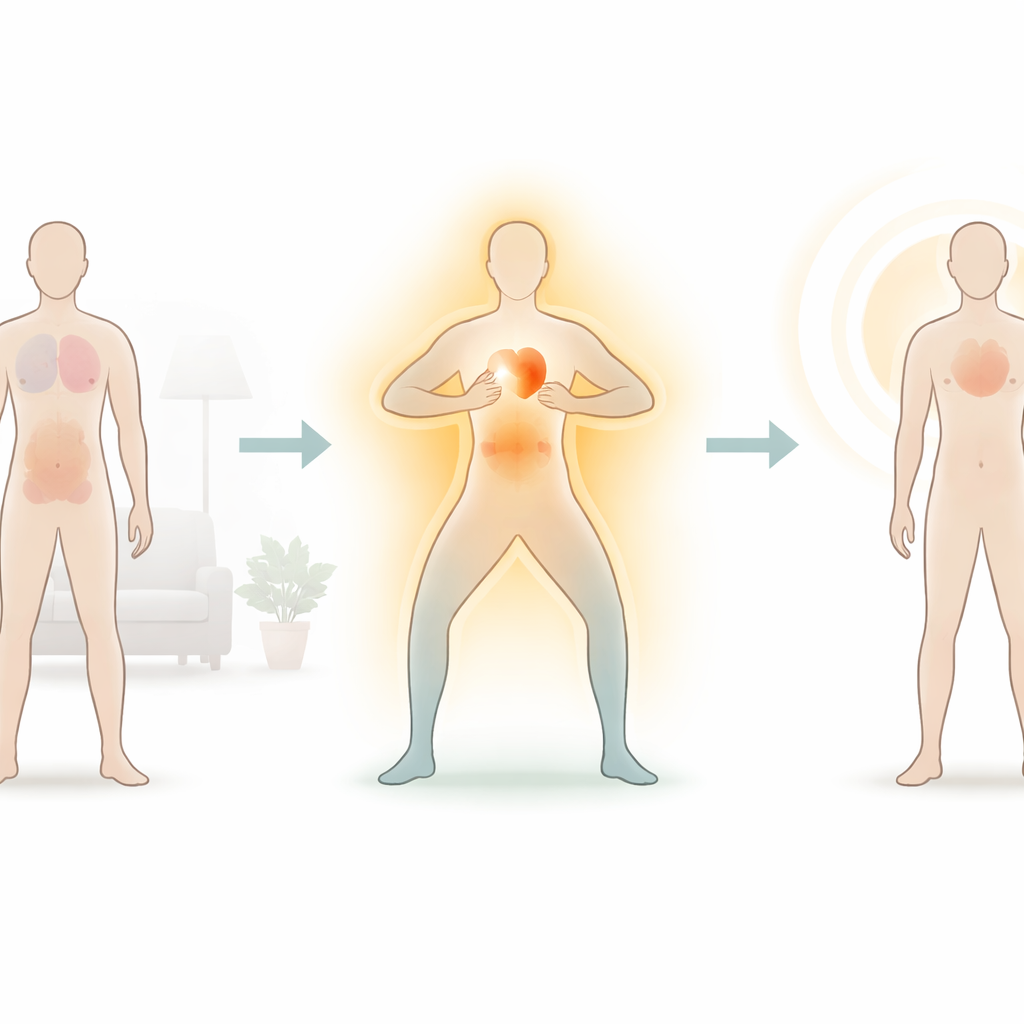
A Quiet Practice with Deep Roots
Hunyuan Zhuang is a form of standing meditation drawn from Chinese martial arts. Practitioners hold a single, open posture for several minutes at a time: knees gently bent, arms rounded as if embracing a ball, spine tall but relaxed, and breathing slow and deep into the belly. Attention is directed inward—to the feeling of the feet on the ground, the rise and fall of the breath, and subtle sensations inside the chest and abdomen. Rather than emphasizing big, visible movements, the practice values “stillness with inner movement,” suggesting that powerful changes can arise from small shifts in posture, breath, and focus.
Why Inner Sensing Matters
The researchers frame inner bodily awareness as a key ingredient in both mental and physical health. Our organs constantly send signals upward to the brain, while the brain sends signals back down to adjust heart rate, breathing, and other functions. How clearly we sense these signals (accuracy) and how attuned we feel to our bodies (sensitivity) influence emotions, decision‑making, and how we cope with stress and fatigue. Problems in this system have been linked to chronic pain, mood disorders, addiction, and neurodevelopmental and neurodegenerative conditions. Existing treatments—drugs, brain stimulation, and various therapies—can help, but often with side effects, high costs, or modest results, leaving room for safe, low‑tech practices that people can use on their own.
Comparing Experts and Beginners
In the first part of the research, the team compared experienced Hunyuan Zhuang practitioners with university students who had never trained in any mind–body or martial arts practice. Everyone tried three different standing postures for ten minutes each on separate days: the Hunyuan Zhuang stance, a contracted pose with arms and legs crossed, and a neutral standing pose. Before and after each session, participants completed a heartbeat‑counting task to see how accurately they could feel their heartbeats, and they filled out a questionnaire about how aware they felt of their bodily sensations. 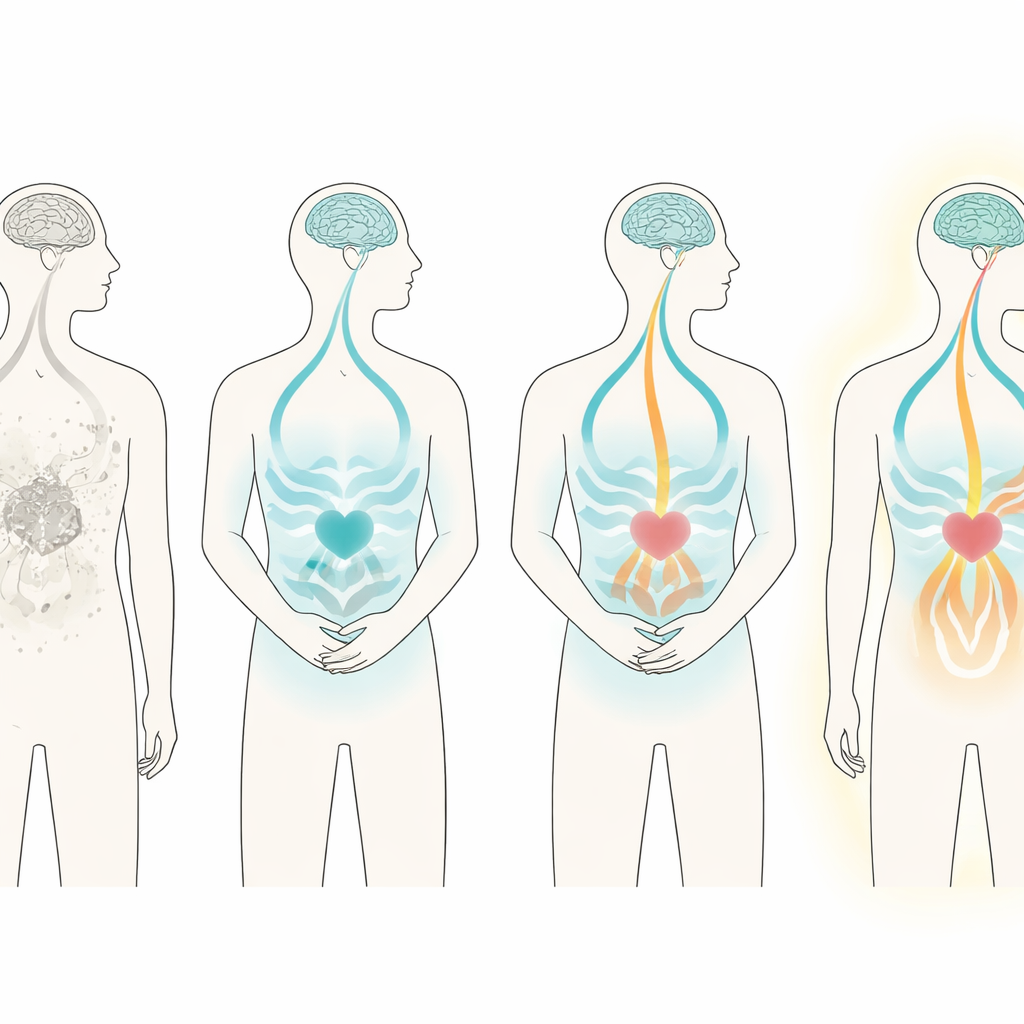
Instant and Lasting Changes
Experienced practitioners already showed better inner accuracy and sensitivity at the start, even before any posture was adopted. But posture mattered for everyone: both experts and novices sensed their heartbeats more accurately and reported feeling more in tune with their bodies after standing in the Hunyuan Zhuang position than after the contracted or neutral poses. Neutral standing was the least helpful, and the contracted pose fell in between. In the second part of the study, beginners were randomly assigned either to an eight‑week Hunyuan Zhuang training program—three supervised sessions and one home session per week—or to a control group that continued their usual routines. After eight weeks, the training group showed clear gains in heartbeat accuracy and body‑awareness scores, while the control group remained essentially unchanged.
How Standing Still May Shape the Brain
To explain these changes, the authors suggest that Hunyuan Zhuang temporarily boosts the clarity of bodily signals and, with practice, may help the brain build more accurate “internal maps” of the body. The expansive stance may promote a positive, alert state; slow diaphragmatic breathing is known to calm the nervous system and strengthen “body‑to‑brain” signals; and sustained inward attention reduces distraction from the outside world. Over time, repeating this combination could re‑tune the circuits that match the brain’s expectations with what the body is actually doing, making inner sensations easier to notice and trust in daily life.
What This Means for Everyday Health
For a lay reader, the takeaway is straightforward: a simple standing meditation, practiced regularly, can measurably improve how accurately you feel your own heartbeat and how connected you feel to your body. These changes appeared both immediately—after just ten minutes of the Hunyuan Zhuang posture—and over the course of eight weeks of training. While the study was done in young Chinese adults and did not yet test long‑term follow‑up or brain scans, it provides early scientific support for a traditional practice that is low‑cost, culturally meaningful, and potentially useful alongside modern treatments for stress‑related and emotional difficulties. In essence, Hunyuan Zhuang offers a structured way to stand still and, quite literally, get back in touch with yourself.
Citation: Li, W., Liu, T. & Sun, C. Hunyuan zhuang improves interoception: evidence from an expert-novice study and a pilot randomized controlled trial. Sci Rep 16, 11872 (2026). https://doi.org/10.1038/s41598-026-42253-0
Keywords: interoception, standing meditation, Hunyuan Zhuang, mind–body training, heartbeat awareness