Clear Sky Science · en
Nitrogen-based cationic copolymers as corrosion inhibitors for P110 carbon steel in 20% sulfuric acid investigated through experimental and theoretical studies
Why protecting steel in harsh acids matters
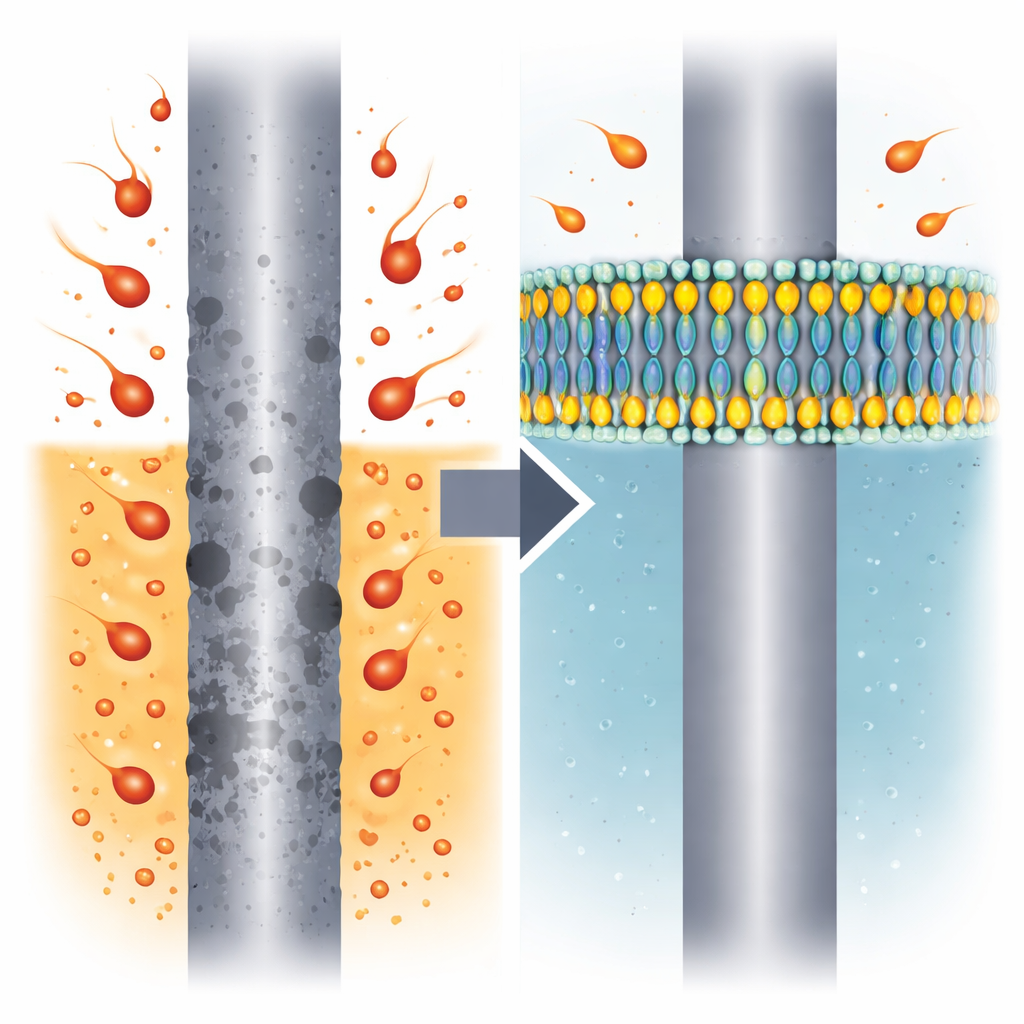
Deep underground, the steel pipes that keep oil and gas wells stable face a constant chemical attack. Powerful acids are routinely pumped down these wells to clear blockages and boost production, but those same acids can rapidly eat away at the metal casings. This study explores new tailor‑made molecules that act like microscopic bodyguards, forming a shield on steel surfaces so that critical infrastructure lasts longer, fails less often, and operates more safely.
Steel under attack in the energy industry
P110 carbon steel is widely used in oil and gas wells because it is strong and can withstand high pressures deep below ground. However, when exposed to very aggressive acids such as 20% sulfuric acid—a strength similar to that used in industrial cleaning and well "acidizing" treatments—this steel can corrode quickly. Corrosion leads to thinning walls, cracks, and leaks that can release hazardous fluids, force costly shutdowns, and even risk blowouts. The industry therefore relies on corrosion inhibitors: additives dissolved in the acid that coat the metal and slow down the damage.
Soap‑like molecules as protective bodyguards
The researchers focused on three related molecules called cationic surfactant copolymers, referred to as AMC‑1, AMC‑2, and AMC‑3. Surfactants are soap‑like compounds with a water‑loving “head” and water‑repelling “tail.” In this case, the heads carry a positive charge based on nitrogen, which helps them cling to the negatively charged steel surface in acid. The three AMCs were designed so that AMC‑1 has no long tail, AMC‑2 has one long oily tail, and AMC‑3 has two long tails. This gradual change in “greasiness,” or hydrophobic character, allowed the team to test how tail length and number affect the ability to protect steel in extremely acidic conditions.
Measuring how well the shield works
To see how much the inhibitors slowed corrosion, the team immersed steel samples in 20% sulfuric acid with and without different amounts of each AMC. They used electrochemical tests that are sensitive to how easily electrical charge moves during rust‑forming reactions on the surface. When AMCs were present, the electrical signals associated with both metal dissolution and hydrogen gas formation dropped sharply, showing that the inhibitors slowed both key sides of the corrosion process—a behavior known as “mixed‑type” inhibition. At a modest dosage of 100 parts per million, corrosion was reduced by about 90% for AMC‑1, over 93% for AMC‑2, and more than 96% for AMC‑3. Microscopy images supported these numbers: unprotected steel appeared rough and pitted, while inhibited samples—especially with AMC‑3—looked smooth and largely intact.
How the molecular shield forms and holds together
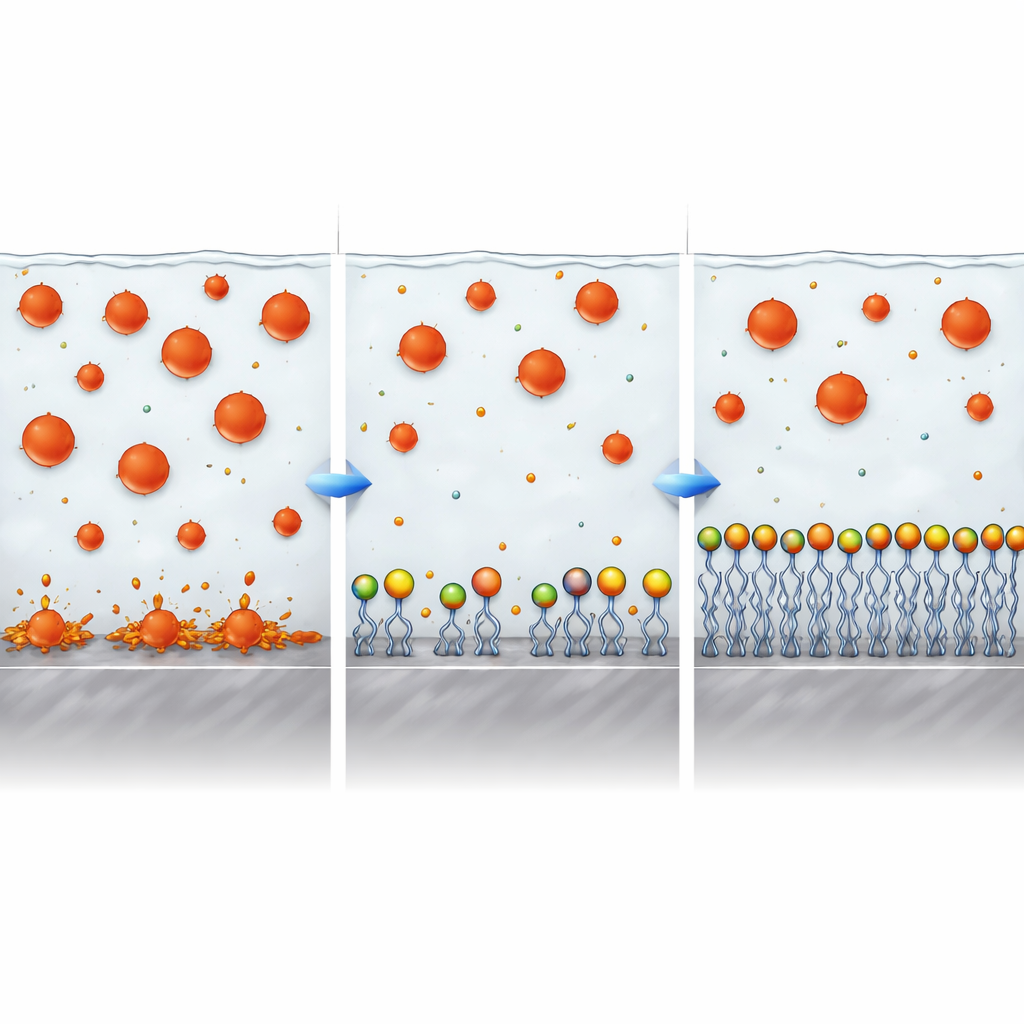
Closer analysis showed that the AMCs work by adsorbing onto the steel and building up a thin protective film. In acid, the steel surface is surrounded by negatively charged species that attract the positively charged heads of the surfactants, pulling them toward the metal. Once nearby, parts of the molecules can share electron pairs with iron atoms, creating a mixed physical and chemical bond. As more molecules attach, their oily tails crowd together and spread out like bristles, forming a compact, water‑resistant layer that keeps aggressive acid ions at bay. The molecules were found to follow an adsorption pattern similar to the classic Langmuir model, indicating they form mostly a single, saturating layer. Computer simulations of their electronic structure supported this picture and confirmed that longer tails improve the strength and completeness of the protective film.
Limits under heat and the importance of design
The team also investigated how rising temperature affects protection, since downhole conditions can be hot. As the acid was heated, corrosion naturally accelerated, and some inhibitor molecules desorbed or degraded, reducing coverage of the steel. Even so, the presence of AMCs increased the energy barrier for corrosion, meaning that rusting became harder than in unprotected acid. Among the three, AMC‑3—the molecule with two long tails—consistently provided the most robust film across temperatures, confirming that increased hydrophobic character helps the shield remain tighter and more effective under demanding conditions.
What this means for real‑world wells
In plain terms, this work shows that carefully engineered, nitrogen‑containing surfactants can dramatically slow the destruction of steel in very strong sulfuric acid by self‑assembling into an ultra‑thin, water‑repelling coat. By tuning the length and number of their oily tails, chemists can boost how well these molecules stick to the metal and how completely they cover it, with the double‑tailed AMC‑3 giving the best protection. For the oil and gas industry, such insights can guide the design of more efficient, longer‑lasting corrosion inhibitors that keep casings and tubing safer during harsh acid treatments, reducing leaks, maintenance costs, and environmental risks.
Citation: Mubarak, G., Verma, C., Mazumder, M.A.J. et al. Nitrogen-based cationic copolymers as corrosion inhibitors for P110 carbon steel in 20% sulfuric acid investigated through experimental and theoretical studies. Sci Rep 16, 13366 (2026). https://doi.org/10.1038/s41598-026-42251-2
Keywords: corrosion inhibitors, oil and gas wells, carbon steel, surfactant copolymers, sulfuric acid