Clear Sky Science · en
Metabolomics of mouth-rinsed water for assessing psychophysiological stress in office workers
Why a Sip of Water Could Reveal Your Stress
Most office workers know what stress feels like, but measuring it accurately and easily is another story. Questionnaires depend on honest self-reflection, and even popular saliva tests can be slow and sensitive to the time of day. This study explores a surprisingly simple alternative: having people briefly rinse their mouth with water and then analyzing tiny molecules in that water to see who is living under high, chronic stress at work.
A Fast New Way to Sample the Body
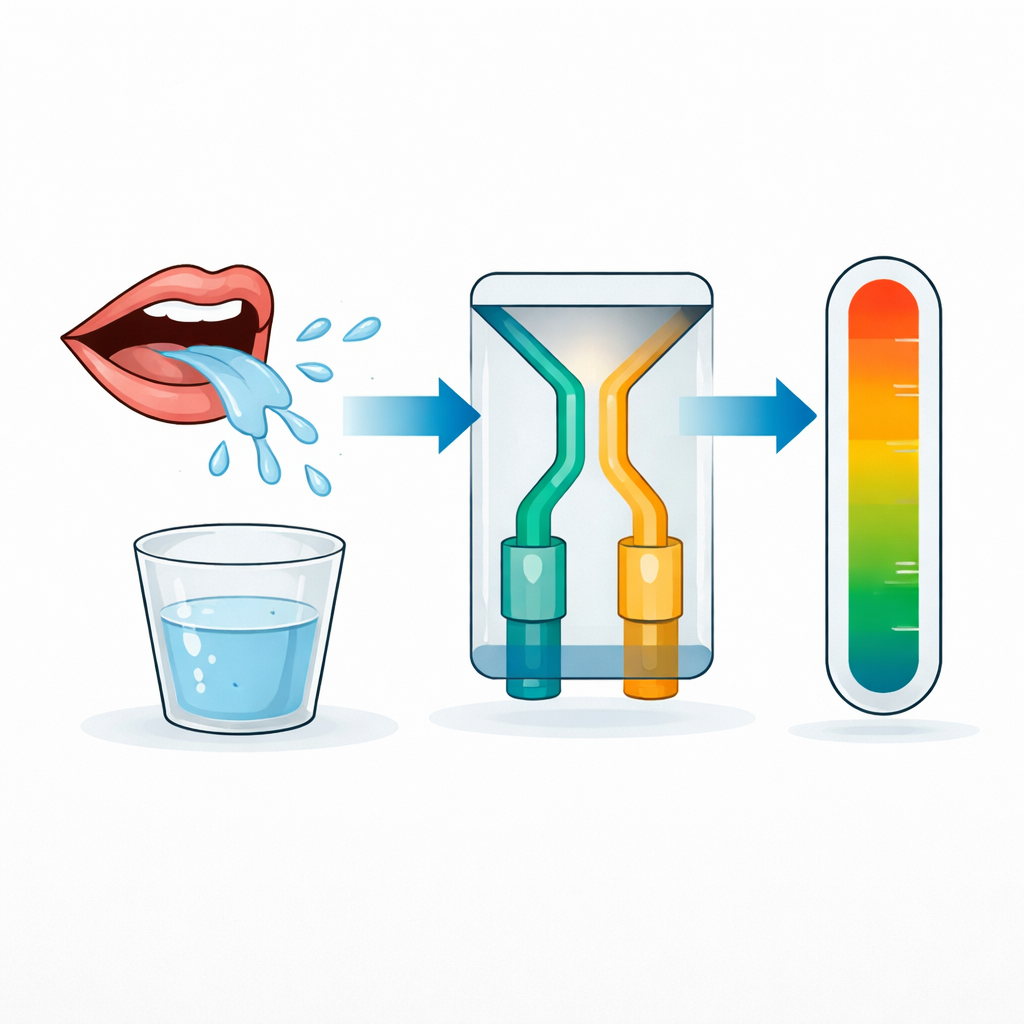
The researchers focused on "mouth-rinsed water"—plain water swished in the mouth for just ten seconds and then spat into a tube. Earlier work showed that this fluid carries many of the same small molecules found in saliva and blood, but is much quicker and easier to collect. Because it imposes almost no burden on participants, it could be used in large companies or routine health checks. The team wanted to know whether the cocktail of molecules in this simple rinse could reliably distinguish highly stressed office workers from their less stressed colleagues.
Comparing Stressed and Non-Stressed Office Workers
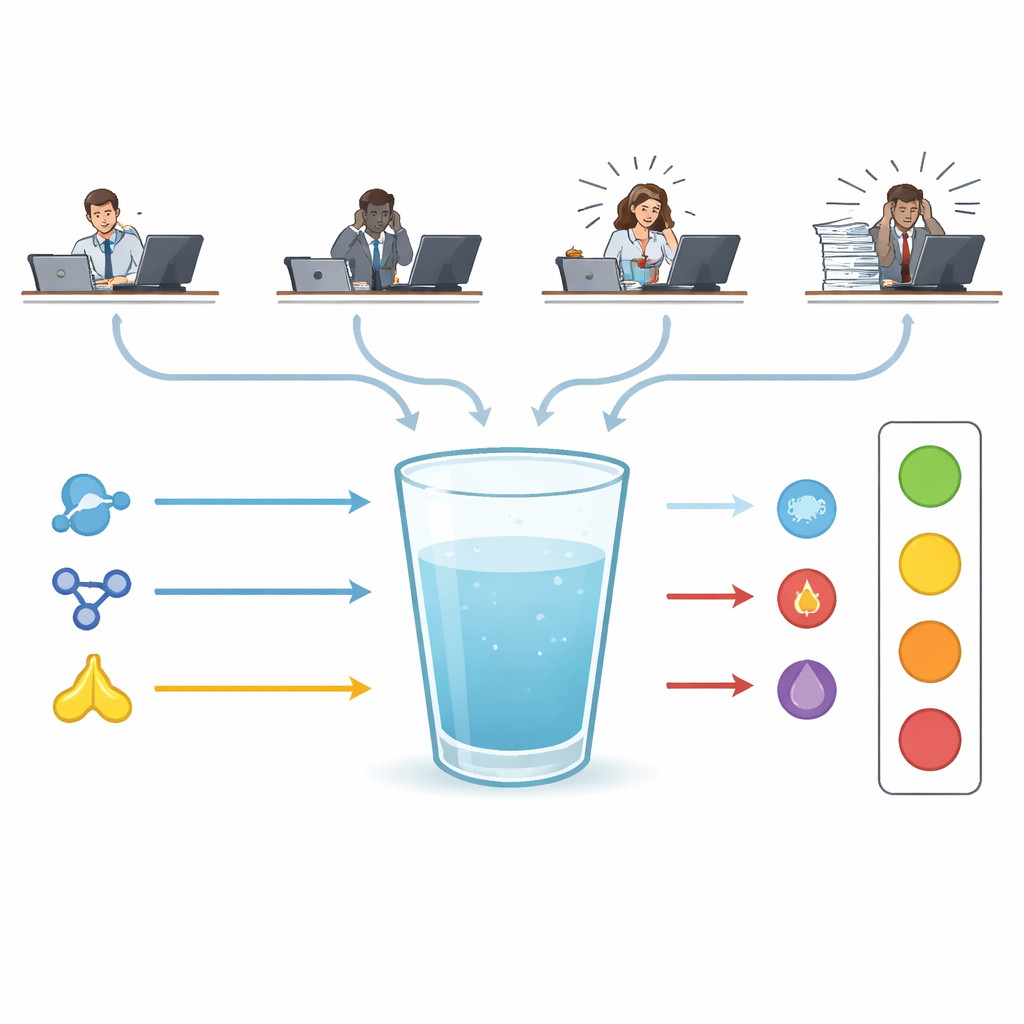
From thousands of potential volunteers, the team selected 32 full-time office workers. Half were classified as "high stress" using two standard questionnaires that rate anxiety and job strain; the other half formed a low-stress control group. To make sure these labels reflected real differences in body and brain, the researchers also measured mood, sleep quality, heart rhythm, body temperature, and blood flow in the brain during mental tasks. The high-stress group showed more negative moods, poorer sleep, lower heart-rate flexibility, and altered patterns of brain blood flow—signs that their bodies were indeed under greater strain, even though none had a diagnosed mental illness.
Catching Stress in the Chemistry of a Rinse
Each participant rinsed their mouth and provided samples at four moments in a single session: at rest, after a fast-paced arithmetic task, after a short recovery, and after a memory task. Using advanced instruments, the team measured more than 500 different chemicals, from amino acids to steroid hormones and salivary proteins; 127 high-quality markers were retained for analysis. While no single molecule was strong enough on its own to pass strict statistical hurdles, many showed meaningful shifts over time, especially in the high-stress group. This pattern suggested that, rather than relying on a lone "stress hormone," the body’s response is written across networks of interacting chemicals.
A Two-Molecule Signature of Chronic Strain
To harness this complexity, the scientists looked at ratios between pairs of molecules, reasoning that relative amounts might better reflect underlying biology and reduce person-to-person differences. One ratio stood out in mouth-rinse samples taken at rest: the level of N-acetyl-β-alanine divided by asymmetric dimethylarginine (ADMA). People in the high-stress group tended to have a lower value for this ratio. When used in a simple prediction model, it distinguished high-stress from low-stress workers with about 85% accuracy, outperforming well-known markers such as salivary cortisol or secretory immunoglobulin A. Additional analyses suggested that this chemical pair sits at the crossroads of hormone production and amino acid metabolism—core pathways in the body’s stress response.
What This Could Mean for Everyday Workers
The findings are still preliminary and come from a relatively small, carefully screened group, so larger and more diverse studies are needed. Even so, they point toward a future in which checking workplace stress might be as simple as a ten-second mouth rinse, followed by automated analysis of a handful of tiny molecules. Rather than relying on how people say they feel, employers and clinicians could obtain an objective snapshot of chronic strain, helping to identify those at risk earlier. If confirmed, this approach could make routine stress screening more practical, ultimately supporting better mental health, productivity, and quality of life at work.
Citation: Maruyama, Y., Yamada, K., Inokuchi, T. et al. Metabolomics of mouth-rinsed water for assessing psychophysiological stress in office workers. Sci Rep 16, 11735 (2026). https://doi.org/10.1038/s41598-026-42241-4
Keywords: workplace stress, biomarkers, metabolomics, saliva testing, mental health screening