Clear Sky Science · en
Physics-guided estimation of freight vehicle loading status using digital tachograph data
Why Truck Loading Matters to Everyone
Every day, thousands of heavy trucks move goods that keep modern life running—from groceries and medicines to construction materials. Yet a surprising share of those trucks drive around nearly or completely empty, wasting fuel, wearing down roads, and adding to congestion and air pollution without moving any cargo. This study shows how data already collected from trucks for safety purposes can be reused to tell, in near real time, whether a vehicle is loaded or empty, creating new tools to boost freight efficiency, cut emissions, and better manage road infrastructure.
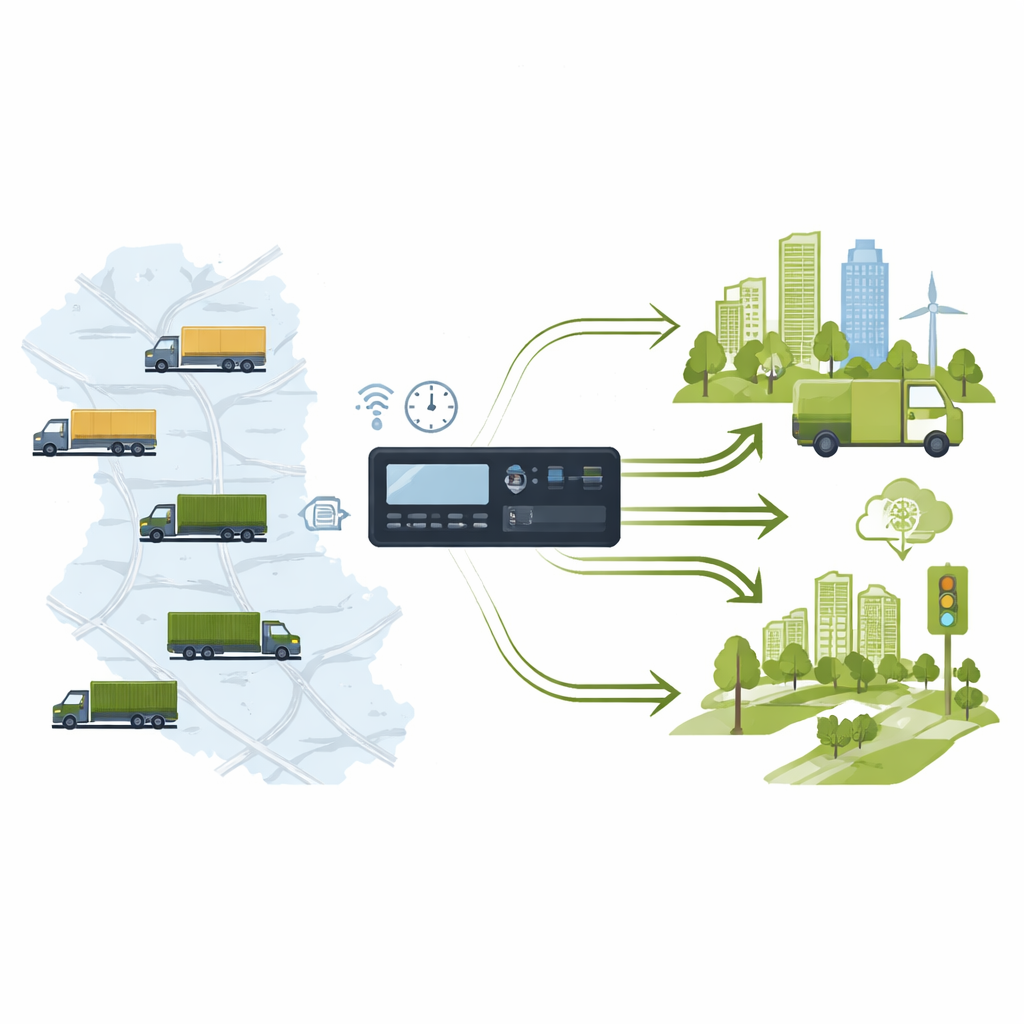
Hidden Clues Inside Truck Black Boxes
In Korea, trucks above a certain size must carry a device called a digital tachograph, which continuously records basic driving information such as speed, acceleration, engine revolutions, and GPS position. Unlike expensive custom sensors or roadside weighing systems, these units are already installed nationwide and operate every day under real-world conditions. The researchers asked a simple but powerful question: using only these standard signals, can we reliably tell whether a truck is hauling a load or running empty, without adding any new hardware?
Using Basic Physics to Read Truck Behavior
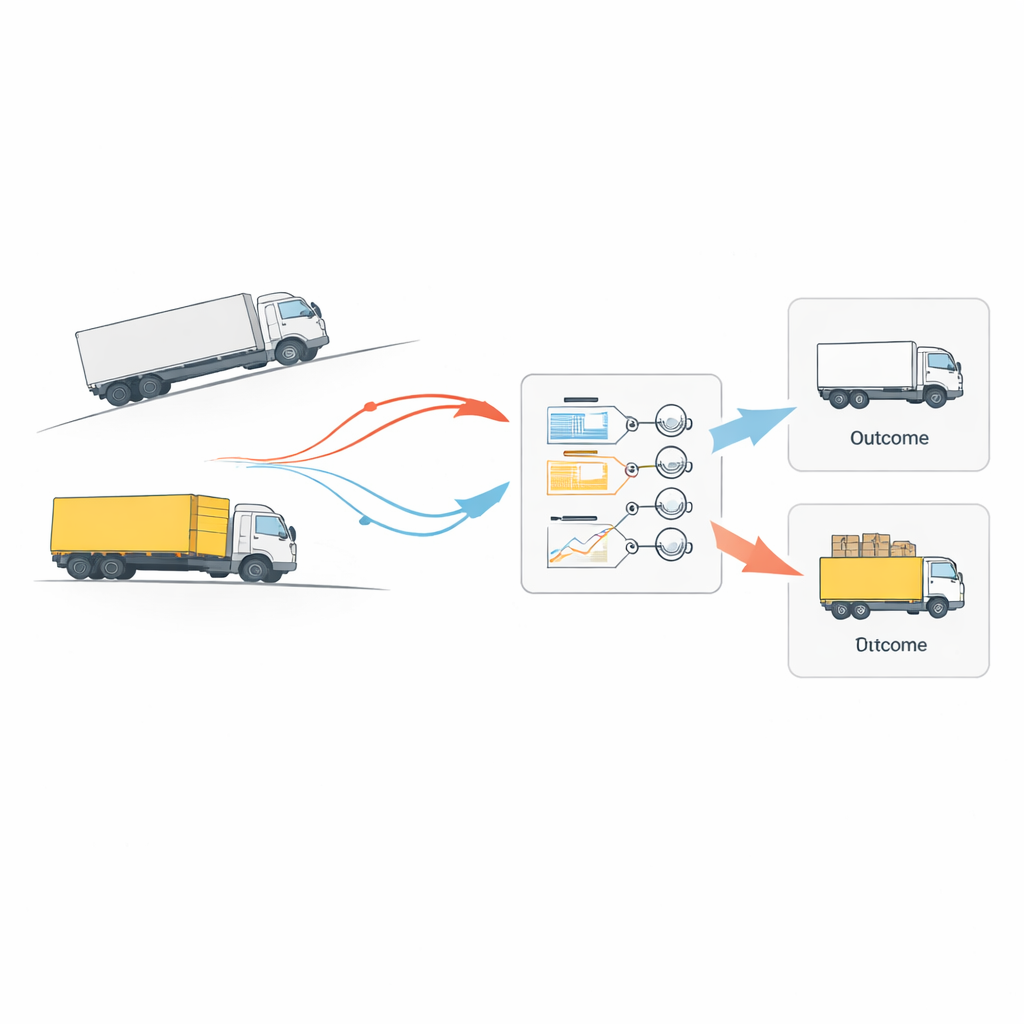
The team grounded their approach in a straightforward physical idea: a heavy truck is harder to accelerate than a light one. To make this principle usable at scale, they combined tachograph data with road maps and elevation information. From the raw signals they inferred which gear the truck was using, how fast it was moving, and whether it was climbing or on level ground, then focused on moments when the driver was actually accelerating. By comparing the acceleration patterns of trips known to be loaded versus empty—using freight documents as ground truth—they confirmed that loaded trucks show distinctly weaker acceleration in comparable speed, gear, and slope conditions.
Teaching a Cautious Machine to Decide
Rather than relying on a simple rule-of-thumb, the researchers trained a Bayesian neural network, a type of machine-learning model that not only predicts an outcome but also expresses how confident it is. The model used three key ingredients—speed, inferred gear, and average acceleration over short nine-second bursts—to classify each segment of driving as loaded or empty. On individual records, it correctly identified load status about three-quarters of the time. When the model looked at short acceleration periods, accuracy rose to about 85 percent overall and exceeded 90 percent on highways, where driving is steadier. By combining several consecutive segments, it reached near-perfect accuracy in this case study, while still flagging uncertain cases rather than forcing a guess.
From Data Streams to Better Roads and Cleaner Air
Because digital tachographs are already mandated for heavy trucks in Korea, this method can be scaled up to provide a live picture of where and when trucks are moving goods versus running empty, all without installing new sensors. That information could help logistics companies match empty trucks with nearby freight, reducing wasted trips; give planners a clearer view of where heavy loads are stressing pavements and bridges; and support smarter enforcement against chronic overloading. Although the current study focused on one type of 25-ton truck from a single company, the framework can be retrained for other fleets, turning routine safety data into a practical tool for cleaner, more efficient, and more durable freight transport systems.
Citation: Tak, J., Hong, J. & Park, D. Physics-guided estimation of freight vehicle loading status using digital tachograph data. Sci Rep 16, 12633 (2026). https://doi.org/10.1038/s41598-026-42232-5
Keywords: freight trucks, digital tachograph, transport data, machine learning, logistics efficiency