Clear Sky Science · en
Novel enhancement of stability and antimicrobial activity of beetroot pigment nanocomposites via graphene oxide and silver nanoparticles
Color From the Kitchen, Power for Medicine
Beetroot’s vivid red color does more than brighten salads: the natural pigments also fight harmful microbes. Yet these fragile molecules break down quickly in light, heat, and air, limiting their use in foods, cosmetics, and medical products. This study explores how pairing beet pigments with ultra-tiny particles of silver and graphene oxide can both lock in their color and dramatically boost their germ-killing power, offering a greener alternative to conventional preservatives and disinfectants.
Turning Beet Color Into a Tough Little Shield
The researchers began with dried beetroot powder and pulled out the red pigments using an alcohol-based extract. To give these delicate molecules protection, they mixed them with xanthan gum, a food-safe thickener already common in sauces and dressings. Xanthan gum forms a soft gel-like network that can trap pigments and help them resist damage from the environment. Into this protective web they then introduced tiny particles of silver and wafer-like sheets of graphene oxide, creating a combined material in which plant color, metal particles, and natural polymer reinforce one another. 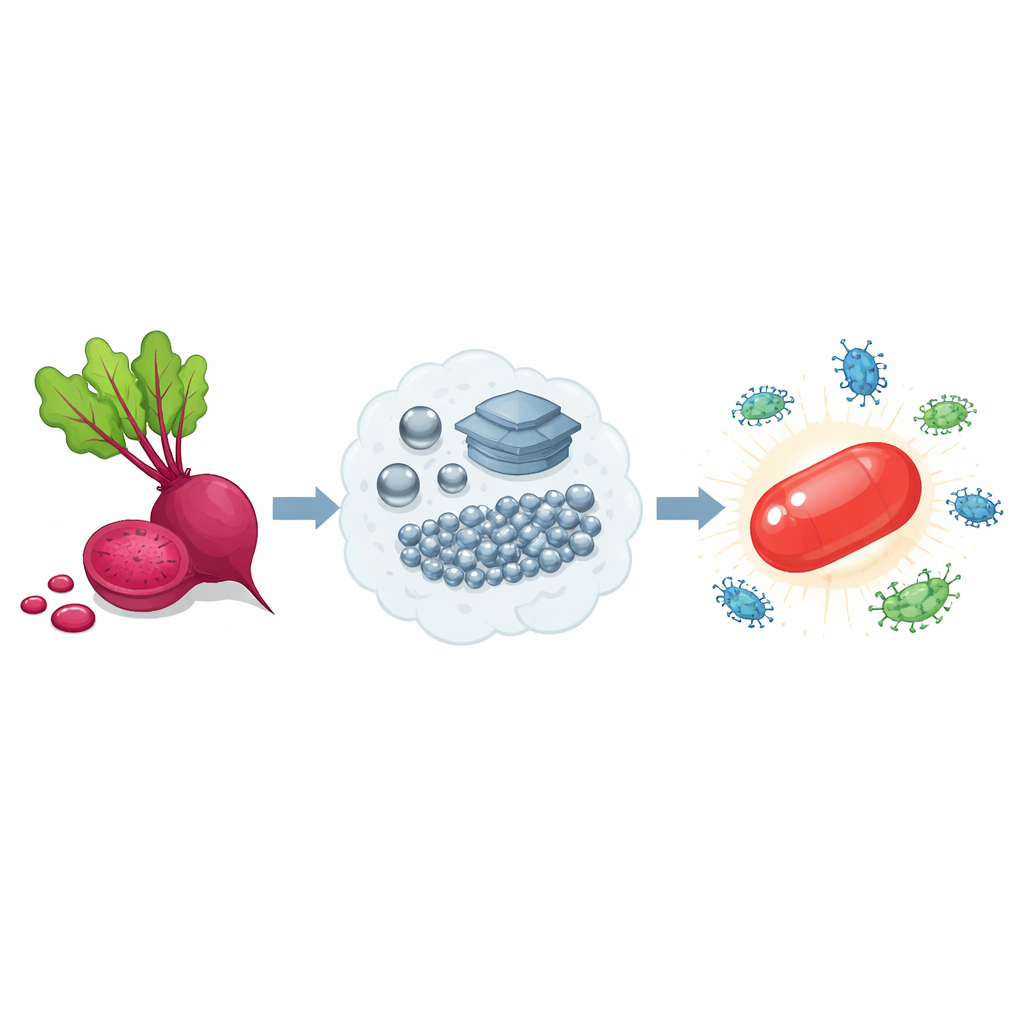
Building Eco-Friendly Tiny Particles
Rather than relying on harsh chemicals, the team used "green" methods to make their nanomaterials. Silver particles were formed in a solution containing chitosan, a biodegradable substance obtained from shellfish waste, which both helps create the particles and keeps them from clumping. Graphene oxide was produced from graphite using a standard oxidation process, then combined with the silver to make a mixed silver–graphene material. These ingredients were finally blended with the beet–xanthan mixture, creating several versions: pigment with silver alone, pigment with graphene oxide alone, and pigment with both, alongside control samples without metals.
Peeking Inside With High-Tech Eyes
To confirm that all parts were truly integrated, the scientists turned to a toolkit of advanced microscopes and light-based methods. Infrared and Raman spectroscopy showed that chemical bonds in the beet pigments and xanthan gum shifted when silver or graphene oxide were added, indicating that these components were not just loosely mixed but interacting at the molecular level. X-ray diffraction revealed that silver kept its metallic crystal structure, while graphene oxide remained in sheet-like form. Electron microscopes provided striking images: silver appeared as tiny dots, graphene oxide as crumpled sheets, and the combined materials as well-dispersed particles embedded in a fibrous network. This well-organized structure is crucial for stable, long-lasting performance.
Keeping Color Bright and Microbes at Bay
The new materials were then tested for two key features: how well they preserved the red color, and how strongly they stopped microbes from growing. Thin films of each sample were stored for three months and photographed over time. Compared with pigment alone, films containing silver, graphene oxide, or both held their color far better, indicating that the nanomaterials helped shield the pigments from light and oxygen. In laboratory plates seeded with bacteria and a yeast-like fungus, the beet–xanthan mixtures with metals carved out clear microbe-free circles that grew with higher doses. The combination of both silver and graphene oxide produced the largest cleared zones, especially against the common skin bacterium Staphylococcus aureus. Measurements of the lowest amount needed to stop growth confirmed that this three-part blend—beet pigment, silver, and graphene oxide—was consistently the most potent. 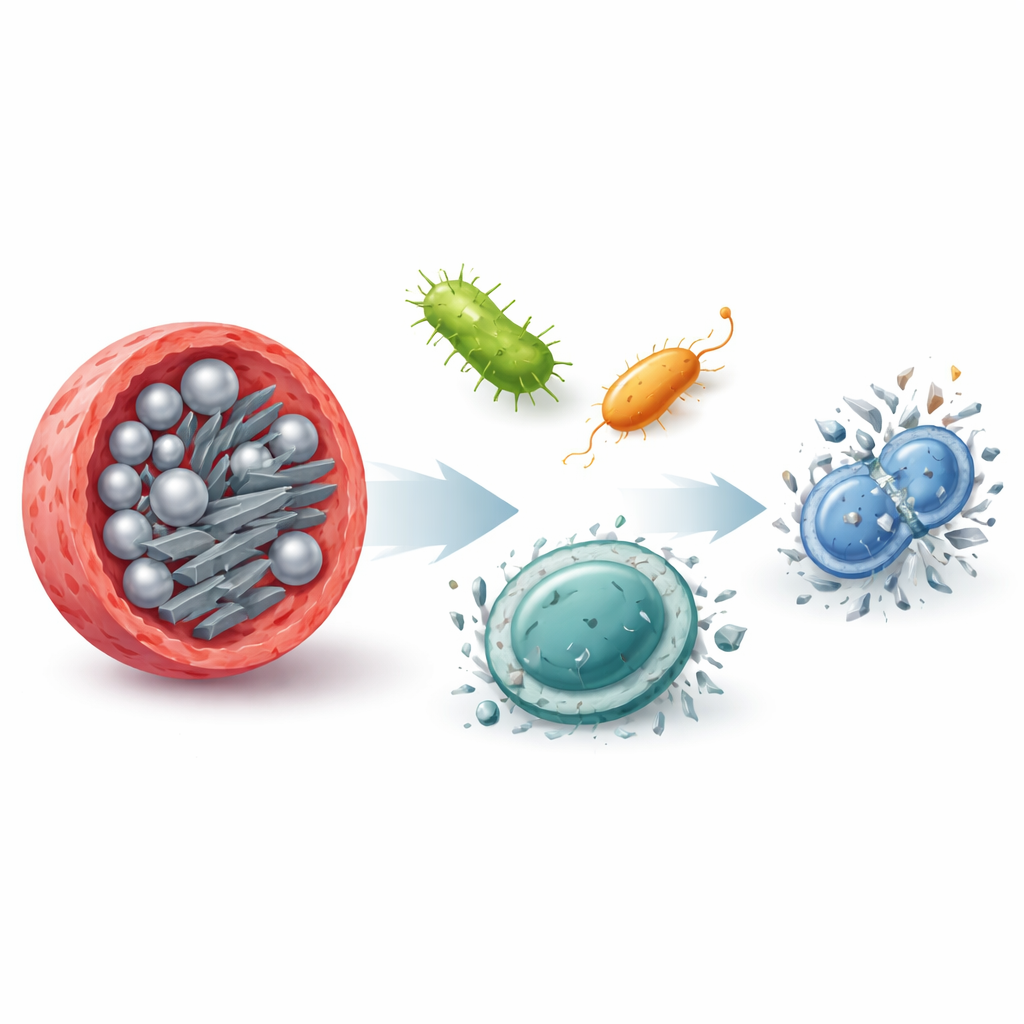
Why This Matters for Everyday Products
In simple terms, the study shows that bright red beet pigments can be turned into a tough, germ-fighting coating when wrapped in a natural gum and armed with smartly designed metal and carbon nanoparticles. This hybrid material keeps its color longer and needs lower amounts to block bacteria and fungi than the pigment alone. Because the particles are made using more sustainable, plant- and biopolymer-based methods, the approach offers a promising path toward safer food coatings, cosmetic ingredients, and medical dressings that rely less on synthetic chemicals. Further safety testing will be needed, but the work points to a future where something as ordinary as beet juice helps tackle the global challenge of resistant microbes.
Citation: Ahmed, H.A., El-Wahab, A.E.A. & Gad, S. Novel enhancement of stability and antimicrobial activity of beetroot pigment nanocomposites via graphene oxide and silver nanoparticles. Sci Rep 16, 10478 (2026). https://doi.org/10.1038/s41598-026-42211-w
Keywords: beetroot pigments, antimicrobial nanocomposite, silver nanoparticles, graphene oxide, green nanotechnology