Clear Sky Science · en
Effects of UV-B radiation distance on morphological and biochemical traits of chicory (Cichorium intybus L.) in an aeroponic system
Why this glowing light matters for your salad and medicine
Chicory is more than a leafy garnish or a coffee substitute: its roots are packed with health-promoting compounds used in functional foods and herbal remedies. This study asks a simple but powerful question with big implications for indoor farming and nutrition: can carefully applied ultraviolet (UV-B) light boost the medicinal quality of chicory roots, and how close is too close before the plant’s growth begins to suffer? Using a soil-free aeroponic setup that exposes roots directly to UV-B, the researchers uncover how distance from a UV lamp reshapes both the size and chemistry of the plant.
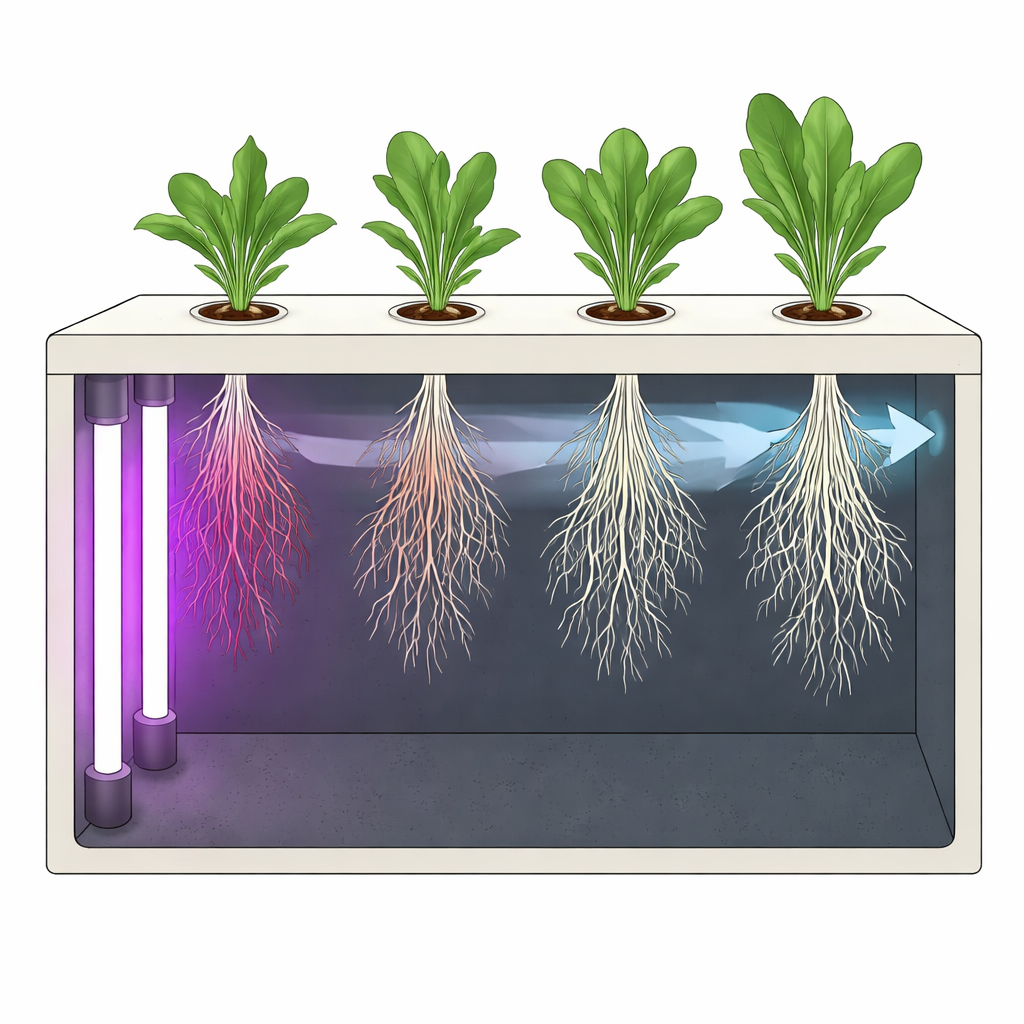
Growing plants in mid-air
Instead of using pots or fields, the team grew chicory in an aeroponic “phytorhizotron,” a box where roots dangle in darkness and are misted with a nutrient solution. This design makes roots easy to study and allows precise control of environmental factors. After starting chicory seedlings in a greenhouse, the researchers moved them into this system and exposed their roots to UV-B lamps placed at three distances: 40, 80, and 120 centimeters, plus a separate control group with no UV-B at all. The lamps shone continuously on the roots for 20 days, while the leafy tops still experienced a normal day–night cycle. Later, the scientists measured plant size, root volume, leaf area, pigments, and a range of compounds linked to stress and antioxidant activity.
Closer light, smaller plants
The results showed a clear cost to sitting too close to the UV-B source. At the shortest distance, plants had dramatically less shoot and root biomass: shoot fresh weight dropped by more than half compared with controls, and root length and volume were also sharply reduced. Plants closest to the lamps had fewer leaves, smaller leaf area, and shorter stature. Even though the roots were the only organs directly lit, the leafy parts above ground lost chlorophyll, the green pigment essential for photosynthesis, especially at 40 and 80 centimeters. In essence, intense root-zone UV-B stress echoed throughout the whole plant, slowing growth and weakening its light-harvesting machinery.
Stress turns on the plant’s inner shield
While growth suffered, the plant’s chemical defenses surged. Roots nearer the lamps drove the above-ground tissues to stockpile more protective molecules. Levels of phenolic compounds and anthocyanins—colorful plant chemicals known for their antioxidant and anti-inflammatory properties—increased strongly at 40 and 80 centimeters. A small amino acid called proline, which helps cells cope with damage and dehydration, more than tripled at the closest distance. Key antioxidant enzymes such as catalase, peroxidase, and ascorbate peroxidase also became much more active, working together to neutralize reactive oxygen particles generated by UV-B. A radar-style analysis of 21 traits revealed two distinct “personalities”: plants far from the lamps or unexposed favored height, leaf number, and protein content, while those closer in sacrificed size to maximize defensive chemistry.
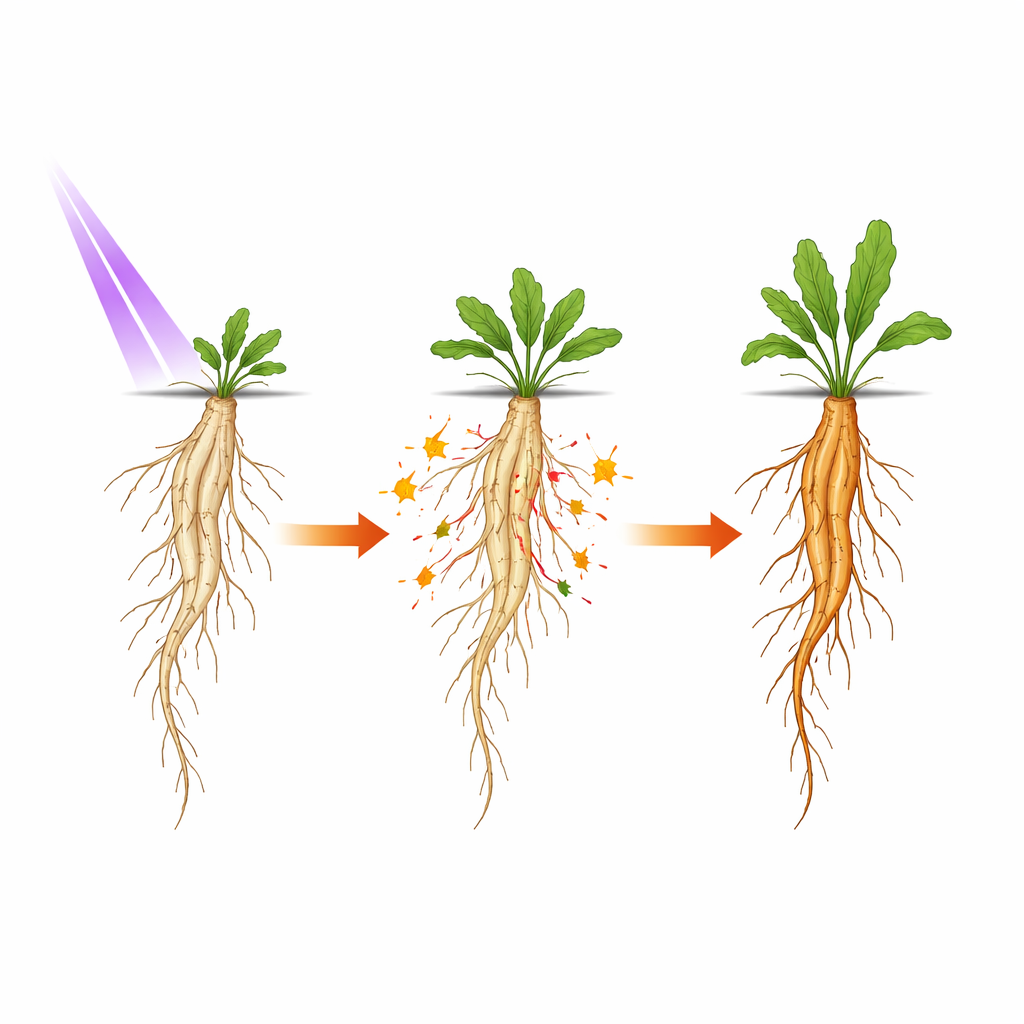
Finding the sweet spot between yield and health value
The study paints a nuanced picture: UV-B is neither simply good nor bad, but a tool whose effects depend on dose and distance. Chicory roots under strong, continuous UV-B become shorter, thinner, and darker, showing classic signs of oxidative stress and reduced branching. Yet these stressed roots are also richer in bioactive compounds that humans prize for health. The authors suggest that intermediate distances—like 80 centimeters—may strike a practical balance, giving plants enough stress to boost beneficial molecules without crippling growth. For future vertical farms and aeroponic facilities, carefully managed UV-B “pulses” could become a new dial to tune both yield and medicinal quality in chicory and similar crops.
What this means for future food and medicine
In everyday terms, the work shows that how we light plants in high-tech farms can change not just how big they grow, but how potent they become as sources of natural health compounds. Too much UV-B too close shrinks chicory, but it also pushes the plant to fortify itself with antioxidants that may benefit consumers. By adjusting the distance and timing of UV-B in aeroponic systems, growers could one day produce tailor-made chicory—one batch optimized for volume, another for maximum medicinal punch—helping bridge the worlds of agriculture, nutrition, and herbal medicine.
Citation: Chemeh, H.G., Movahedi, Z., Ghabooli, M. et al. Effects of UV-B radiation distance on morphological and biochemical traits of chicory (Cichorium intybus L.) in an aeroponic system. Sci Rep 16, 14393 (2026). https://doi.org/10.1038/s41598-026-42210-x
Keywords: chicory, UV-B radiation, aeroponics, antioxidants, hydroponic farming