Clear Sky Science · en
High-efficiency predictive torque control of induction motors in PV water pumping using GTO-optimized PI controller
Turning Sunlight into Reliable Water
In many rural and remote regions, getting water to fields and villages still depends on diesel pumps that are noisy, polluting, and expensive to fuel. This study explores how to run water pumps directly from solar panels in a way that is not only clean, but also smooth, efficient, and dependable even as clouds pass overhead. By carefully shaping how electricity flows from panels to an electric motor, the authors show they can move more water with the same sunshine while reducing stress on the equipment.
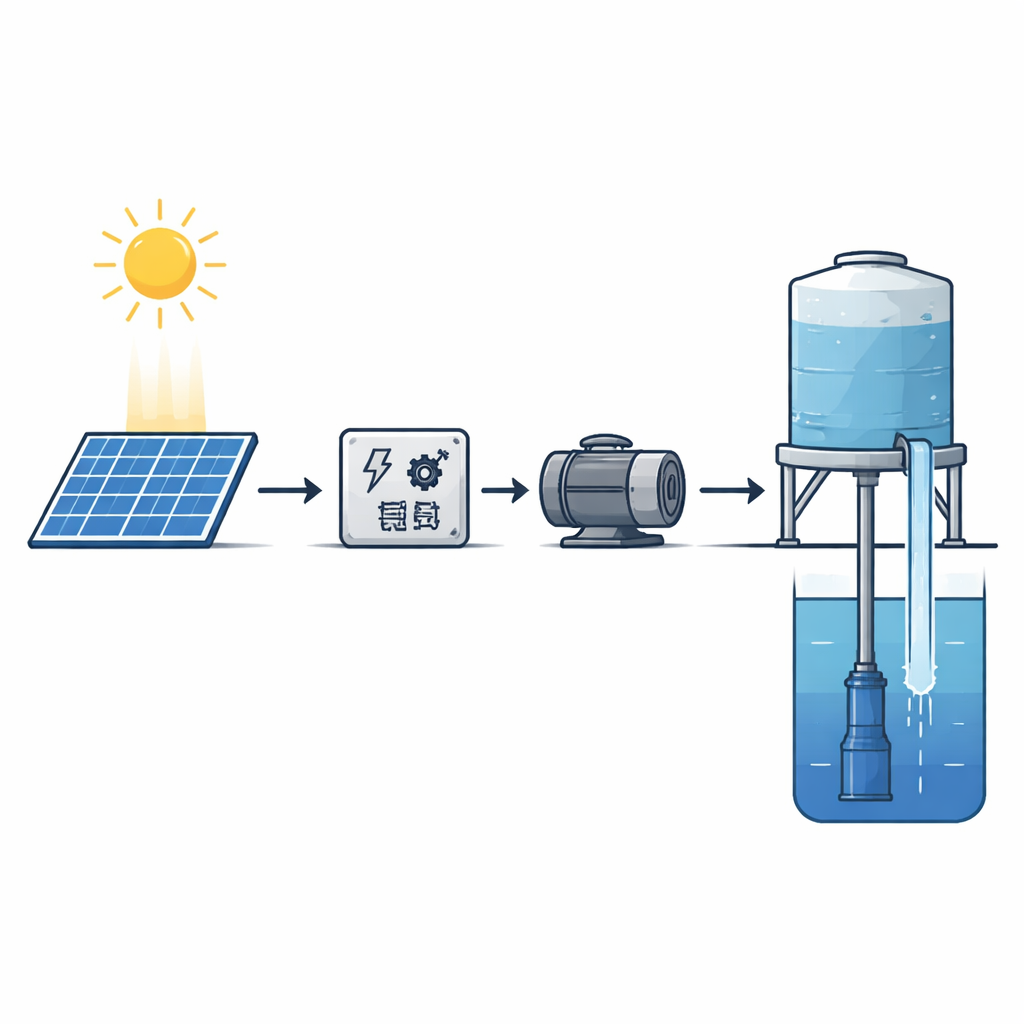
Why Solar Pumps Are Harder Than They Look
A basic solar water pumping system takes sunlight, converts it to electricity in photovoltaic (PV) panels, boosts the voltage with an electronic converter, and then feeds an electric motor that drives a centrifugal pump. The challenge is that sunshine is never constant. As light and temperature change, the power a PV array can deliver shifts minute by minute, and a motor running a pump is itself a demanding, changing load. If the electrical control is not smart enough, the pump may run roughly, waste energy as heat, or even fail to start properly on hazy days.
Finding the Sweet Spot in Solar Power
To make the most of the sunlight, the authors use a method called maximum power point tracking, which constantly adjusts how the PV panels are loaded so they operate at their most productive point. They choose a specific technique, Incremental Conductance, because it reacts quickly and accurately to sudden changes in sunlight. This tracker sits in the DC–DC boost converter between the panels and the motor drive, nudging the operating voltage so the panels stay close to their peak power despite shifting weather. In computer simulations, this module keeps the PV array delivering near‑maximum power while the rest of the system adapts to the motor and pump.
Teaching the Motor to Run Smoothly
The heart of the work lies in how the induction motor is controlled. The team compares three strategies. The first, direct torque control, is known for fast reaction but tends to produce jerky torque and noisy currents. The second, predictive torque control, uses a mathematical model of the motor to anticipate how different switching actions will affect torque and magnetic flux, choosing the best option at each instant; this already reduces ripples and improves current quality. The third and proposed method adds an automatically tuned speed controller on top of the predictive scheme. Here, a nature-inspired search method, Gorilla Troops Optimization, adjusts the proportional and integral gains of the speed loop so that the motor reaches its target speed quickly and with minimal overshoot.
Letting a Virtual Gorilla Fine‑Tune the System
In the optimization step, many candidate settings for the speed controller are treated like individual gorillas exploring a landscape of possible solutions. Their positions are updated according to rules that mimic how a troop roams, follows a dominant leader, and competes within the group. For each candidate, the researchers simulate how well the pump drive follows the desired speed and how much the motor torque fluctuates. A combined score rewards fast, precise speed tracking and low torque ripple. Over many iterations, the virtual troop converges on a set of controller gains that strikes the best balance between quick response and smooth operation for the solar‑driven pump.
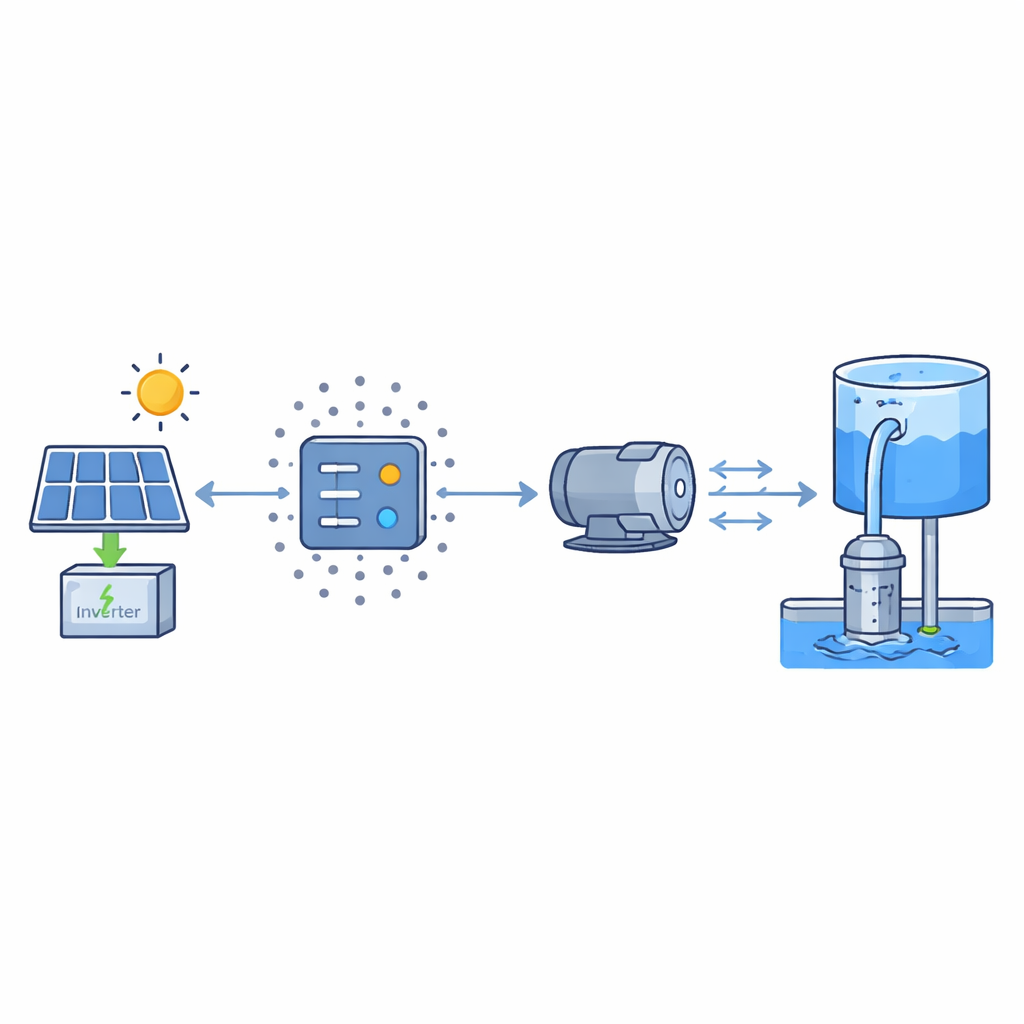
More Water, Less Wear and Tear
Simulation results under changing sunlight show that the optimized strategy delivers clear advantages. Compared to the earlier direct torque method, the improved controller cuts torque fluctuations by roughly 54–66 percent and magnetic flux variations by nearly 90 percent, while also reducing electrical distortion in the motor current to about 2.6 percent. The pump reaches its intended speed faster and with fewer oscillations, which translates into steadier water flow and better overall use of available solar power—up to about 9–11 percent more useful output than the conventional scheme. In practical terms, this means that for the same solar array, farmers and communities could pump more water with gentler mechanical stress on their equipment, moving closer to a robust, fuel‑free way of securing water in sun‑rich regions.
Citation: Kechida, R., Gacem, A., Romdhane, M. et al. High-efficiency predictive torque control of induction motors in PV water pumping using GTO-optimized PI controller. Sci Rep 16, 13428 (2026). https://doi.org/10.1038/s41598-026-42200-z
Keywords: solar water pumping, photovoltaic systems, motor control, renewable energy, optimization algorithms