Clear Sky Science · en
Caffeic acid suppresses cyclin D1 expression by directly binding to ribosomal protein S5 in colorectal cancer cells
How a Coffee Compound May Help Protect the Colon
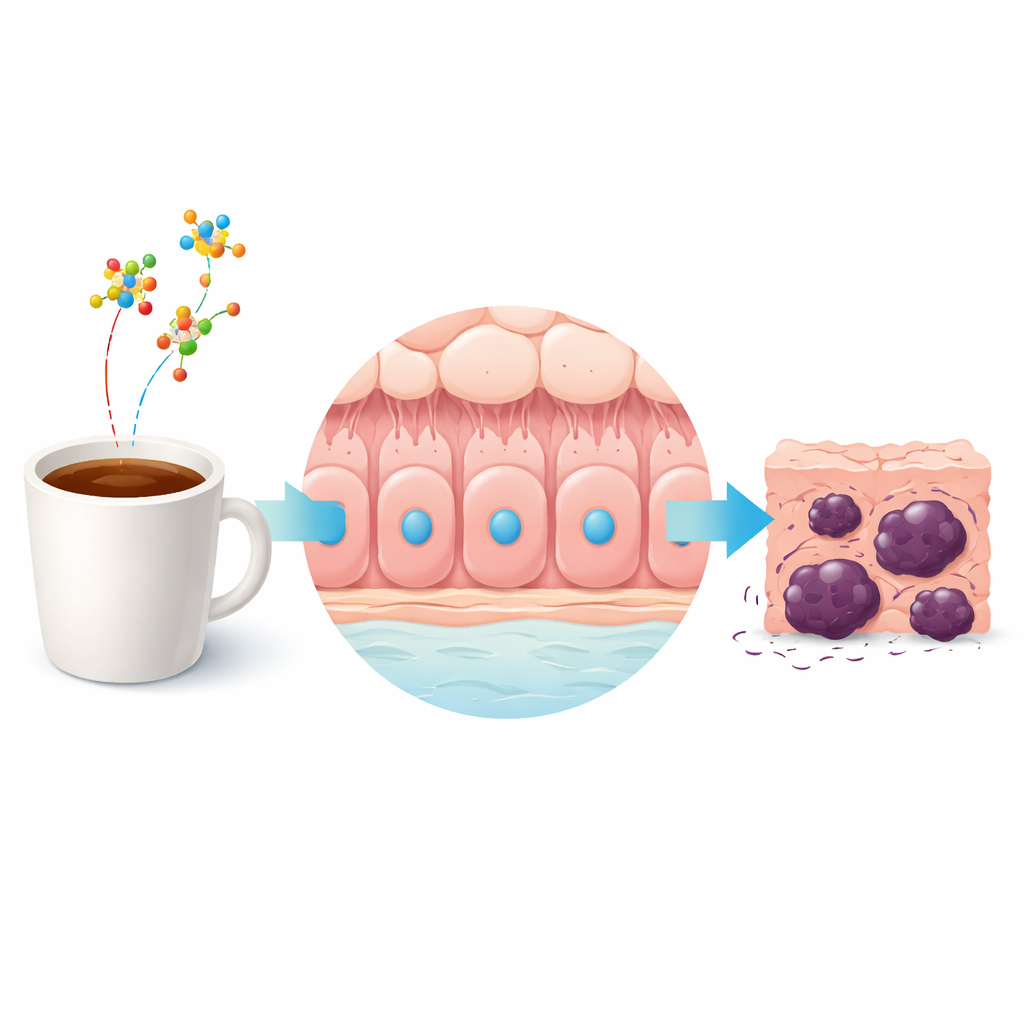
Coffee drinkers have long been told that their daily brew might lower the risk of colorectal cancer, but the reasons have remained murky. This study digs into that mystery and pinpoints one specific coffee-derived molecule, caffeic acid, and one particular protein inside colon cells that it latches onto. Together, they form a surprising partnership that slows the growth of cancer cells, offering a glimpse of how an everyday beverage could influence our cells at the molecular level.
A Closer Look at Coffee’s Protective Power
Colorectal cancer is one of the most common and deadly cancers worldwide, and its rates are projected to keep rising. Large population studies have repeatedly found that people who regularly drink coffee, including decaffeinated coffee, tend to have a lower risk of this disease. That pattern hints that ingredients other than caffeine are doing some of the protective work. The researchers focused on chlorogenic acid, a major coffee compound that breaks down in the body into smaller pieces, including caffeic acid. They asked a straightforward question: which of these breakdown products, if any, can actually slow the growth of human colon cancer cells in the lab?
Finding the Active Ingredient
To test this, the team exposed two human colorectal cancer cell lines to caffeic acid and to another breakdown product, quinic acid. Over about two weeks, they watched how well the cells could form colonies—clusters that signal ongoing growth and survival. Quinic acid had little effect. In contrast, caffeic acid nearly wiped out colony formation in both cell types, meaning the cells struggled to grow and spread. This result singled out caffeic acid as a key player among coffee’s components and suggested it might be an important contributor to coffee’s cancer-preventive reputation.
Tracking Down Caffeic Acid’s Cellular Partner
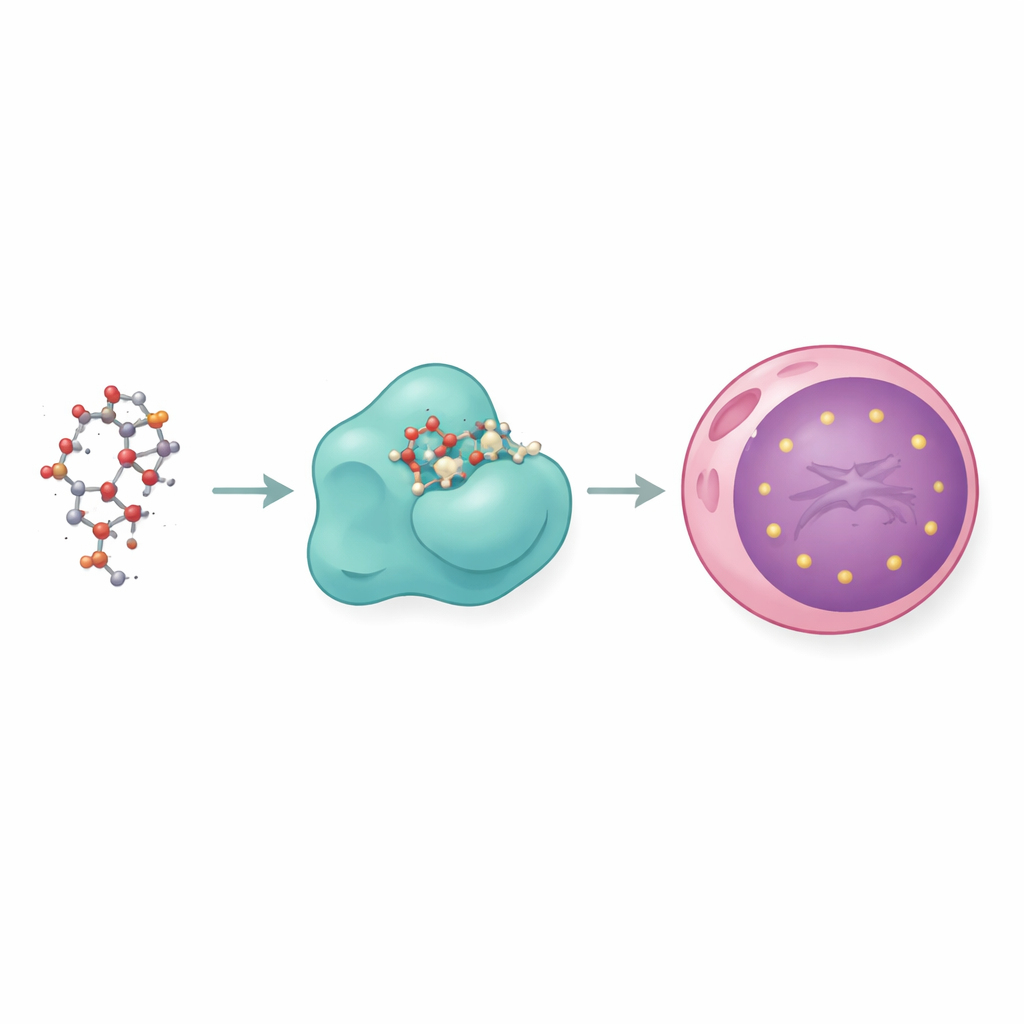
Knowing that caffeic acid slows cancer cell growth is only half the story; the other half is discovering what it sticks to inside the cell. The researchers chemically attached caffeic acid to tiny magnetic beads and mixed them with extracts from colorectal cancer cells, then pulled out whatever proteins clung to the beads. Mass spectrometry and follow-up tests revealed two main binding partners: a protein called prohibitin 2 and another called ribosomal protein S5 (RPS5). Because earlier work had linked high levels of RPS5 to worse outcomes in colorectal cancer patients, the team zeroed in on this protein. Computer-based molecular simulations showed that caffeic acid fits snugly into a specific pocket on RPS5 and forms stable interactions there, supporting the idea that this is a direct, meaningful binding event rather than a chance encounter.
How Blocking One Protein Slows Cell Division
The next step was to see what happens when RPS5 is taken out of the picture. Using small interfering RNAs, the researchers reduced the amount of RPS5 in colorectal cancer cells. The result was striking: colony formation almost disappeared, and short-term growth dropped by about 85 percent in one cell line. Detailed analyses of the cell cycle—the series of steps cells go through to divide—showed that more cells got stuck in the first gap phase, known as G1, and fewer reached the DNA-copying phase. This pattern matched a drop in the levels of cyclin D1, a protein that acts like a gatekeeper for the transition from G1 to the next stage. Caffeic acid treatment itself also lowered cyclin D1 levels, tying the compound’s action to the same pathway controlled by RPS5.
A Subtle Control Switch on Cancer-Driving Messages
To understand how RPS5 affects cyclin D1, the researchers looked at the gene’s activity from two angles: the “instructions” being made and the stability of those instructions once produced. They found that reducing RPS5 lowered the amount of cyclin D1 messenger RNA in cells but did not change the activity of the gene’s promoter, the stretch of DNA that controls when the gene is switched on. That suggests the regulation happens after the message is written, likely by changing how long that message survives before being destroyed. Computer simulations supported this by showing RPS5 tending to bind segments of RNA rich in specific letter pairs that are known to control message stability. In essence, RPS5 appears to help keep cyclin D1 messages alive, and binding of caffeic acid to RPS5 may weaken this support, leading to less cyclin D1 and slower cell division.
What This Means for Everyday Coffee
Taken together, the study uncovers a new chain of events that links a coffee-derived molecule to the slowdown of colorectal cancer cell growth. Caffeic acid directly attaches to RPS5, a protein that helps sustain levels of the cell cycle driver cyclin D1. By interfering with this partnership, caffeic acid nudges cells to pause before dividing, reducing their ability to form new colonies. While the experiments used higher doses of caffeic acid than are typically found in the bloodstream after a cup of coffee, the work provides a compelling “proof of concept” for how coffee components could influence cancer risk. Future studies in animals and humans, as well as efforts to refine caffeic acid into more potent and stable forms, will be needed to determine whether this molecular circuit can be harnessed for real-world prevention or therapy.
Citation: Watanabe, M., Boku, S., Sukeno, M. et al. Caffeic acid suppresses cyclin D1 expression by directly binding to ribosomal protein S5 in colorectal cancer cells. Sci Rep 16, 12965 (2026). https://doi.org/10.1038/s41598-026-42196-6
Keywords: coffee and colorectal cancer, caffeic acid, cyclin D1, ribosomal protein S5, cancer prevention