Clear Sky Science · en
High-density lead-free alloys for compact and sustainable photon shielding: a Monte Carlo and benchmarking study
Why safer radiation shields matter
Whenever you get an X‑ray, sit near a nuclear medicine suite, or rely on power from a nuclear reactor, invisible beams of high‑energy light—gamma rays—have to be carefully contained. For decades, thick walls of toxic lead and heavy concrete have done most of this work. But these materials are bulky, can degrade over time, and pose environmental and health concerns. This study explores a new family of metal mixtures that aim to block radiation at least as well as lead, while being thinner, more durable, and less hazardous.
Looking for a better wall against rays
The researcher focused on three metal arsenide alloys—made from vanadium (VAs), molybdenum (MoAs), and tantalum (TaAs)—because they are dense, mechanically robust, and can be produced with established solid‑state methods. High density is crucial: the more tightly packed the atoms, the more chances a passing photon has to collide and lose energy. The central question was whether these alloys could out‑perform common shielding materials, such as steel or concrete, and even rival some advanced lead‑free alloys, while remaining compact enough for space‑limited settings like medical scanners and industrial inspection systems.
Testing virtual shields with digital beams
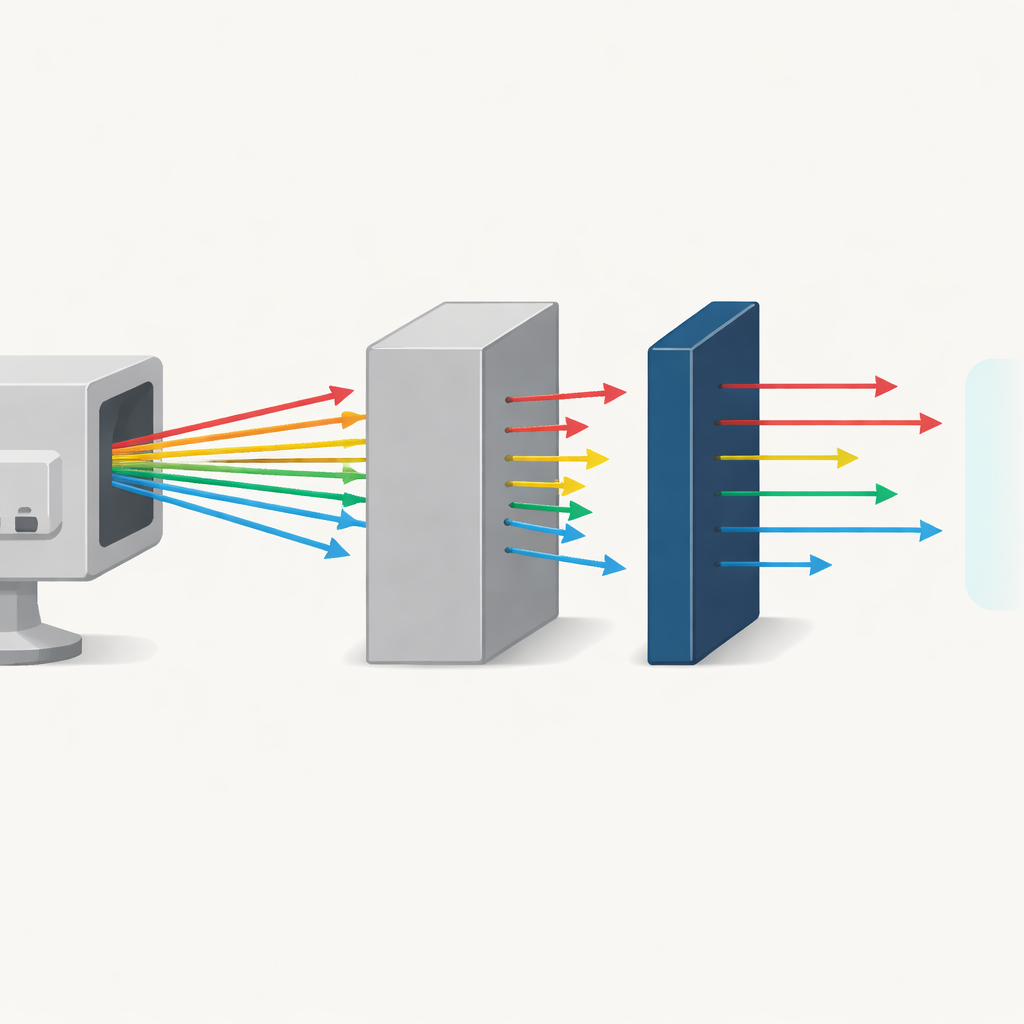
Instead of casting large metal slabs and measuring them in a laboratory, the study used a powerful simulation toolkit called Geant4 to model how photons move through matter. Virtual beams of photons with energies spanning those used in medical imaging up to those relevant in nuclear power—0.015 to 15 million electronvolts—were fired at digital samples of VAs, MoAs, and TaAs. The program tracked how many photons were stopped, how many passed through, and how far they typically traveled. To ensure these simulations were trustworthy, the results were carefully checked against a respected international database of photon‑matter interactions (XCOM) and against other calculation tools. Across the energy range, the simulated values agreed with reference data to within about one percent, and a formal statistical test found no meaningful differences between them.
How the new alloys stop high‑energy light
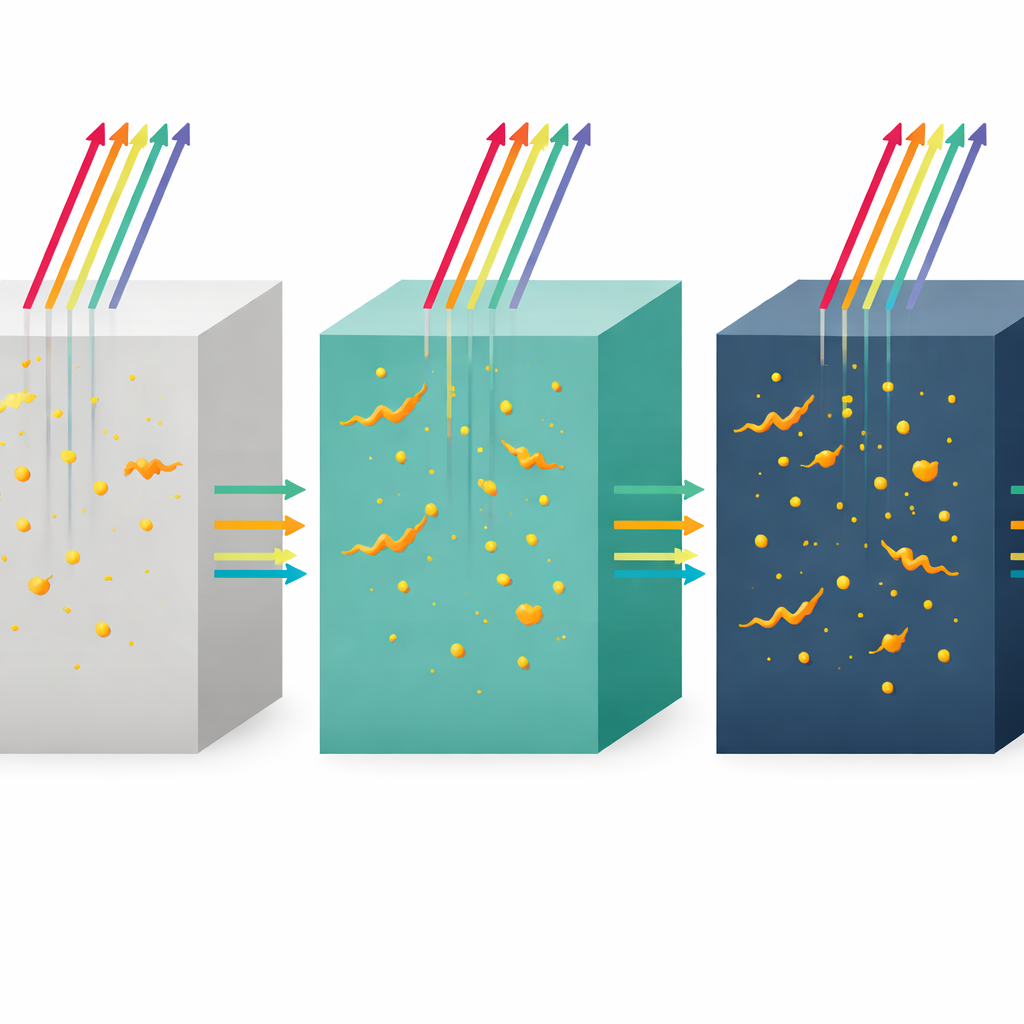
The study examined not just whether photons were blocked, but how. At low energies, gamma rays are most likely to be simply absorbed by individual atoms, a process that strongly favors elements with high atomic numbers. Here, TaAs—with heavy tantalum—showed the strongest stopping power, followed by MoAs and then VAs. At intermediate energies, where photons mainly bounce off electrons in the material, the differences narrowed but TaAs still held a modest edge thanks to its higher density and electron count. At the highest energies, where photons can disappear and create particle–antiparticle pairs, TaAs again emerged as the most effective shield because this process also benefits from heavy, dense atoms.
Thinner shields with stronger stopping power
To translate the physics into something engineers can use, the researcher calculated how thick a barrier must be to cut the radiation intensity in half—a measure called the half‑value layer. At a representative energy typical of medical and industrial gamma sources (0.5 MeV), TaAs needed less than half a centimeter to halve the beam, while MoAs and VAs required nearly one centimeter and more than one centimeter, respectively. Compared with standard materials such as steel scrap and ordinary concrete, all three arsenide alloys performed better, but TaAs stood out. It had the highest ability to attenuate photons and the shortest distances over which photons were stopped, meaning it can deliver the same protection in a much thinner, lighter layer. Dose‑rate calculations showed that even a tenth of a centimeter of TaAs could cut the received dose by more than 50 percent compared with VAs under the same conditions.
What this means for everyday technology
For people who will never run a nuclear simulation but may one day lie inside a medical scanner, the bottom line is straightforward: TaAs appears to be a promising, compact, lead‑free alternative for blocking harmful radiation. The simulations suggest it can provide strong protection in thinner panels than many traditional materials, which is especially valuable where space and weight are limited. Because the results closely match trusted reference data, they offer a solid roadmap for experimental work and eventual real‑world shields. If future manufacturing and safety studies bear out these predictions, devices from hospital imaging suites to industrial inspection lines could be built with slimmer, more sustainable radiation barriers that still keep patients, workers, and the public well protected.
Citation: Hamad, M.K. High-density lead-free alloys for compact and sustainable photon shielding: a Monte Carlo and benchmarking study. Sci Rep 16, 11285 (2026). https://doi.org/10.1038/s41598-026-42187-7
Keywords: radiation shielding, lead-free alloys, gamma rays, Monte Carlo simulation, TaAs material