Clear Sky Science · en
Empirical validation of a generative AI framework for personalized education assessment
Why Smarter Grading Matters for Every Student
Anyone who has ever waited days for a teacher to return an assignment knows that feedback often arrives too late and too generic to be truly helpful. This study explores whether modern artificial intelligence can change that by acting as a tireless teaching assistant that reads student work, understands their strengths and weaknesses, and sends back detailed, tailored comments within seconds. Focusing on university students learning Python programming, the researchers ask a simple but powerful question: can an AI system grade and respond almost as well as human experts, while giving each learner the kind of personalized attention most classrooms cannot provide?
From One-Size-Fits-All to Made-to-Measure Feedback
Traditional tests and homework tend to treat students as if they all learn in the same way and at the same pace. The authors argue that this uniform approach clashes with what is now known about how differently people think, remember, and solve problems. Instead of just ranking students, a better system would diagnose which ideas each person has mastered, where they are confused, and how they prefer to learn. Recent advances in generative AI – systems that can write text, explain code, and answer questions – offer a chance to build such a system, but only if the technology can be made accurate, transparent, and fair enough for real classrooms.
A Layered AI Assistant Built for the Classroom
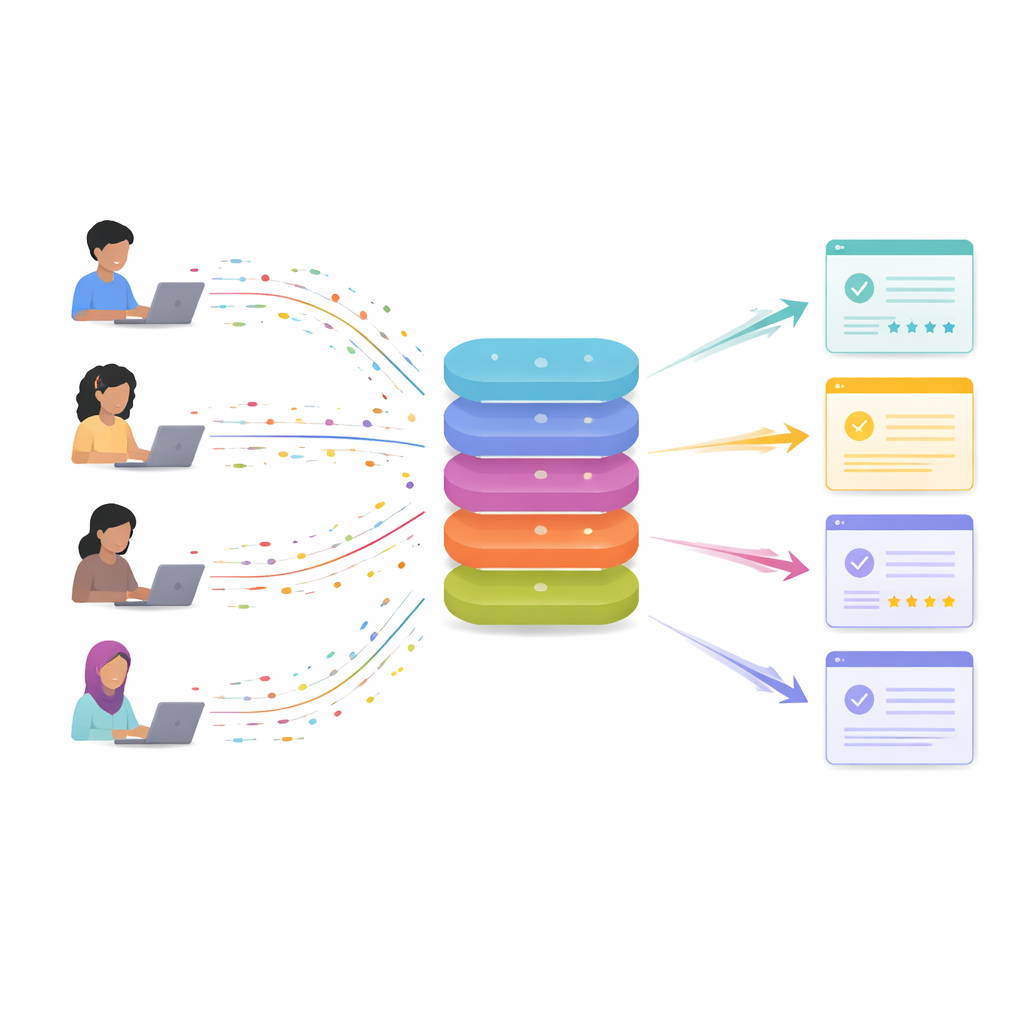
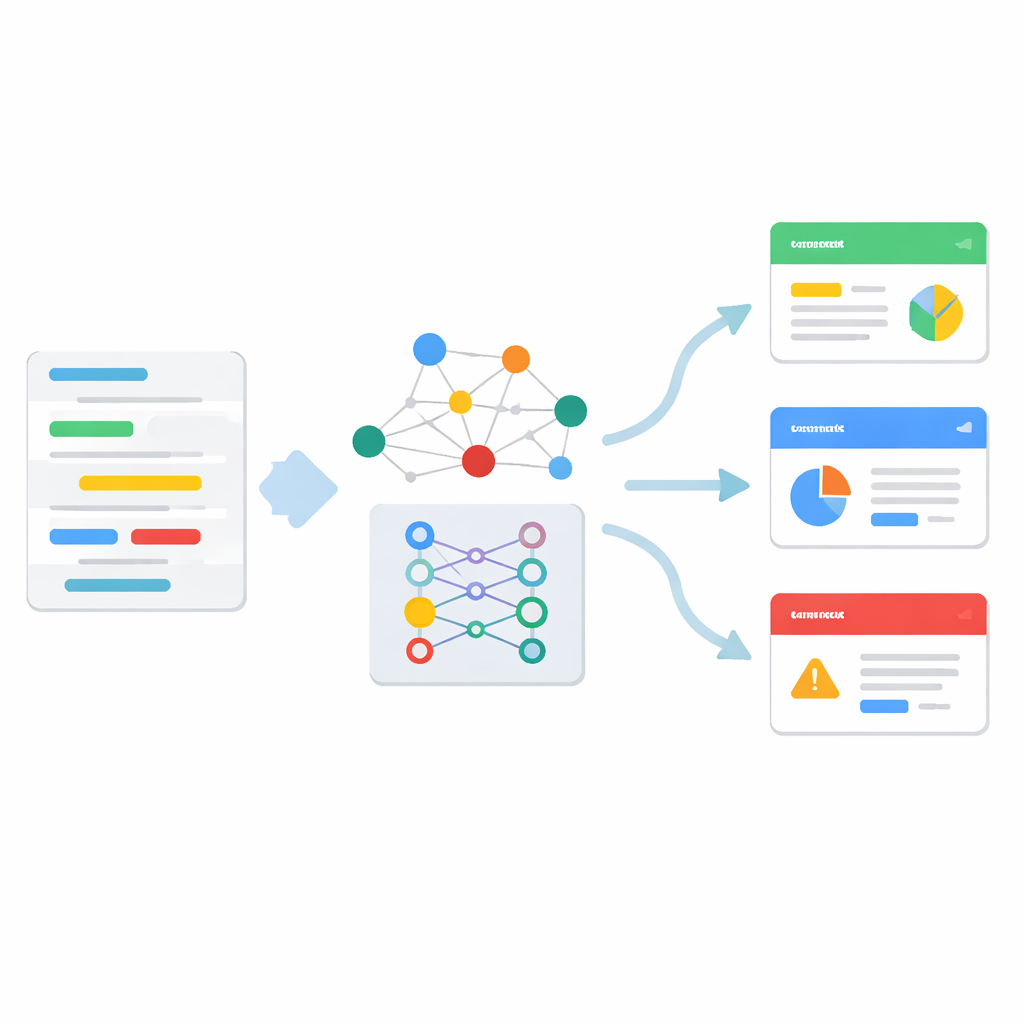
To tackle this, the researchers design a five-layer digital framework that mirrors how a thoughtful human tutor might work. First, a data layer collects information about what students do online: the code they submit, how long they spend on tasks, and how often they practice. Second, a processing layer cleans and organizes this raw stream into meaningful signals. Third, an analysis layer keeps track of each learner’s grasp of key ideas using a detailed map of Python concepts, so the system can see, for example, that trouble with loops may stem from earlier gaps with basic control flow. On top of this, a generation layer uses a fine-tuned language model to create personalized comments, suggestions, and new practice questions. Finally, a feedback layer continuously adjusts the system based on how teachers and students react, nudging the AI to sound more like a skilled educator over time.
Putting the AI Tutor to the Test
The team did not stop at building a clever design—they tested it with 449 undergraduates taking introductory Python courses at two universities. Half of the students received conventional, largely standard feedback; the other half used the AI-driven system, which produced individualized responses to their code. Human experts independently scored a large sample of student work and compared their judgments to the AI’s scores. The new framework’s ratings lined up very closely with expert opinion, nearly matching the level of agreement seen between experienced instructors themselves. At the same time, the AI could generate a full assessment in about a dozen seconds, compared with roughly half an hour of manual grading per submission, cutting turnaround time by more than 99 percent.
How the Smart Feedback Changes Learning
Beyond accuracy and speed, the key test was whether students actually learned more. On final tests, the group using AI-powered assessments outperformed the control group by a meaningful margin, with a medium effect size that education researchers view as practically important. The gains were especially strong for students who started out weaker, suggesting that individualized guidance helped them catch up. Measures based on activity logs showed that these students stayed more engaged over the twelve-week course, logging in more often, practicing more, and maintaining their motivation while the comparison group gradually lost steam. Surveys also revealed that students felt the AI’s comments were more relevant, clearer, and more encouraging than standard feedback.
What This Could Mean for Future Classrooms
For a general reader, the main takeaway is that carefully designed generative AI can come surprisingly close to expert teachers in judging student work, while making it possible to offer rich, personalized feedback to hundreds of learners at once. The system is not flawless: it occasionally makes minor mistakes, requires significant computing power, and still benefits from human oversight, especially for unusual errors. Yet the study shows that when AI is grounded in solid educational theory and rigorously tested in real courses, it can help turn grading from a slow, blunt instrument into a fast, nuanced conversation about how each student learns. If these tools become more affordable and widely adopted, they could bring the kind of tailored support once reserved for one-on-one tutoring into everyday classrooms.
Citation: Qian, M., Ji, H. & Li, L. Empirical validation of a generative AI framework for personalized education assessment. Sci Rep 16, 11538 (2026). https://doi.org/10.1038/s41598-026-42169-9
Keywords: personalized learning, AI assessment, programming education, student feedback, educational technology