Clear Sky Science · en
Anti-obesity medication use sparks effort-based sanctions and social penalties
A New Twist in the Weight-Loss Story
Medications like Ozempic have rapidly moved from medical journals to dinner-table conversations, promising major help with weight loss. But as more people turn to these drugs, another pattern is emerging: social backlash. This study asks a simple but pressing question for anyone who cares about health, fairness, or stigma: when people lose weight with medical help instead of willpower alone, do others quietly see them as less admirable—and treat them worse because of it?
Why Medicine for Weight Loss Raises Eyebrows
Obesity now affects more than a billion people worldwide and brings serious health and economic costs. Doctors increasingly see it as a complex condition shaped by genes, environment, stress, and money—not just by personal choices. New anti-obesity medications that change appetite signals in the body can help people lose substantial weight. Yet in public debates and on social media, these drugs are often derided as an “easy way out,” reinforcing old stereotypes that people with obesity are lazy or undisciplined. The authors suspected that a deep-seated belief—that effort itself is a moral virtue—might be fueling this backlash.

Testing Reactions to the Same Success Story
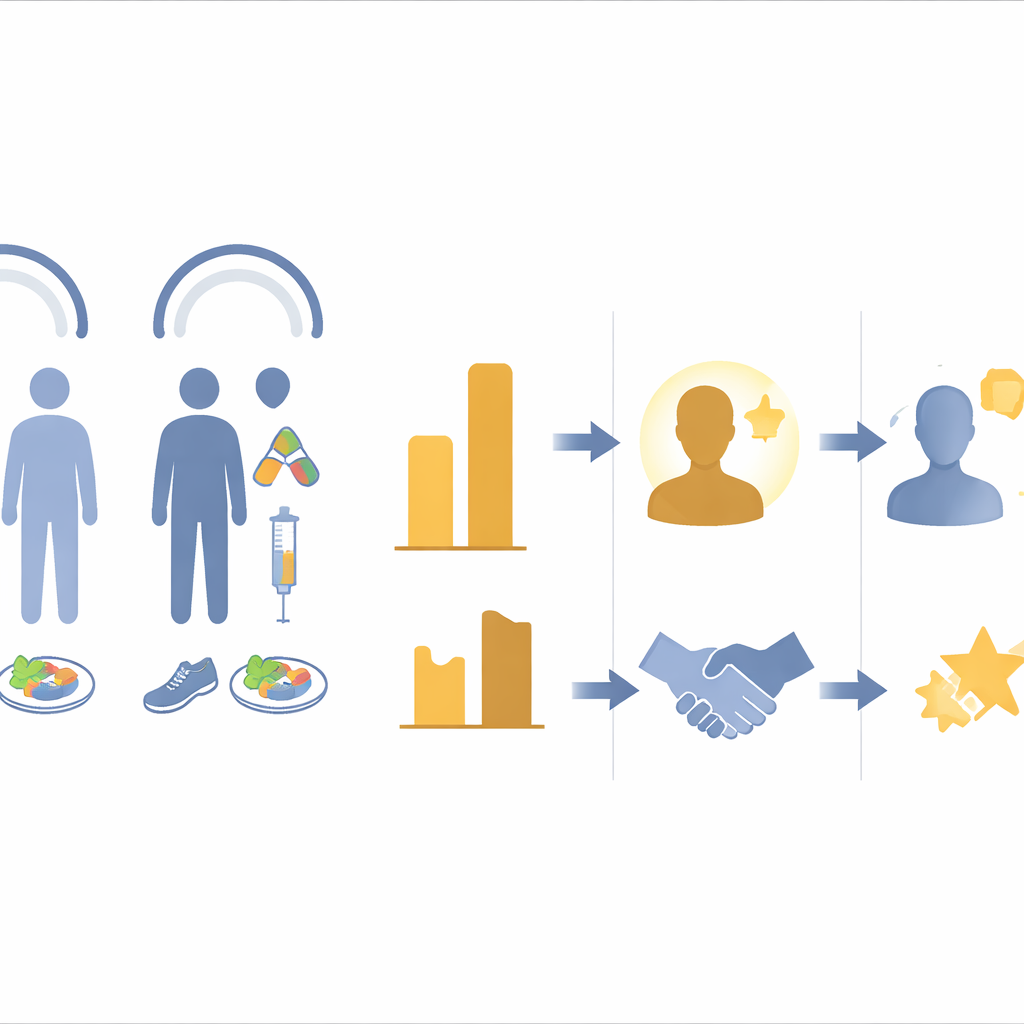
To examine this, the researchers ran four online studies in Belgium, the United States, and the United Kingdom, with more than 1,200 participants in total. Everyone read the same short story about two men who were overweight and wanted to lose 20 kilograms. Both changed their eating and exercise habits, and both were described as strict and committed. The only difference was that one also used anti-obesity medication that made him feel less hungry. Afterward, participants rated each man on how much effort he had put in, how moral and trustworthy he seemed, how warm and competent he appeared, whether he deserved his success, and how willing they would be to team up with him for a future challenge.
How Effort Shapes Moral Judgment
Across all four studies, the pattern was strikingly consistent. Even though the story clearly stated that both men followed the same strict diet and exercise routine and lost the same amount of weight in the same amount of time, the man using medication was judged as having put in less effort. That single perception carried a heavy cost: he was also rated as less moral, less disciplined, less competent, and less warm. Participants thought he less deserved the positive outcome and were less happy at the idea of cooperating with him in a future activity. In other words, people appeared to downgrade his character and social value simply because medication was part of his success.
Beliefs, Experience, and Hidden Biases
The team then looked for factors that might soften or intensify these reactions. People who already viewed weight-loss drugs more positively—or who had personal experience using them—tended to show smaller gaps in moral judgment between the medicated and non-medicated dieter. Those who strongly believed that such drugs are a “shortcut” showed particularly large differences: they saw the medicated person as much less deserving, even when effort and results were matched on paper. Personality traits such as being more conscientious or outgoing did little to change the pattern. Overall, the results suggest that a powerful mental shortcut—equating more visible struggle with higher virtue—drives these judgments more than stable personality differences do.
What This Means for Health and Fairness
These findings matter because they show that people who use medical tools to manage their weight are not just dealing with their health condition; they may also be quietly punished in social and professional settings. They can be seen as cheaters rather than as patients following a legitimate treatment plan, even when their effort is the same as someone relying on lifestyle changes alone. The study suggests that to reduce stigma, public discussions and health campaigns should highlight the discipline required to stick with treatment and focus less on glorifying visible struggle for its own sake. In simple terms, taking medicine for obesity is not a moral failure—but our reflex to equate suffering with virtue can make it feel that way, with real costs for those who seek help.
Citation: Tissot, T.T., Roth, L.H.O. Anti-obesity medication use sparks effort-based sanctions and social penalties. Sci Rep 16, 13033 (2026). https://doi.org/10.1038/s41598-026-42166-y
Keywords: weight stigma, anti-obesity medication, moral judgment, social bias, effort perception