Clear Sky Science · en
Sleep quality prediction in basketball athletes using a deep learning framework with an attention mechanism based on multimodal data
Why Sleep Matters for Student Athletes
For college basketball players, late-night study sessions, early-morning practices, and high-pressure games often collide, leaving little room for good sleep. Yet sleep is when the body repairs muscles, the mind consolidates learning, and emotions settle. This study asks a practical question with big implications for player health and performance: can we use simple tests and questionnaires that teams already collect—like fitness scores, body weight, and stress levels—to automatically flag which athletes are at risk of poor sleep?
Looking at the Whole Athlete
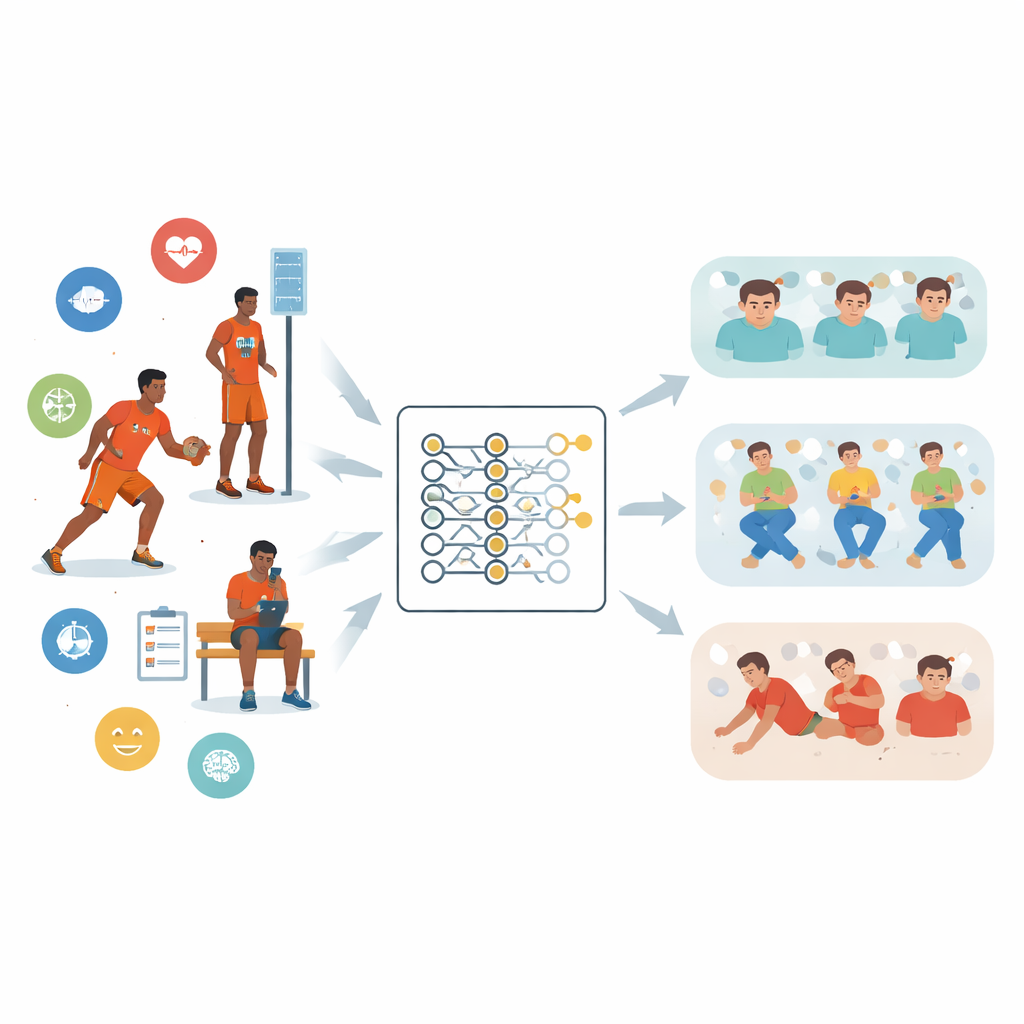
Instead of focusing on a single number, such as hours slept or a wearable device reading, the researchers took a broad view of what shapes sleep. They worked with university basketball teams across eight provinces in China and gathered data from 379 players. Each athlete completed standard psychological questionnaires on anxiety and perceived stress, a widely used sleep-quality survey, and an online form about age, sex, school year, and training background. At the same time, physical education staff measured height, weight, lung capacity, sprint speed, jumping power, strength tests like pull-ups or sit-ups, and running endurance on the track. This combination created a rich profile of both body and mind for each player.
Turning Data Into Sleep Risk Levels
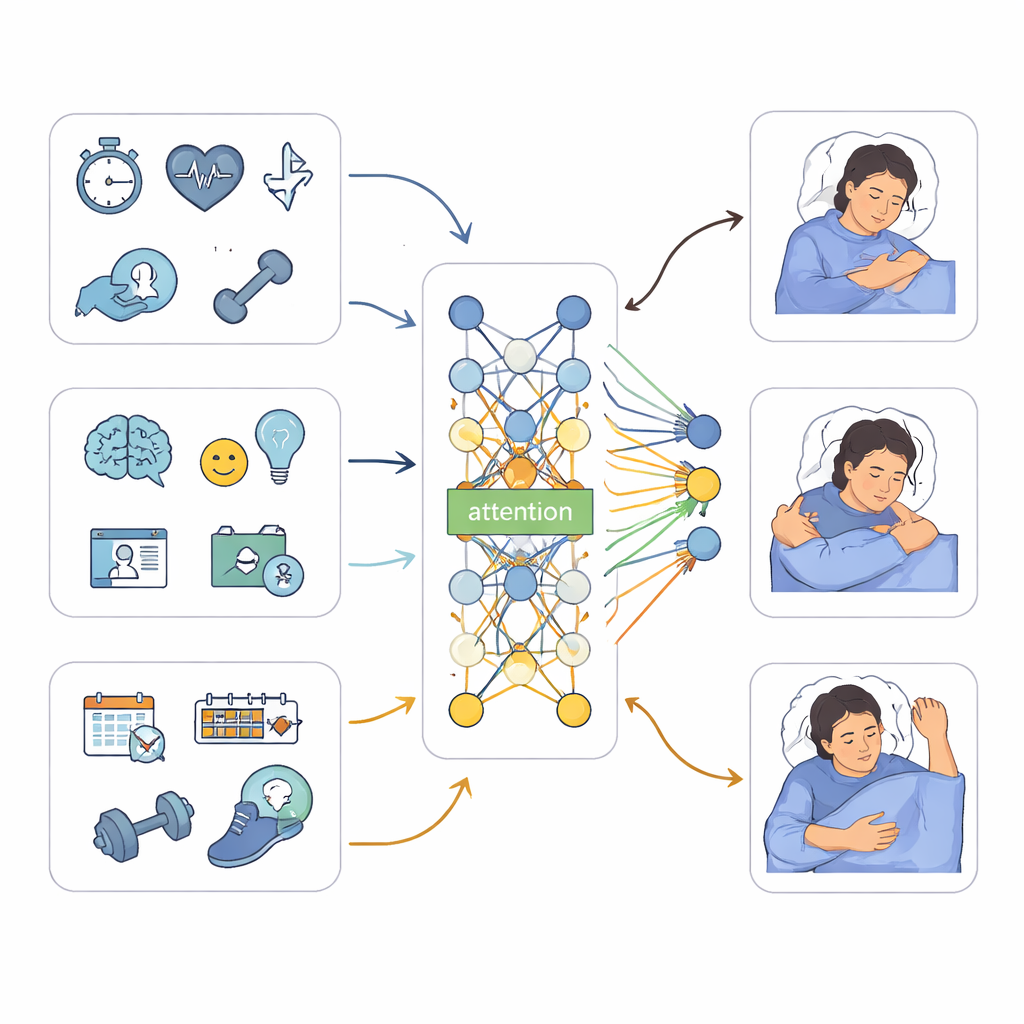
To make the results useful for coaches and health staff, the researchers grouped players into three categories based on their sleep questionnaire scores: good sleep, moderate problems, and poor sleep. Nearly half of the athletes fell into the poor-sleep group, underscoring how common sleep issues are in college sports. The team then cleaned and standardized the data, filled in missing values, and used these profiles to train several computer models. Traditional methods such as logistic regression and tree-based approaches were compared with a more flexible deep learning model called an attention-based multilayer perceptron. This model can learn which pieces of information deserve more “attention” when making predictions, allowing it to weigh physical, psychological, and background factors differently.
What the Smart Model Learned
The attention-based model did a somewhat better job than the traditional models at sorting athletes into the three sleep groups. Its overall accuracy was about 73%, with a noticeably higher balance between correctly identifying each group than the other methods achieved. However, the improvement was modest rather than dramatic, and the model struggled most with the middle, “moderate” group, where sleep is neither clearly good nor clearly poor. This suggests that borderline cases are genuinely hard to distinguish using the current measurements. When the researchers tried techniques that artificially rebalance the data—by giving extra weight to under-represented cases or creating synthetic examples—the model became better at recognizing this moderate group, though at a small cost to overall accuracy.
Clues From Body and Mind
To avoid a “black box” system, the study also examined which features the model seemed to rely on most. Two complementary tools were used: the attention mechanism inside the network, which highlights where the model focuses, and a method called SHAP, which estimates how much each factor nudges predictions toward better or worse sleep. Across these views, psychological strain—especially anxiety and perceived stress—stood out as strongly tied to poor sleep. Body mass index (a simple ratio of weight to height) and several fitness measures, like upper-body strength and lung capacity, also played an important role, along with school year and training frequency. Many individual fitness tests showed only weak direct links with sleep when viewed one by one, but together they still added useful information, especially when combined with mental health measures.
What This Means for Teams
For coaches, trainers, and university health staff, the main message is not that a computer can definitively diagnose who sleeps badly, but that everyday data can help flag athletes who may need closer attention. The deep learning approach provided small but statistically reliable gains over simpler models, and it highlighted that anxiety, stress, and weight are among the most informative warning signs. Because the model performs worst for the “in-between” sleepers, the authors recommend using it as a screening and triage tool: identify higher-risk players, then follow up with conversations, more detailed assessments, and, if needed, professional care. Future work that adds behavior and schedule information—such as caffeine use, screen time at night, and training times—may sharpen these predictions and help teams better protect both performance and long-term health.
Citation: Liu, L., Miao, J. Sleep quality prediction in basketball athletes using a deep learning framework with an attention mechanism based on multimodal data. Sci Rep 16, 11900 (2026). https://doi.org/10.1038/s41598-026-42147-1
Keywords: athlete sleep, basketball performance, sports psychology, machine learning health, college athletes