Clear Sky Science · en
Application research of powder forming technology in the preparation of heated tobacco core materials
Why This Matters for Everyday Smokers
Heated tobacco products are marketed as a cleaner alternative to traditional cigarettes, promising less smoke and fewer harmful chemicals while keeping a familiar sensation for users. At the heart of these devices is a small packed “core” of processed tobacco that must efficiently hold flavors and nicotine, then release them when heated. This paper explores a new way to make that core using ultrafine tobacco powder, aiming to boost flavor delivery and heating performance without changing the basic ingredients.
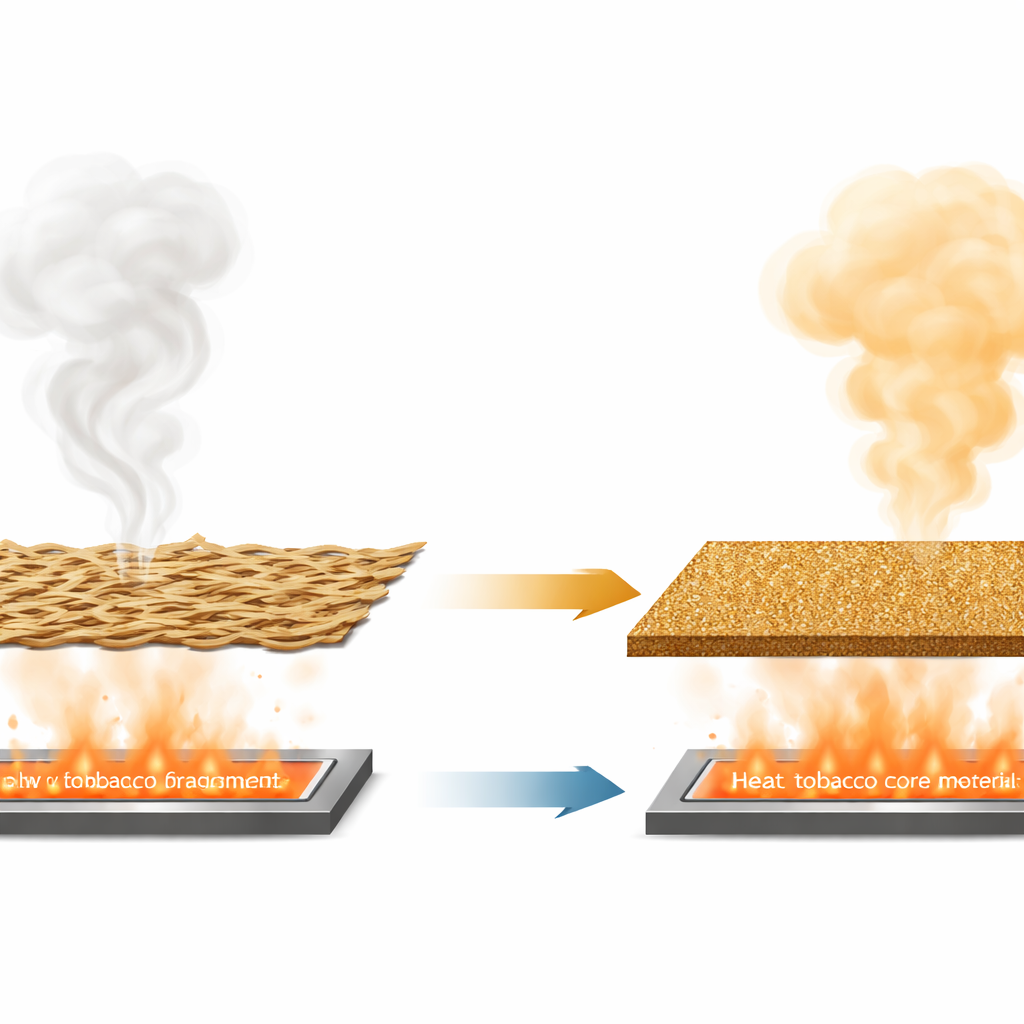
From Paper-Like Sheets to Powder-Based Cores
Most current heated tobacco sticks rely on reconstituted tobacco made with paper-making techniques. Tobacco scraps are pulped, spread into thin sheets, dried, and then coated with liquids that contain nicotine and flavor agents. While well established, this method produces sheets that are often too dense on the surface and not very absorbent. When too much coating liquid is added, it tends to sit on top, crystallize, and cause clumping, which can disrupt manufacturing and lead to uneven taste during use.
Grinding Tobacco Down to the Ultrafine Scale
The researchers propose a different strategy: instead of starting from coarser tobacco fibers, they grind the tobacco mixture into an ultrafine powder, then build the sheet around these tiny particles. Using industrial equipment, they reduced much of the tobacco material to particles tens of micrometers in size—far thinner than a human hair. These particles are then blended with a small amount of wood pulp and other helpers to form a new type of sheet. Microscopic images reveal that, unlike conventional paper-like sheets, this new material combines a fibrous backbone with densely packed powder, creating a three-dimensional network full of accessible surfaces and fine pores.
Stronger, Smoother, and Better at Handling Heat
When the team compared the ultrafine-powder sheets with standard ones, they found clear physical improvements. The new cores were thinner but denser, meaning more material in the same volume and fewer large air gaps. They were significantly stronger and more stretchable, which helps them survive winding and cutting in factories. Air moved through them more slowly, which is actually helpful in this context: during heating, less air leaking through means heat is used more efficiently on the tobacco itself. Their ability to conduct heat was also noticeably higher, and their surfaces were much smoother. Together, these traits support more even heating and more predictable aerosol release when the product is used.
Holding More Liquid and Releasing More Aroma
Another key test looked at how easily the base sheet soaks up and holds the coating liquid that contains flavor and nicotine. By watching how droplets spread over time, the researchers showed that the ultrafine-powder sheets were more “water-loving”: droplets spread faster and penetrated more quickly than on conventional sheets. Chemically, the usual bulk measures—such as sugars, nitrogen, and alkaloids—remained similar between the two materials, since the recipes were matched. But when they examined volatile aroma compounds, the ultrafine-powder cores contained about 21 percent more. This increase is linked to the breaking of plant cell walls during fine grinding, which releases more of the natural flavor components and helps the sheet retain them.
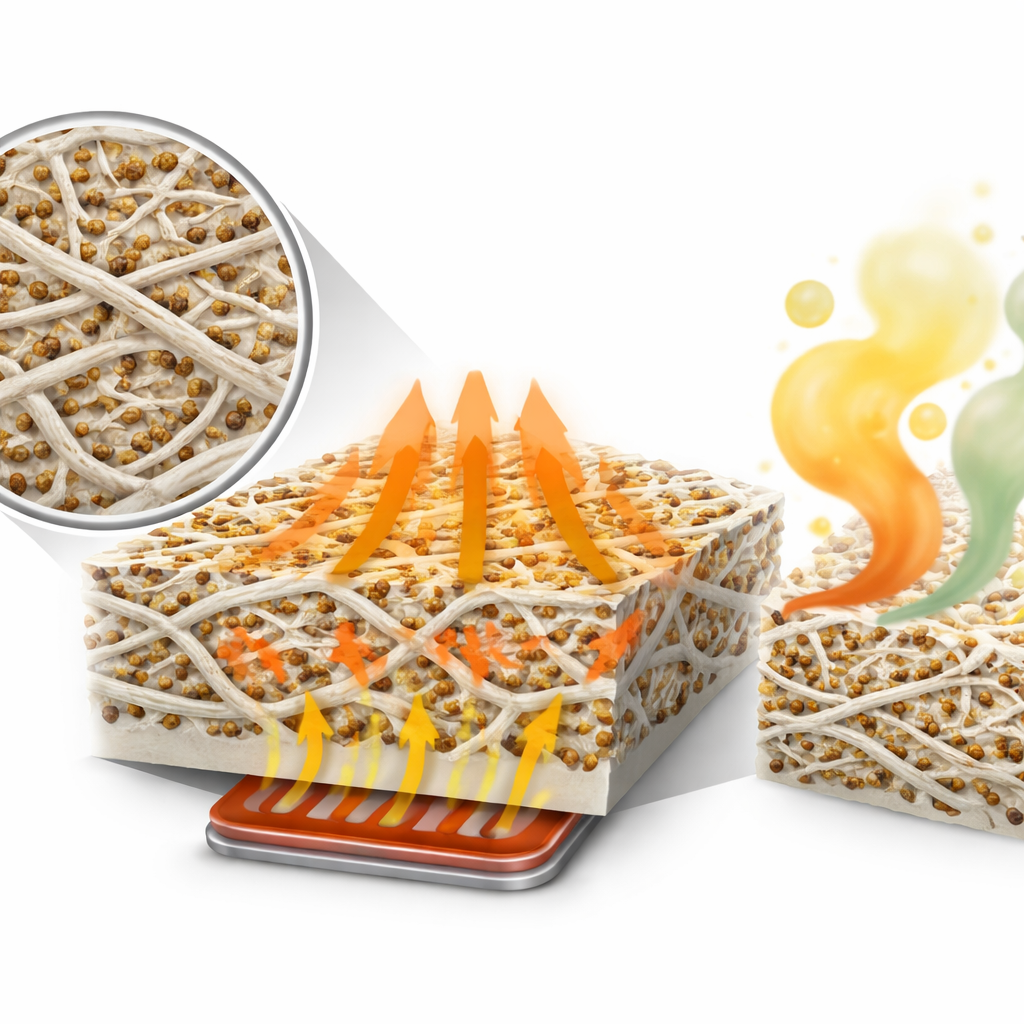
Heating Profile and What It Means for Users
To understand what happens during actual use, the team heated samples in a controlled way and tracked their weight loss as temperature rose. In the temperature window typical for heated tobacco devices, the ultrafine-powder cores lost more mass than conventional ones, suggesting that more flavor-rich substances were driven off as vapor. The peak of this release also occurred at a slightly lower temperature, consistent with better heat flow through the material. Above this range, the behavior of both materials became similar, indicating that the key differences lie in the user-relevant heating zone rather than at extreme temperatures.
What the Study Concludes for Future Products
In simple terms, the new powder-based method makes the heated tobacco core stronger, smoother, better at soaking up flavor liquid, and more efficient at turning stored compounds into inhalable aerosol when heated. The core recipe does not rely on exotic new chemicals; instead, it rearranges the same basic ingredients into a finer, more responsive structure. For consumers who already use heated tobacco, this approach could translate into sticks that are more consistent from puff to puff, with richer flavor at the same or lower heating settings. At the same time, the work underscores that such products still deliver nicotine and tobacco-derived substances; the innovation here lies in how effectively and controllably that delivery is engineered.
Citation: Zhang, W., Liu, J., Xiong, Z. et al. Application research of powder forming technology in the preparation of heated tobacco core materials. Sci Rep 16, 12658 (2026). https://doi.org/10.1038/s41598-026-42140-8
Keywords: heated tobacco, reconstituted tobacco, ultrafine powder, aerosol generation, tobacco sheet design