Clear Sky Science · en
Predicting the risk for distant metastasis in hypopharyngeal squamous cell carcinoma and assessing the survival benefit of induction therapy
Why this study matters for patients and families
Cancers of the lower throat are rare but often deadly, largely because they tend to spread from the original tumor to distant organs such as the lungs. Doctors have a drug-based approach called induction therapy, given before the main course of treatment, that may lower the chance of this spread. However, these drugs are strong and can cause serious side effects, and past trials have not shown clear survival benefits for everyone. This study asks a simple but important question: can we pinpoint which patients are most likely to benefit from induction therapy so that they get extra help while others avoid unnecessary harm?
Understanding a hidden and dangerous throat cancer
The cancer examined here, hypopharyngeal squamous cell carcinoma, starts in the part of the throat that connects the mouth, nose, and food passage. Because this area is anatomically subtle and early symptoms are vague, many people are diagnosed only when the disease is already advanced. Even with modern combinations of surgery, radiation, chemotherapy, targeted drugs, and immunotherapy, only about one in three patients with locally advanced disease are alive five years later. When the cancer spreads to distant organs, survival usually drops to less than a year. Being able to estimate the risk of such spread at the time of diagnosis could transform how doctors tailor treatment.
Building a simple risk score from big data
To tackle this problem, the researchers turned to a large U.S. cancer registry called SEER, which covers about one-third of the American population. They identified 3,415 patients with this specific throat cancer diagnosed between 2004 and 2015, then randomly split them into a training group and an internal test group. They also collected records from 203 patients treated at two hospitals in China to serve as an external test set. Using standard statistical methods, they searched for basic clinical features recorded at diagnosis that were linked with later distant spread. Four stood out as independent risk factors: being male, having a larger or more deeply invading primary tumor, having cancerous lymph nodes in the neck, and having a tumor that looked more aggressive under the microscope.
From statistics to a bedside prediction tool
These four pieces of information were combined into a visual prediction tool called a nomogram, which works like a points-based scorecard. Each patient’s sex, tumor size and invasion (T classification), lymph node status (N classification), and tumor grade add up to a total score that corresponds to a predicted probability of distant spread. 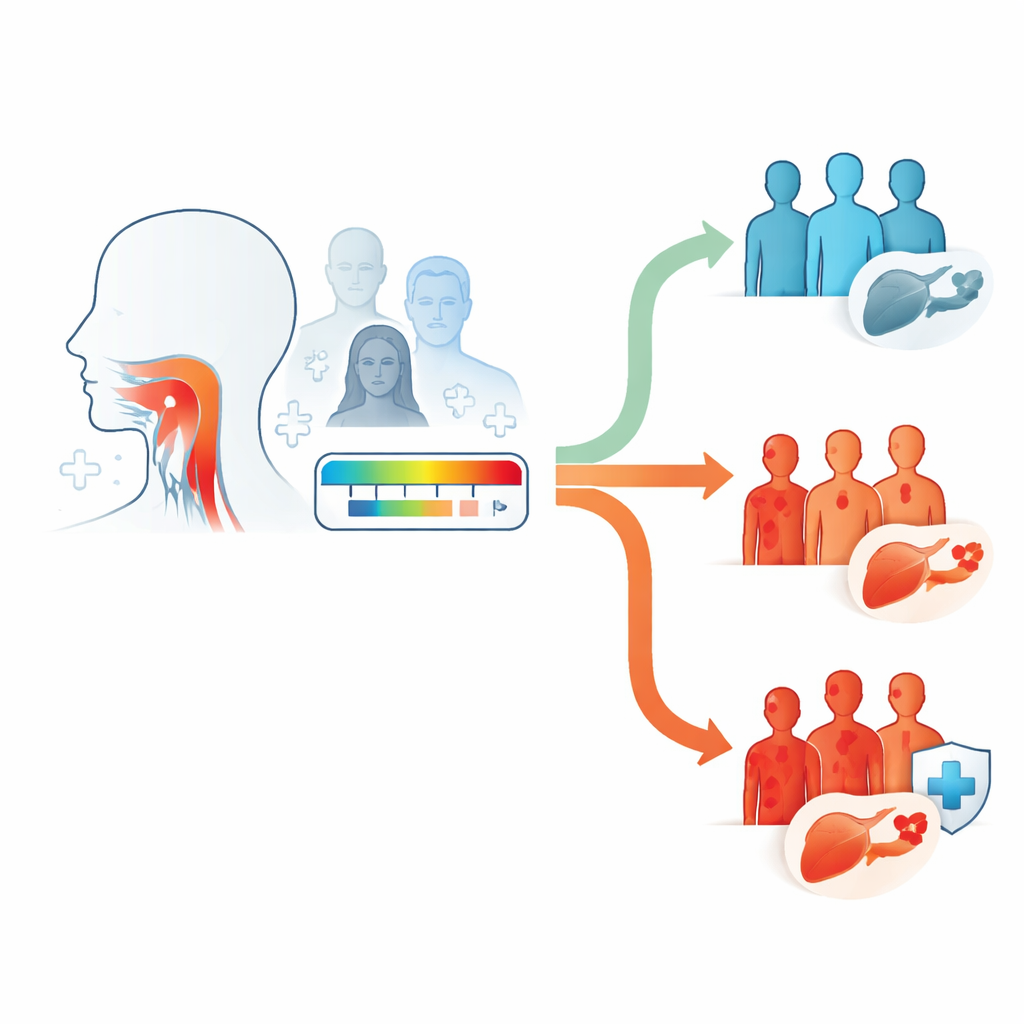
Who truly benefits from extra early treatment?
The researchers then asked how this risk score might guide real treatment choices. They used the nomogram to divide 108 Chinese patients, all of whom had complete treatment and follow-up information, into high- and low-risk groups based on an optimal score cut-off. Within each group, some patients had received induction therapy before their main course of radiotherapy or chemoradiotherapy, while others had gone straight to the main treatment. After adjusting for baseline differences between patients, they compared survival in those who did and did not get induction therapy. 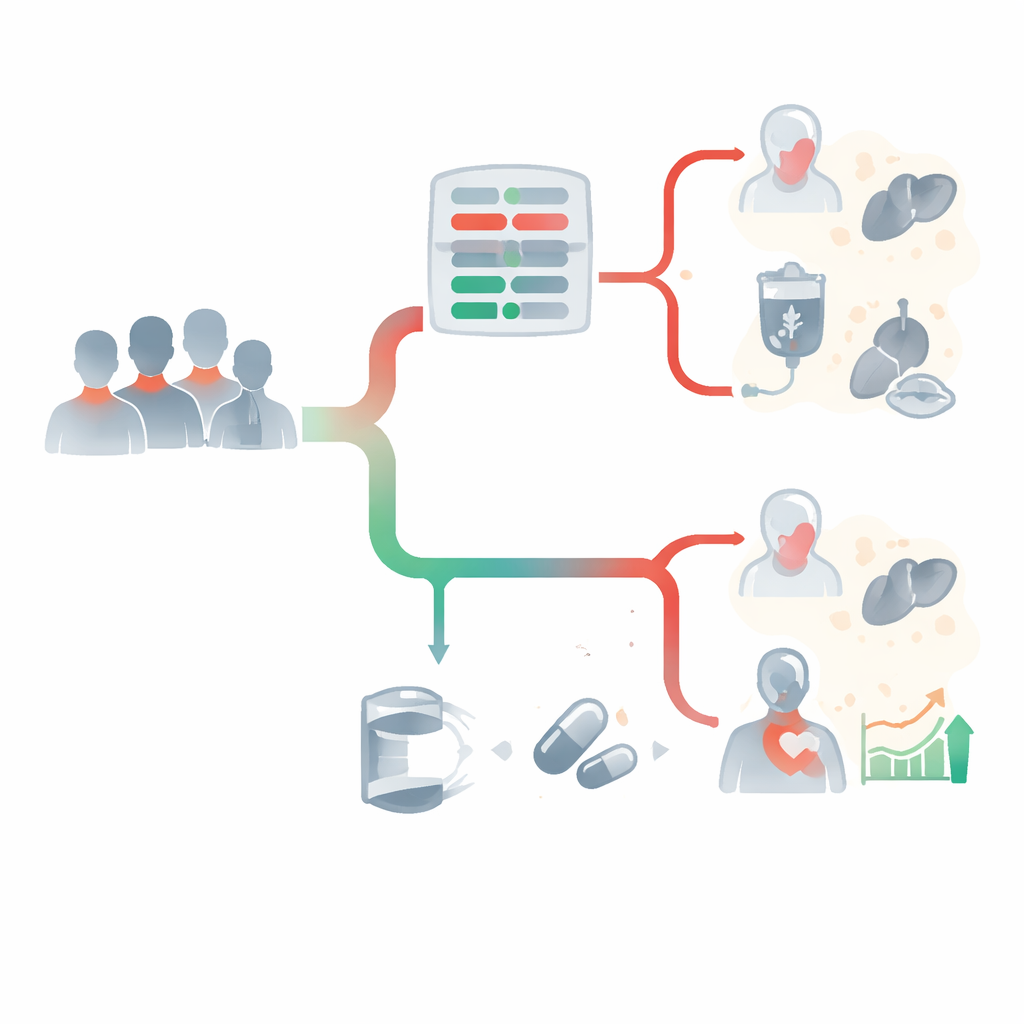
What this means for future care
To a non-specialist, the take-home message is that not all patients with this severe throat cancer should be treated the same way. This study offers an early blueprint for a practical scoring tool that uses four familiar clinical features to estimate the chance of long-distance spread. Patients flagged as high risk appear to gain real survival benefits from induction therapy, while those at low risk may safely avoid it. Because the work is retrospective and based on past records, the authors stress that the model is not yet ready for routine use. Instead, it should serve as a starting point for future, carefully designed clinical trials that test whether risk-guided treatment can improve survival while reducing unnecessary toxicity.
Citation: Zhang, Y., Wang, J., Zhao, W. et al. Predicting the risk for distant metastasis in hypopharyngeal squamous cell carcinoma and assessing the survival benefit of induction therapy. Sci Rep 16, 11999 (2026). https://doi.org/10.1038/s41598-026-42118-6
Keywords: hypopharyngeal cancer, distant metastasis, induction chemotherapy, risk prediction, head and neck oncology