Clear Sky Science · en
Integrated deep learning-driven multi-stage steam forecasting and scheduling optimization for converter energy systems
Turning Waste Heat into Useful Power
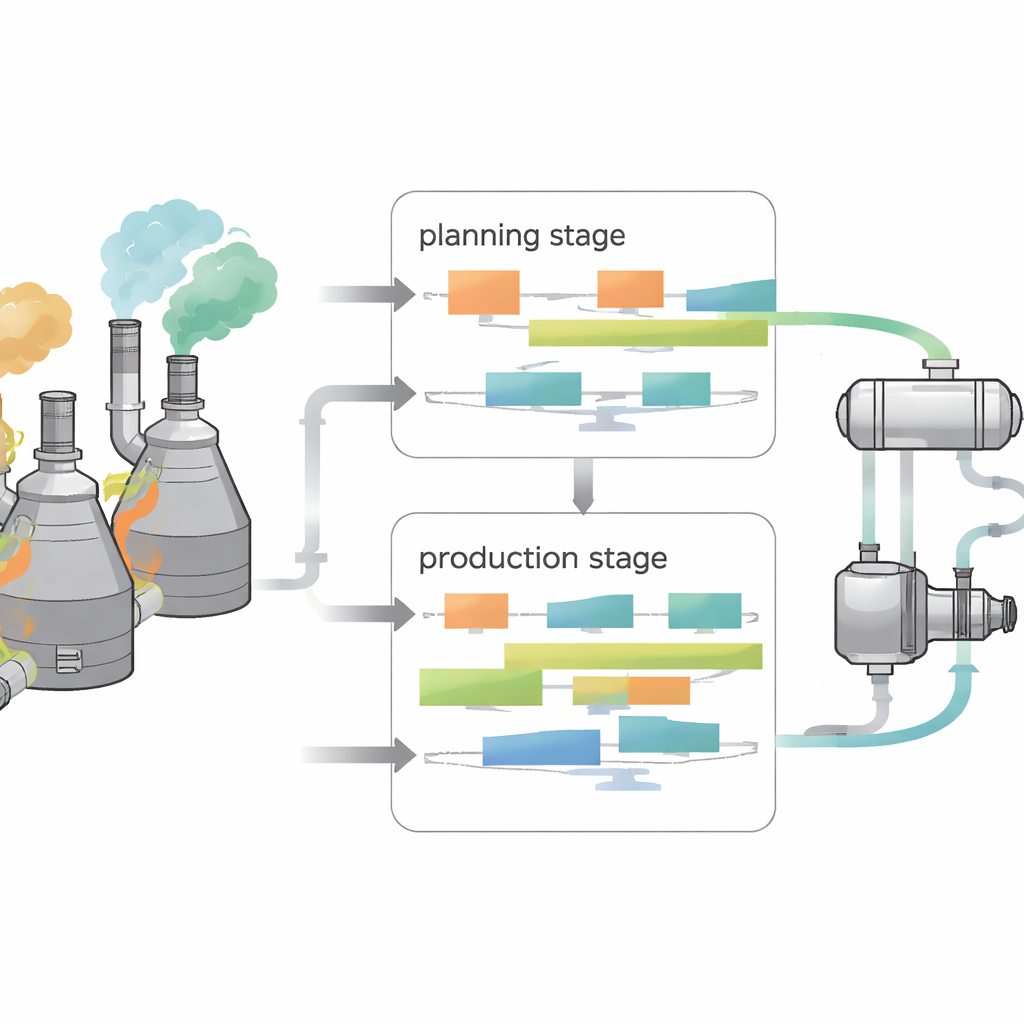
Every time a batch of steel is made, an invisible river of hot steam rushes out of the converters where molten metal is refined. Most of this steam can be captured and turned into heat or electricity, saving fuel and cutting costs. But the steam rises and falls unpredictably as the process unfolds, making it hard for steel plants to plan how much they can reuse. This paper presents a new way to predict those steam surges more accurately, marrying long‑range planning with second‑by‑second monitoring so that steelmakers can squeeze more energy from what they already produce.
Why Steam Matters in Steelmaking
China’s steel industry alone produces more than half of the world’s crude steel, and steam accounts for about a tenth of a typical plant’s total energy use. In modern converter steelmaking, oxygen is blown into a huge vessel of molten iron, triggering fierce reactions that release enormous heat. Water circulating in furnace walls and gas‑cooling systems absorbs that heat and turns into steam, which can then be routed to turbines for electricity, or used to warm buildings and equipment. The more reliably this steam can be predicted and recovered, the less fuel a plant needs to buy and burn, and the lower its operating costs and emissions.
Why Predicting Steam Is So Difficult
In practice, steam output is anything but steady. Different steel grades (low, medium, or high carbon) burn with different intensities, changing how much steam is produced. Each converter has its own quirks and performance profile, and plants often operate several converters at once. On top of that, there are distinct smelting modes—conventional decarburization, double decarburization, and double dephosphorization—each with its own timing and steam pattern. Most of the steam appears during the oxygen‑blowing phase, but the size and shape of that peak can differ sharply from one batch to another. Production schedules also shift with equipment status and material supply, making the overall rhythm of steam generation highly irregular.
Bridging Planning and Real‑Time Operation
Until now, most forecasting efforts have focused on the real‑time production stage, using historical sensor readings to predict short‑term changes. Those models generally ignore the information that exists before a batch even starts, such as the planned steel grade, the weight of molten iron, or the expected oxygen‑blowing duration. The authors argue that a useful solution must work on two time scales at once. First, a planning‑stage model looks roughly two hours ahead, giving managers interval‑style estimates of how much steam several upcoming batches will yield. Those estimates help set targets for the plant’s steam network, decide how to allocate buffer storage, and prepare turbines and other users.
Smart Algorithms for Each Stage
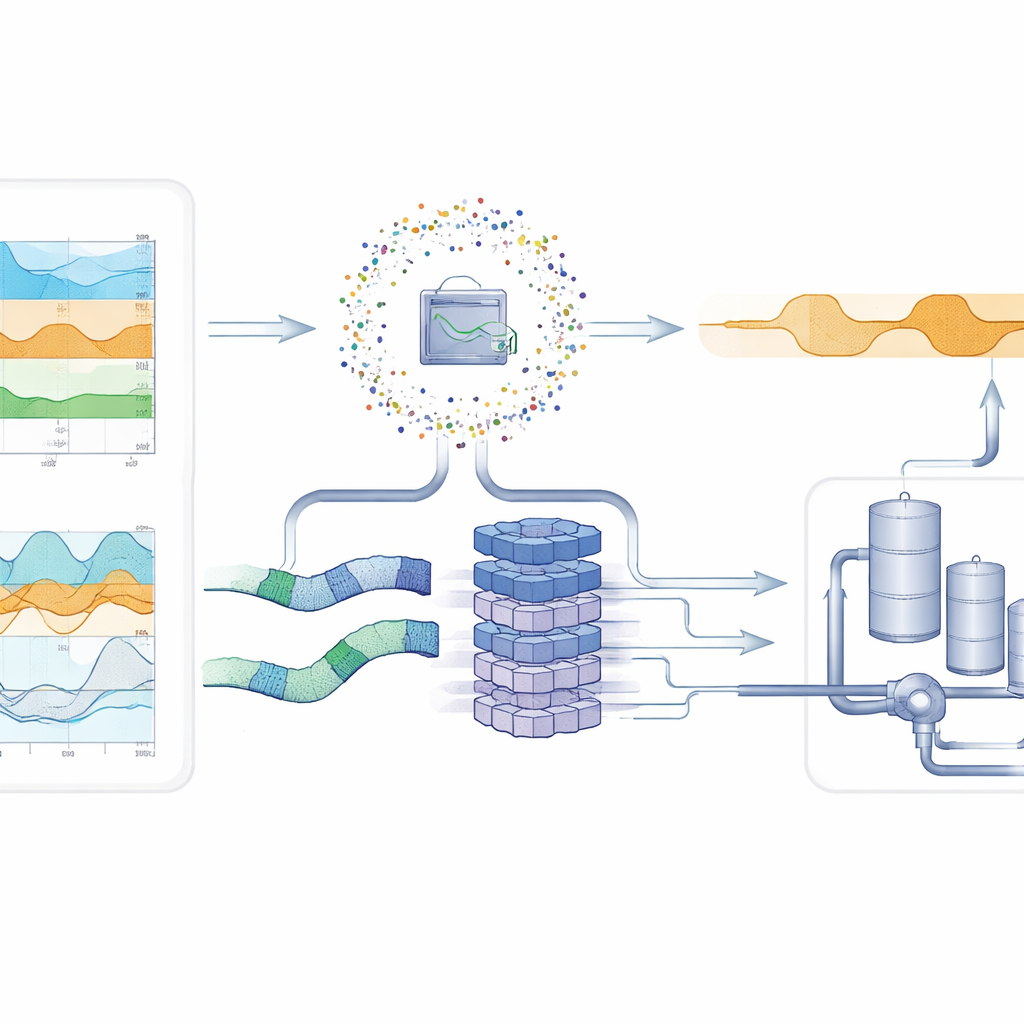
To deliver planning‑stage forecasts, the team pairs a support vector machine—a well‑known, relatively compact machine‑learning method—with an improved “black‑winged kite” optimization algorithm. This optimizer systematically searches for the best internal settings of the support vector model, avoiding the trial‑and‑error tuning human engineers would normally perform. Feeding in low‑dimensional planning data such as steel grade, iron weight, oxygen time, and converter ID, the tuned model can predict the total steam of upcoming batches with an accuracy of about 92%. Once production is under way, the problem changes: high‑frequency readings of steam temperature, pressure, liquid levels, and other signals stream in, and steam flow can spike or drop within seconds. For this stage, the authors introduce a deep‑learning architecture called DSC‑Transformer. It uses a flexible, shape‑adapting convolution layer to track rapid local fluctuations, combined with a Transformer module that excels at understanding long‑range patterns in time series data.
From Data Streams to Better Energy Use
In the production stage, the DSC‑Transformer ingests rolling time windows of sensor data and outputs fine‑grained steam‑flow predictions, updating the earlier planning estimates as conditions change. The model can be configured with different window lengths—from a few seconds to two minutes—allowing operators to trade off ultra‑short‑term sensitivity against longer‑term stability. Tested on 50 days of real plant data from 1,100 converter heats, the system reached about 99% predictive accuracy in this second stage and consistently outperformed popular alternatives such as long short‑term memory networks and standard Transformers. Together, the planning‑stage and production‑stage models form a continuous forecasting pipeline that aligns the expected steam from multiple converters with the storage and consumption capacity of the plant’s network.
What This Means for Steel Plants
For a layperson, the message is straightforward: by learning both the “slow” plan and the “fast” heartbeat of steelmaking, this two‑stage forecasting system helps plants catch and use more of the steam they already create. The planning model gives advance notice of how much steam is likely to be available in the next couple of hours, while the real‑time model corrects and refines that picture second by second as each batch progresses. This joined‑up view allows operators to keep turbines and heaters running smoothly, avoid wasting steam when storage is full, and reduce reliance on extra fuel. As a result, steel plants can cut energy bills and emissions without changing their core production methods—simply by being smarter about when and how they use their own waste heat.
Citation: Hu, Y., Huang, B., Gao, C. et al. Integrated deep learning-driven multi-stage steam forecasting and scheduling optimization for converter energy systems. Sci Rep 16, 12252 (2026). https://doi.org/10.1038/s41598-026-42104-y
Keywords: steelmaking steam, industrial energy efficiency, time series forecasting, deep learning in industry, waste heat recovery