Clear Sky Science · en
Influence of vegetation types on soil physicochemical and biochemical properties in naturally recovering riverbank sand mining sites
Why damaged riverbanks can heal themselves
Every year, sand and gravel are dug from riverbanks to fuel construction, leaving behind stripped, compacted ground where little can grow. Yet, if left alone, some of these barren sites slowly come back to life as hardy plant species move in and begin rebuilding the soil. This study explores how different kinds of pioneering vegetation along a heavily mined stretch of China’s Huai River help damaged riverbanks recover, and which plants are most useful at different stages of restoration.
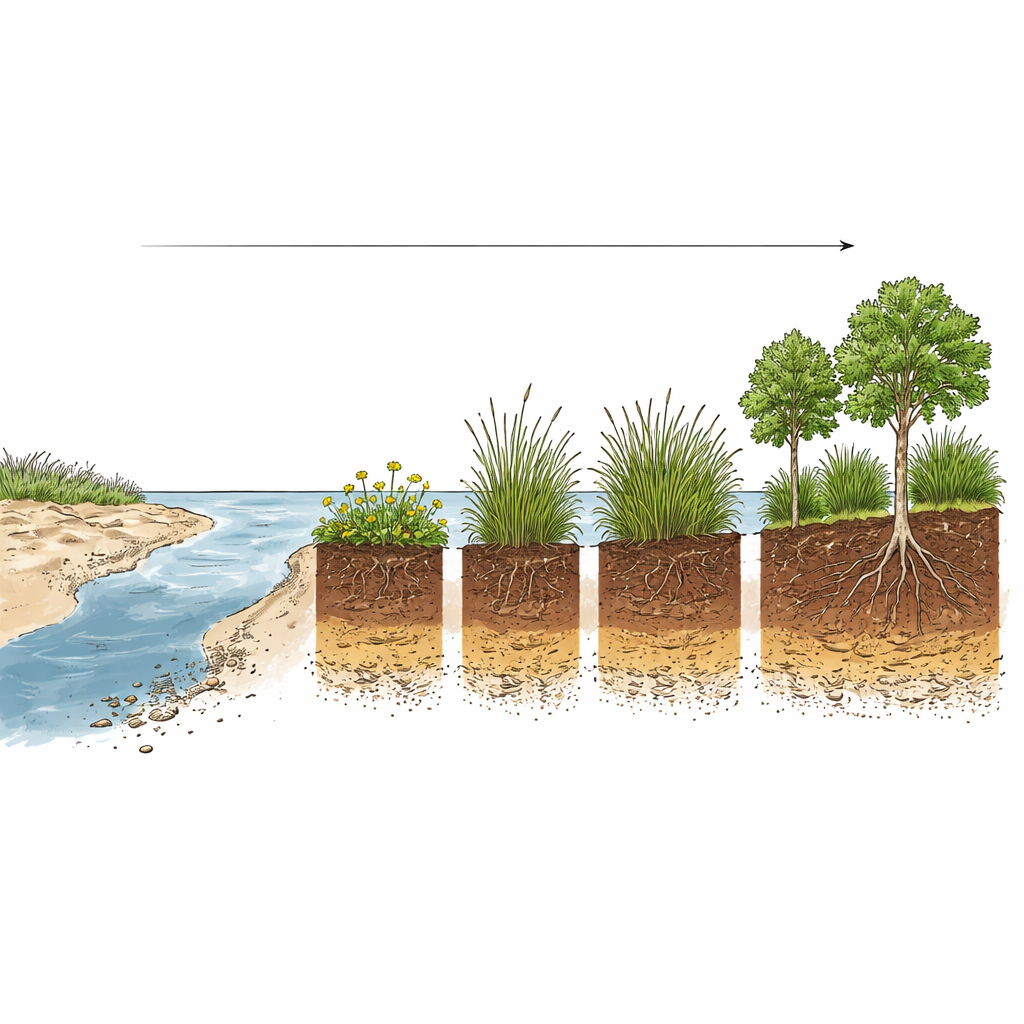
From bare sand to living soil
The researchers focused on riverbank areas that had been heavily mined for sand, then left to recover naturally for nearly a decade. The original attempt to revegetate the sites with seeded grasses failed because the soil was too poor. Over time, however, a new community of pioneer plants established itself spontaneously. Four common vegetation types were studied: a low-growing herb (Artemisia scoparia), tall clumps of grass (Saccharum arundinaceum), dense tussock grass (Imperata cylindrica), and scattered solitary trees. In 16 plots, the team sampled both surface soil (0–20 cm) and deeper soil (20–40 cm), and measured a suite of physical, chemical and biological properties, along with the nutrient content of the plants themselves.
How plants change the ground beneath them
Across all vegetation types, the upper soil layer was consistently richer and more active than the deeper layer, showing a clear “surface enrichment” effect. Surface soils held more carbon, nitrogen and phosphorus, had better water-holding capacity and porosity, and supported higher enzyme activity. These improvements reflect the concentration of roots, organic litter, and microbial life near the surface. Yet each vegetation type shaped the soil in a distinct way. Imperata cylindrica, a high-biomass grass, produced the highest soil carbon and phosphorus in the surface layer, as well as strong overall soil multifunctionality—an integrated measure of nutrient supply, carbon storage, structure, water regulation and enzyme activity. In contrast, solitary trees had a stronger influence deeper down, improving soil structure and porosity in the 20–40 cm layer through their deep, penetrating roots.
Different growth strategies, different soil services
The plants themselves also displayed contrasting nutrient strategies that help explain their soil effects. Artemisia scoparia had leaves rich in nitrogen and phosphorus but with a low carbon-to-nitrogen ratio, meaning its litter decomposes quickly and jump-starts nitrogen cycling in otherwise poor sand. Imperata cylindrica and Saccharum arundinaceum, on the other hand, had higher carbon content and higher carbon-to-nitrogen ratios, suggesting tougher, slower-decomposing tissues that build structural carbon in the soil. Saccharum arundinaceum stood out for improving water-related properties, such as saturated and field water-holding capacity, likely due to its dense fibrous roots that enhance soil aggregation and moisture retention, even though its soils remained relatively low in nutrients.
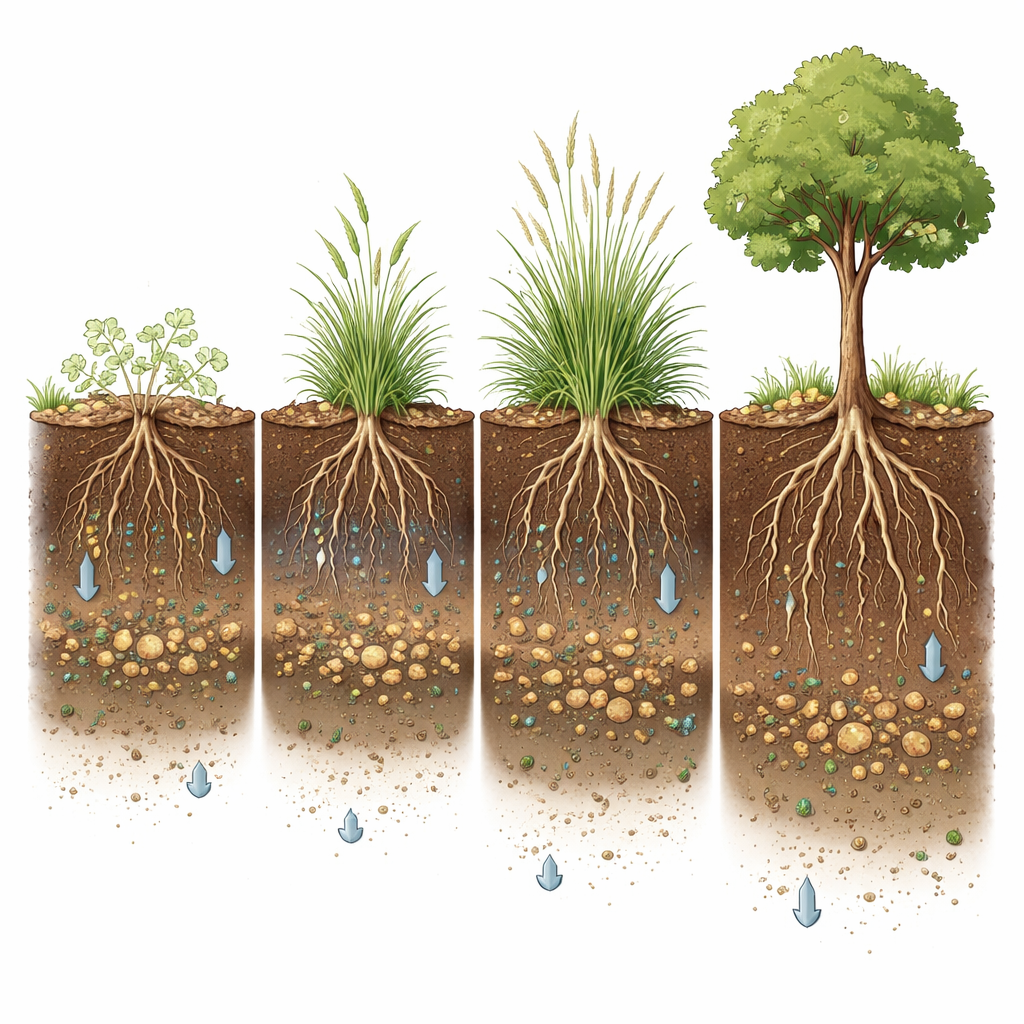
The hidden currency: active carbon in soil particles
To understand what most strongly governed soil recovery, the team used multivariate analyses linking plant traits, soil chemistry, physical structure, and enzyme activity. They found that coarse particulate carbon—the more active, short-lived fraction of soil organic matter—was the single most important driver, explaining over a third of the variation in soil properties. This suggests that rapid cycling of fresh organic matter, supplied by roots and litter, is critical in the early stages of rebuilding degraded sandy soils. The authors describe this as a “trading carbon for nitrogen and phosphorus” strategy: plants invest carbon into the soil, which in turn helps unlock and retain scarce nutrients.
A relay team for riverbank restoration
Taken together, the results show that no single species can do everything, but different pioneers can form an effective relay team for healing damaged riverbanks. Fast-growing Artemisia helps kick-start nutrient cycling with nitrogen-rich litter; Imperata cylindrica rapidly enriches the surface layer with carbon and improves overall soil function; Saccharum arundinaceum boosts the site’s ability to hold water in a low-phosphorus environment; and solitary trees gradually reinforce deeper soil structure through their roots. The authors propose using these natural roles to design “staged” restoration strategies—first establishing high-biomass grasses to rebuild surface soil, while introducing trees to slowly repair deeper layers. Because Imperata cylindrica can be invasive in some regions, the study also underscores the need to balance restoration benefits with careful species management.
Citation: Qin, Y., Yan, T. & Feng, S. Influence of vegetation types on soil physicochemical and biochemical properties in naturally recovering riverbank sand mining sites. Sci Rep 16, 12494 (2026). https://doi.org/10.1038/s41598-026-42081-2
Keywords: riverbank restoration, pioneer vegetation, soil health, sand mining, ecosystem recovery