Clear Sky Science · en
Practices for glucose measurement with a glucometer in a population of diabetic patients. An observational study
Why Checking Blood Sugar the Right Way Matters
For millions of people living with diabetes, a tiny drop of blood from a fingertip guides big health decisions: when to take medicine, what to eat, whether it’s safe to drive or exercise. This study looks closely at how real-world patients actually use their home blood sugar meters (glucometers) and shows that small mistakes in everyday routines are widespread and could quietly undermine treatment. Understanding these missteps can help patients, families, and health professionals make blood sugar checks safer, more accurate, and more useful.
Everyday Life With a Blood Sugar Meter
The researchers observed 212 adults with diabetes during follow-up visits to two hospital diabetes clinics in Poland. All participants had been living with diabetes for at least a year and used only a fingerstick glucometer, not continuous sensors. Nurses collected background information such as age, education, work and financial status, type of diabetes, treatment, and recent long-term blood sugar results (HbA1c). Then, instead of asking people what they usually do, the nurses watched each person perform a blood sugar test step by step, using a 16-point checklist that covered preparation, finger pricking, getting a blood drop, caring for the fingertip afterward, disposing of sharps, and understanding the result. 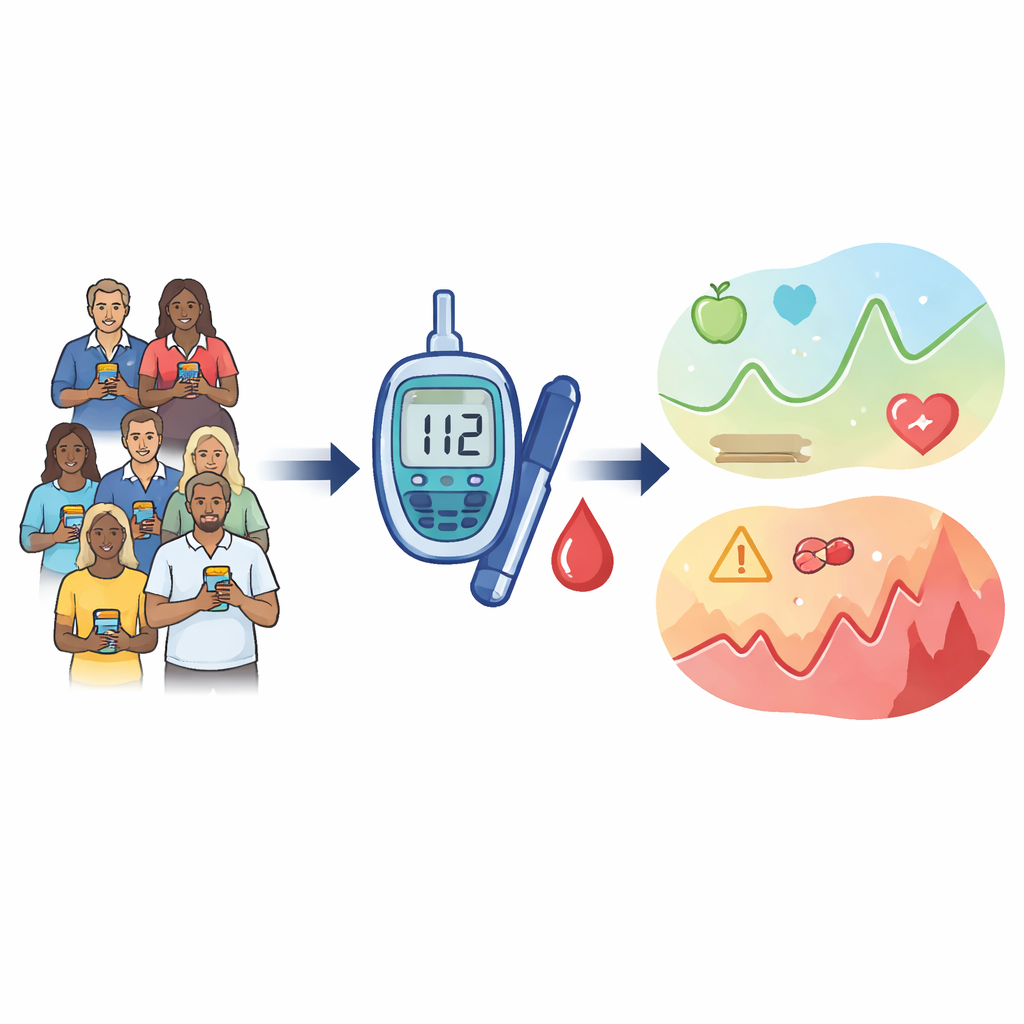
Common Missteps in a Familiar Routine
The results were sobering. On average, patients made nearly four errors per measurement, and only about one in ten followed all key steps correctly. The two most frequent problems were failing to change the lancet in the finger-pricking device (over 80% did not) and not washing hands with warm soapy water before testing (about two-thirds skipped this). Both habits can distort readings: leftover sugar on the fingers may falsely raise results, while moisture or squeezing the finger can make them appear lower than they really are. Many patients also skipped proper drying of hands, did not press gauze or a clean wipe on the puncture site afterward, or handled used lancets in ways that were unsafe for themselves and others. Almost a quarter of participants misinterpreted their glucose reading as normal, too low, or too high, which raises concerns about the treatment decisions they make at home.
Who Is Most at Risk for Errors?
Errors were not random. Older patients tended to make more mistakes and were less likely to perform each step correctly, possibly due to reduced dexterity, vision problems, or memory issues. People with lower education levels, those who were unemployed or on disability, and those who rated their financial situation as poor also made more errors. Patients with type 2 diabetes committed more mistakes than those with type 1, even though they often test less frequently. Living in rural areas was linked to worse technique, hinting at more limited access to structured diabetes education. A key finding was that over half of the participants had never taken part in any formal training on how to use a glucometer; many relied only on the device’s leaflet or informal help from someone they knew. Not surprisingly, those who reported feeling unsure about their own skills performed worst, and better training and lower HbA1c levels were strongly tied to fewer errors.
Why Technique and Teaching Go Hand in Hand
The study highlights that having a modern meter is not enough; what matters is how it is used. Even small practical details—washing and drying hands, replacing lancets, letting a blood drop form naturally, storing and discarding supplies properly—can shift readings enough to spark wrong choices about food, pills, or insulin. The researchers argue that teaching and re-teaching these skills should be considered a core part of diabetes care, not a one-time lesson at diagnosis. They recommend that nurses and other health professionals watch patients perform a test at least once a year, especially older adults, people with fewer resources, or those with type 2 diabetes, and use patients’ own sense of confidence as a quick signal that more help may be needed. 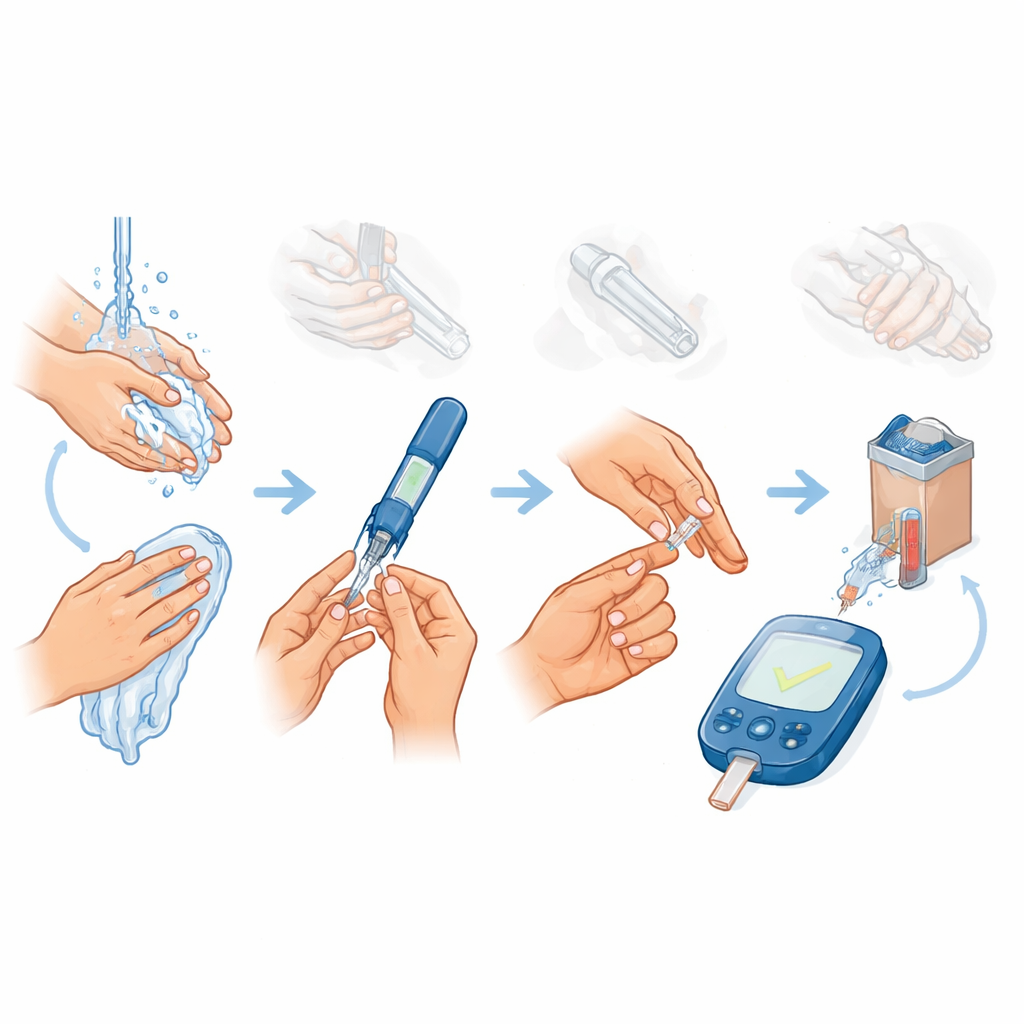
Bringing Better Checks Into Everyday Care
In simple terms, this article shows that many people with diabetes are doing their fingerstick tests in ways that can quietly lead them astray. While meters, strips, and guidelines are widely available, everyday practice often falls short. The authors conclude that regular, hands-on education—focused on basics like clean hands, fresh lancets, safe disposal, and understanding what the numbers mean—can make self-checks more reliable and help patients use their results to stay healthier and avoid complications. In short, better technique can turn each small drop of blood into more trustworthy information and better long-term control.
Citation: Kobos, E., Kostrzewa-Zabłocka, E., Ławnik, A. et al. Practices for glucose measurement with a glucometer in a population of diabetic patients. An observational study. Sci Rep 16, 11918 (2026). https://doi.org/10.1038/s41598-026-42065-2
Keywords: diabetes self-monitoring, glucometer technique, blood glucose testing, patient education, diabetes self-care