Clear Sky Science · en
Evolutionary game model for public health emergency management in universities
Why campus crises matter to everyone
When a disease outbreak hits a university, it does not stay within the campus gates. Students live in dorms, move through crowded classrooms, and travel home on weekends and holidays. A single case can quickly ripple out to families and entire cities. This paper asks a deceptively simple question: how do the choices of universities, students, and online platforms interact to make an outbreak easier or harder to control? Using tools from game theory, the authors simulate these choices and show how rules, incentives, and even student optimism can push a campus toward transparency and safety—or secrecy and greater risk.
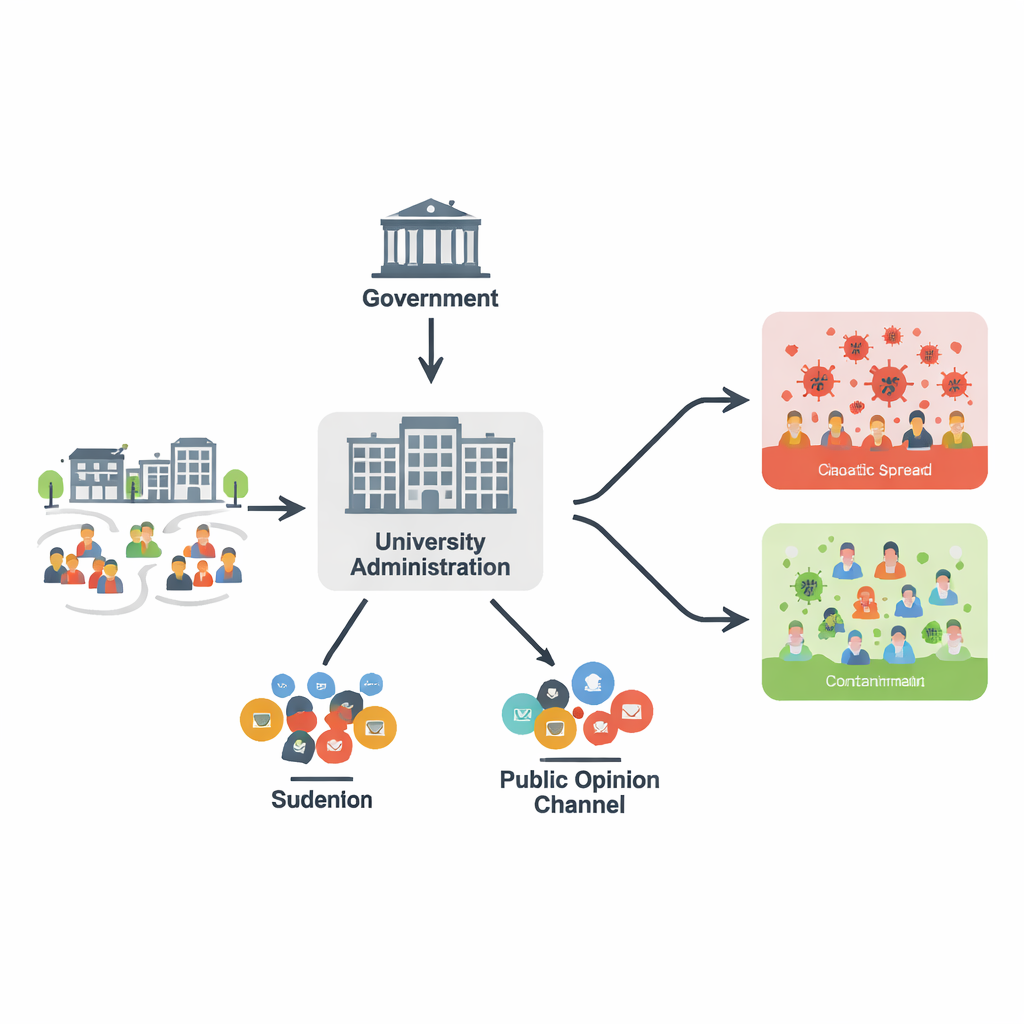
Who is involved in a campus emergency
The study focuses on three main players during a public health emergency: university departments, students, and what the authors call the “public opinion channel” – social media and online forums that spread news and rumors. Universities can either share information about an outbreak quickly or try to hide parts of the truth. Students can decide to report problems and file complaints, or to stay silent. Online platforms can choose to carefully check information before posting or rush to publish unverified stories for attention. All three groups act under pressure, with incomplete information and limited time, which means they rarely behave like perfectly rational calculators.
How the strategy game is modeled
To capture these tangled choices, the authors build a three-way evolutionary game model. Instead of assuming everyone instantly knows the best move, the model lets strategies shift gradually as each side observes what seems to work over time. Costs and benefits are built in: universities face investigation expenses and government penalties if concealment is exposed; students pay effort and possible risk to complain, but may receive rewards; online platforms weigh the cost of fact-checking against the traffic and influence they gain. The model also adds a psychological twist: students often show an “optimistic bias,” underestimating how much a crisis could hurt them personally, which makes them less likely to complain or push for better protection.
What the simulations reveal
Using computer simulations, the researchers explore how different policy choices change behavior. They find that moderate government penalties for mishandling emergencies are surprisingly effective. When penalties are too low, universities are tempted to conceal information. When penalties are extremely high, universities do become more transparent, but media platforms are less willing to verify reports, because the risks of being wrong rise and the payoff from painstaking checks drops. The sweet spot is a middle range of penalties that pushes universities toward timely disclosure while still leaving room for media to act as independent watchdogs. The model also shows that lowering the cost for students to complain makes them more likely to report problems, but at the same time reduces the incentive for online platforms to invest in verification, since students are already providing more direct pressure.
The hidden power of student attitudes
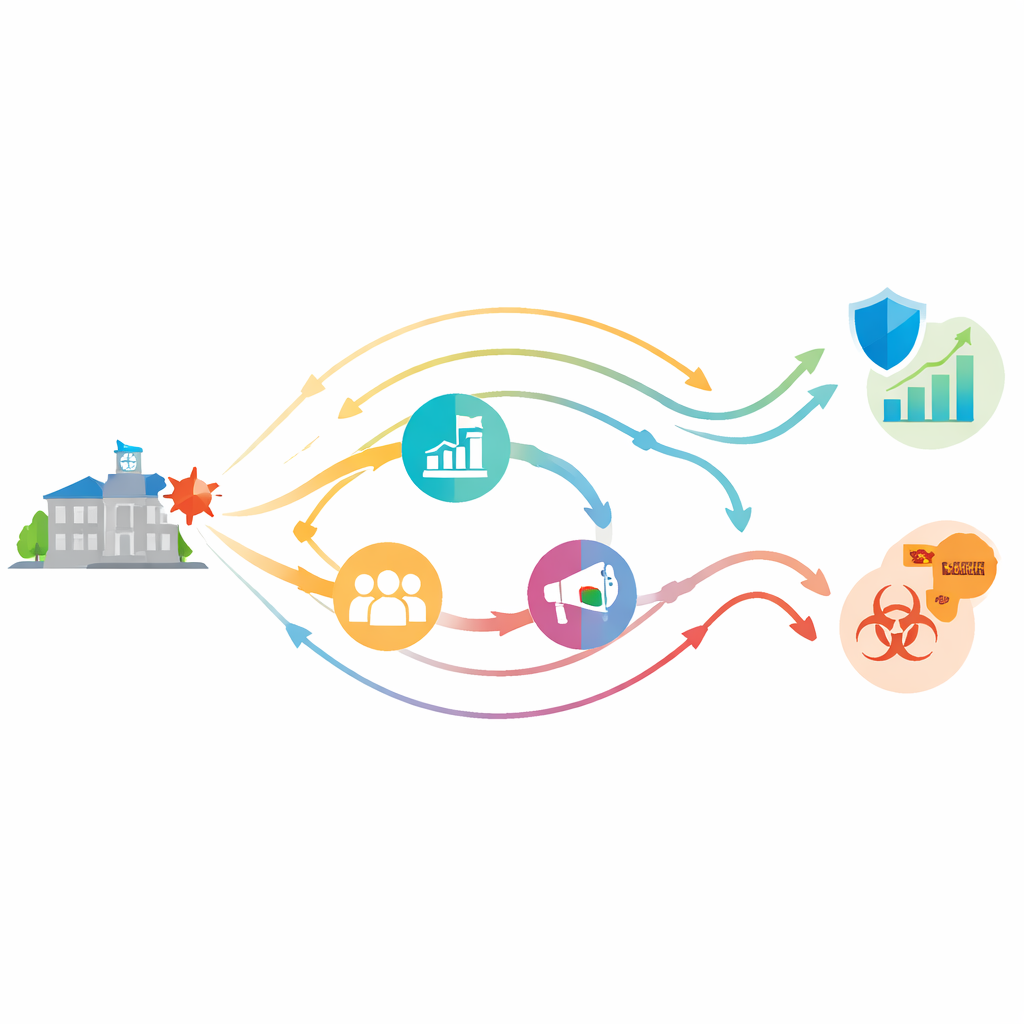
One of the most striking findings concerns student optimism. When students believe that bad things are unlikely to happen to them, they complain less, follow up less, and apply weaker pressure on both universities and online platforms. In the simulations, raising this optimism factor leads to a drop in university openness, a decline in media verification, and fewer student reports—all of which increase the risk that small problems grow into large crises. Conversely, when students are more aware of real risks, all three groups behave more cautiously and responsibly. This suggests that education campaigns that make risks feel real and immediate can change the entire decision landscape, not just student attitudes.
What this means for safer campuses
Overall, the study argues that campus safety during a health crisis is not just about medical supplies or quarantine rooms. It is equally about rules, incentives, and beliefs that shape how people share—or hide—information. The authors conclude that governments should use moderate, well-calibrated penalties; universities should expand low-cost, easy-to-use complaint channels and reward honest reporting; and both should work to reduce unrealistic student optimism through clear education. Online platforms should be encouraged to keep playing a careful watchdog role rather than being scared into passivity. Together, these measures can steer the “game” toward openness and cooperation, making universities stronger buffers against the next public health emergency.
Citation: Wei, J., Zhou, J., Zheng, L. et al. Evolutionary game model for public health emergency management in universities. Sci Rep 16, 12516 (2026). https://doi.org/10.1038/s41598-026-42052-7
Keywords: university crisis management, public health emergencies, social media and outbreaks, student risk perception, evolutionary game modeling