Clear Sky Science · en
LaED: a novel lightweight, edge-aware and explainable deep learning model for privacy-preserving facial attendance tracking in resource-constrained educational environments
Why smarter roll call matters
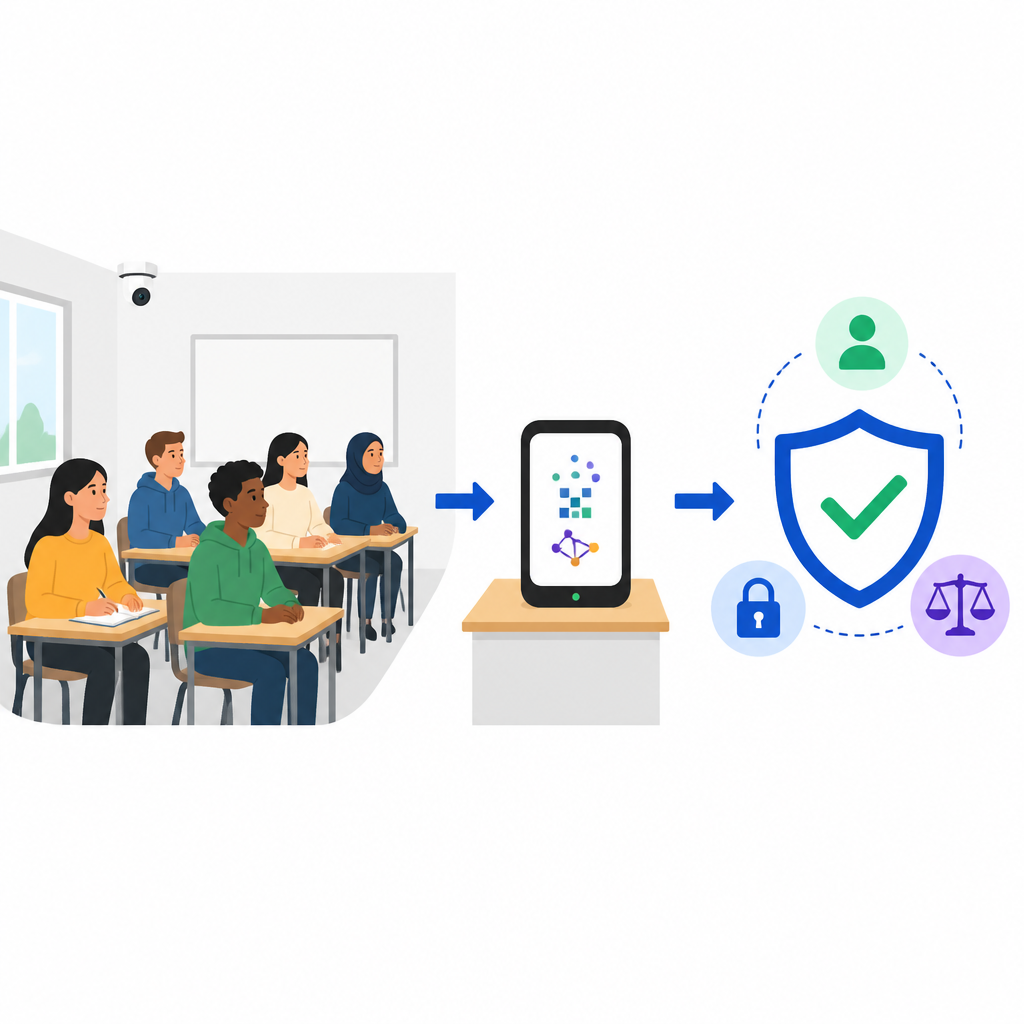
Taking attendance may seem routine, but in many schools it is slowly being handed over to facial recognition. That shift promises fewer errors and less paperwork, yet it also raises hard questions about student privacy, digital safety, and fairness. This study introduces LaED, a new classroom attendance system that tries to keep the convenience of automated face recognition while reducing the risks that have led to public backlash and regulatory action in several countries.
From simple face scanners to safer classroom tools
Early classroom systems treated attendance as a pure pattern-matching task: find a face, match it to a stored image, and mark the student present. LaED starts from a different premise. It is built around real classrooms, where lighting changes, students move around, and not everyone has agreed to be scanned. The authors argue that any serious solution must handle five issues at once: resisting fake faces, refusing unknown people, treating demographic groups fairly, protecting sensitive data, and leaving an auditable trail of decisions. LaED is designed as a three-layer pipeline that addresses each of these concerns instead of chasing accuracy alone.
Seeing who is really there, not just what the camera shows
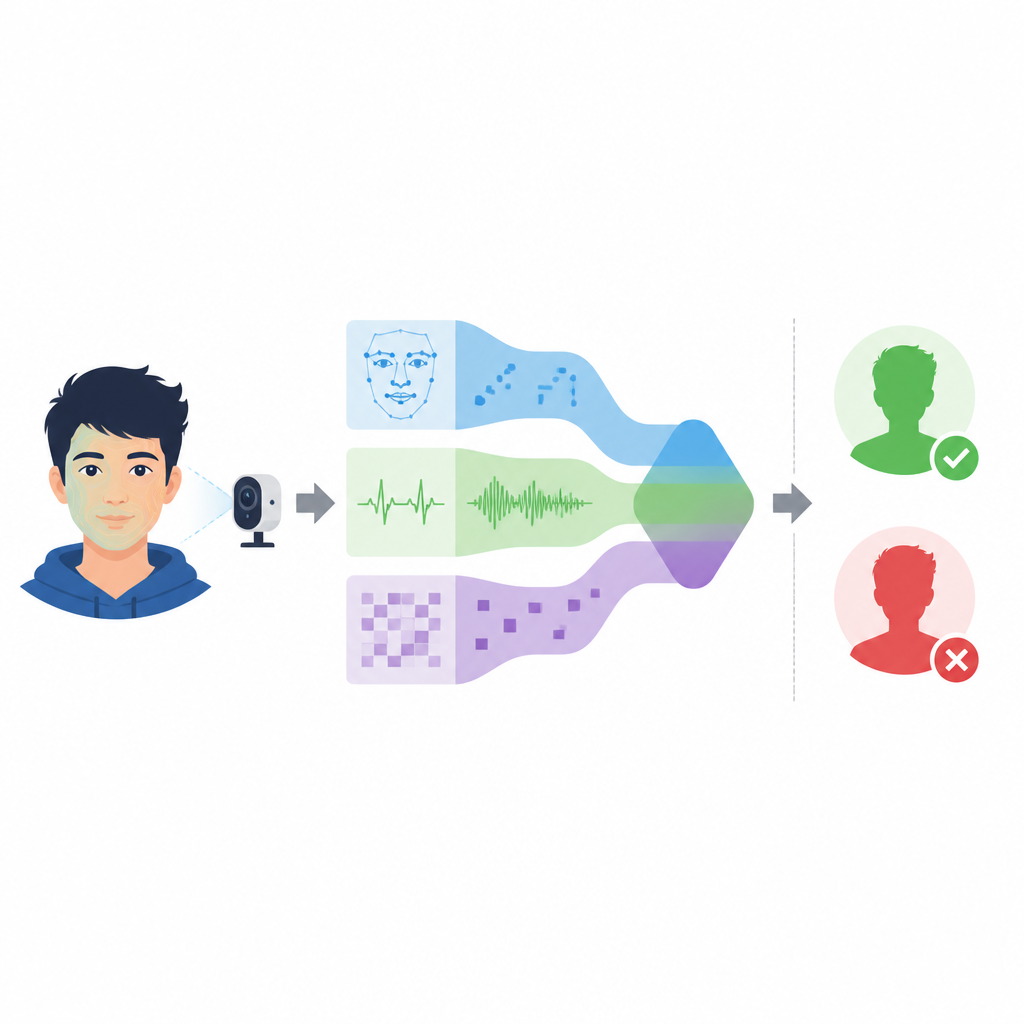
The first layer, called the perception layer, focuses on checking whether an observed face actually belongs to a live person in front of the camera. It uses tiny color changes in the skin that follow the heartbeat and subtle timing clues in video frames to spot printed photos, replayed videos, 3D masks, or deepfake clips. Inputs that appear fake, low quality, or heavily manipulated are discarded before any identity decision is made. This extra screening step sharply reduces the chance that a student can cheat the system with a phone screen or that an outsider can slip through using synthetic media.
Recognizing students while rejecting strangers
Once an image passes these checks, LaED’s identity layer extracts a compact facial representation using a small transformer network tuned for low-cost hardware such as a Raspberry Pi or Jetson Nano. Instead of forcing every face into a known slot, the system uses an “open set” strategy: if the similarity to all enrolled students falls below a threshold, the person is labeled as unknown and not added to the attendance list. During training, the model also nudges its internal representation so that age, gender, and skin-tone groups cluster more evenly, which reduces performance gaps that have plagued many commercial systems, especially for darker-skinned and younger students.
Keeping data local and decisions accountable
The final trust layer is responsible for what happens after a decision is made. LaED keeps biometric data on school devices rather than in a central cloud and relies on federated learning, in which only scrambled model updates are shared to improve performance across sites. Additional mathematical noise further reduces the risk that any student’s face could be reconstructed from those updates. Each attendance event is written to a tamper-evident log that records timing, confidence scores, and consent status. This makes it possible for schools and regulators to review how the system behaved and to honor requests to delete past records.
How well it performs in the real world
To test LaED, the researchers combined several public datasets that include spoof attacks, deepfakes, and diverse faces with a smaller, consent-based classroom collection. LaED reached around 98 percent recognition accuracy while keeping error rates for fake presentations below 2 percent and maintaining very small performance gaps across demographic groups. It also ran fast enough for real-time use on modest edge devices, using only a few watts of power. When parts of the system were removed in ablation tests, spoof attacks, unfair treatment, or privacy risks quickly increased, underscoring the need for the full layered design.
A cautious path toward responsible attendance tracking
For lay readers, the key message is that automated attendance does not have to be an all-or-nothing trade between convenience and civil rights. LaED shows that by combining checks for fake media, careful handling of unknown faces, fairness-aware training, local data processing, and detailed logging, it is possible to get reliable roll call information while better respecting students’ privacy and dignity. The authors stress, however, that technology alone is not enough: lasting trust will also depend on clear consent, strong oversight, and careful adaptation to local school policies and laws.
Citation: Abiodun, E.O., Abiodun, O.I., Alawida, M. et al. LaED: a novel lightweight, edge-aware and explainable deep learning model for privacy-preserving facial attendance tracking in resource-constrained educational environments. Sci Rep 16, 15215 (2026). https://doi.org/10.1038/s41598-026-42051-8
Keywords: facial recognition in education, privacy preserving AI, classroom attendance system, deepfake and spoof detection, fair and explainable biometrics