Clear Sky Science · en
Molar distalization and stability following maxillary anterior teeth alignment with class II elastics and a 10-day aligner protocol
Why this matters for your smile
Clear plastic aligners like Invisalign have become a popular alternative to metal braces, promising straighter teeth with less fuss and more comfort. But how closely do these computer‑designed treatment plans match what actually happens in the mouth, especially in adults who need their back teeth moved to make room for crowded front teeth? This study followed a group of adults treated with clear aligners, a 10‑day tray‑change schedule, and elastic bands to find out how reliable the planned tooth movements really are, and how stable the back teeth remain over time.
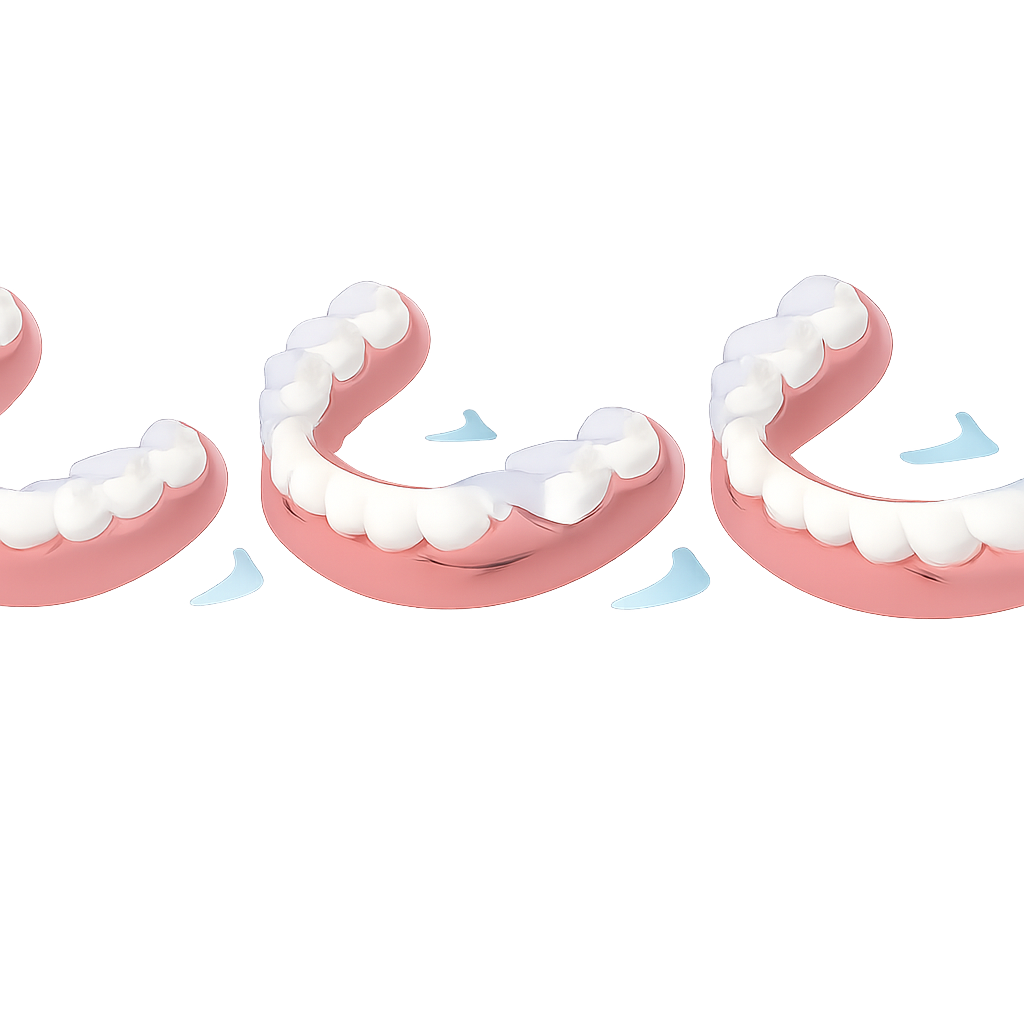
Moving back teeth to make room
The researchers focused on a common strategy in adult orthodontics: gently shifting the upper molars (back teeth) toward the rear of the mouth to create space so that the front teeth can be straightened without extractions. Thirty adults, all finished growing, received Invisalign treatment using a standard sequence: first, the second molars were moved backward, then the first molars followed, and only afterward were the front teeth aligned and pulled into the newly created space. Patients wore their aligners nearly full‑time, changed to a new set every 10 days, and used small rubber bands connecting the upper and lower teeth to help guide the bite.
From digital plan to real teeth
Before treatment, after the molars had been moved back, and again near the end of treatment, the team scanned each patient’s upper teeth with an intra‑oral 3D scanner. They then compared these real‑world models to the detailed computer plan produced by the Invisalign software. Using stable landmarks on the roof of the mouth as a reference, they measured how far each molar actually traveled backward, and how closely the front teeth followed the predicted movements in six directions: side‑to‑side, up‑and‑down, front‑to‑back, and three kinds of rotation or tipping.
How accurate were the aligners?
In the first phase—right after the molars were pushed backward but before the front teeth were aligned—the aligners performed fairly well. On average, the first and second upper molars achieved about three‑quarters of the backward shift the software had predicted. That confirms earlier reports that clear aligners can be reasonably effective at moving molars in adults, typically by a few millimeters. However, when the researchers looked at the situation again near the end of treatment, after the front teeth had been straightened and retracted, the picture changed. The effective accuracy of molar movement dropped to just under half of the planned amount, because some of the space that had been gained was lost as the molars drifted forward again.
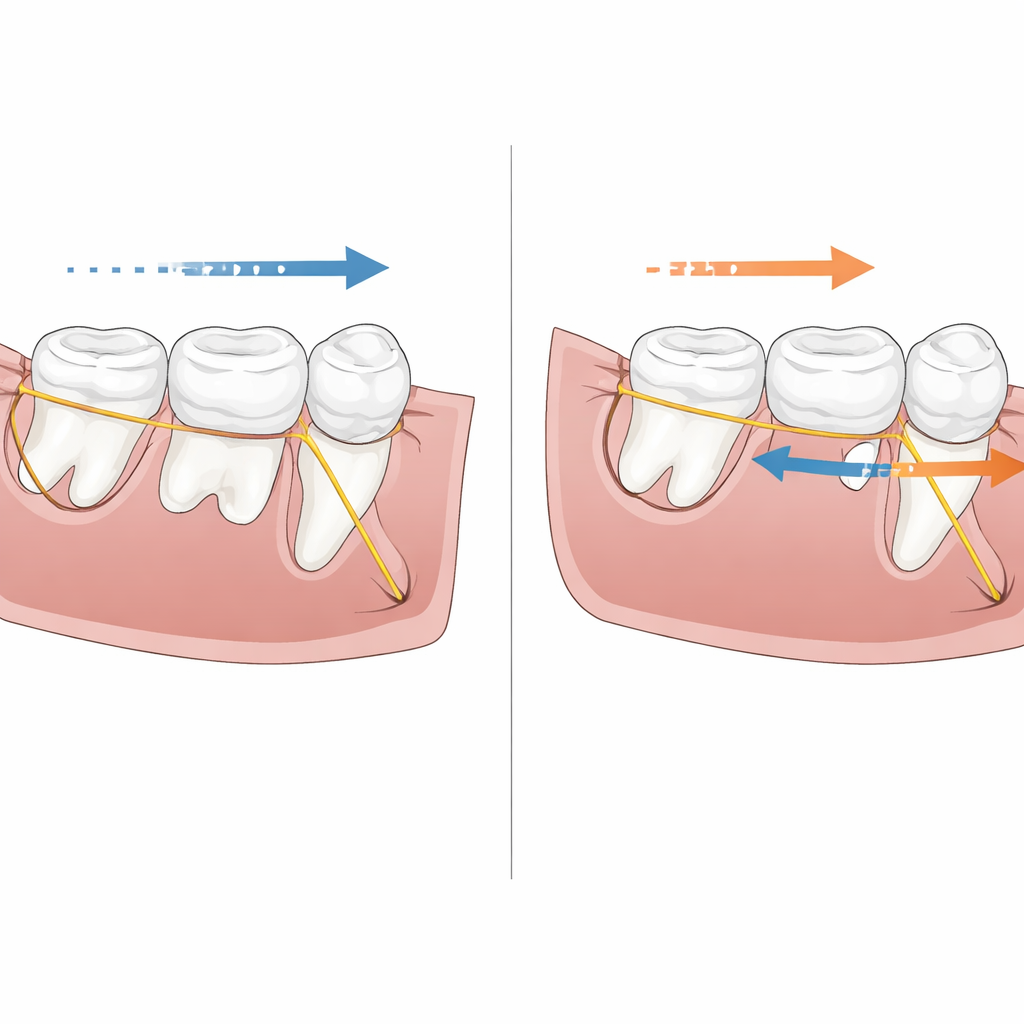
Hidden trade‑offs and weak spots
This forward drift, known to orthodontists as “anchorage loss,” turned out to be substantial: on average, about one‑third of the space originally created by moving the molars backward disappeared as treatment progressed. The more the molars were pushed back, the more they tended to slide forward later, showing a strong link between how ambitious the plan was and how much ground was lost. The front teeth also did not follow the digital script perfectly. Overall, their alignment accuracy was around 55 percent. Movements that pushed the front teeth outward and slightly forward were achieved more reliably than those that pulled them inward toward the tongue or moved them up and down. Precise inward correction of the upper front teeth—important for reducing protrusion and deep overbites—was particularly difficult to accomplish with a single series of aligners.
What this means for patients and clinicians
For adults considering clear aligners, this study offers a nuanced message. The system can reliably move upper molars backward and improve crowded front teeth, but the final result may fall short of the ideal picture shown in the software. Some of the space created at the back is naturally “spent” as the molars slide forward again while the front teeth are being corrected, and delicate inward and vertical adjustments of the front teeth often need extra refinements and time. For clinicians, the findings highlight the need to anticipate anchorage loss, build intentional overcorrections into the digital plan, and be ready for additional aligner sets to fine‑tune the front teeth. For patients, it underscores that clear aligner treatment is effective but not magical: achieving a precise, stable smile may take longer and require more adjustment than the initial virtual plan suggests.
Citation: Saif, B.S., Tang, Y., Bu, Wq. et al. Molar distalization and stability following maxillary anterior teeth alignment with class II elastics and a 10-day aligner protocol. Sci Rep 16, 11896 (2026). https://doi.org/10.1038/s41598-026-42045-6
Keywords: clear aligners, Invisalign, molar distalization, orthodontic anchorage, anterior teeth alignment