Clear Sky Science · en
Forensic examination to determine the correlation between fingerprint patterns and blood groups in the population of Assam
Why Fingerprints and Blood Types Matter
When detectives investigate a crime, they rely on every tiny clue a body leaves behind. Fingerprints and blood are two of the most familiar traces, but they are usually treated as separate pieces of evidence. This study, carried out in Assam in northeastern India, asks a simple but intriguing question: do the patterns at our fingertips tend to go along with particular blood groups? If so, that quiet link in our biology might someday help investigators in situations where modern DNA testing is too slow, too costly, or simply impossible.
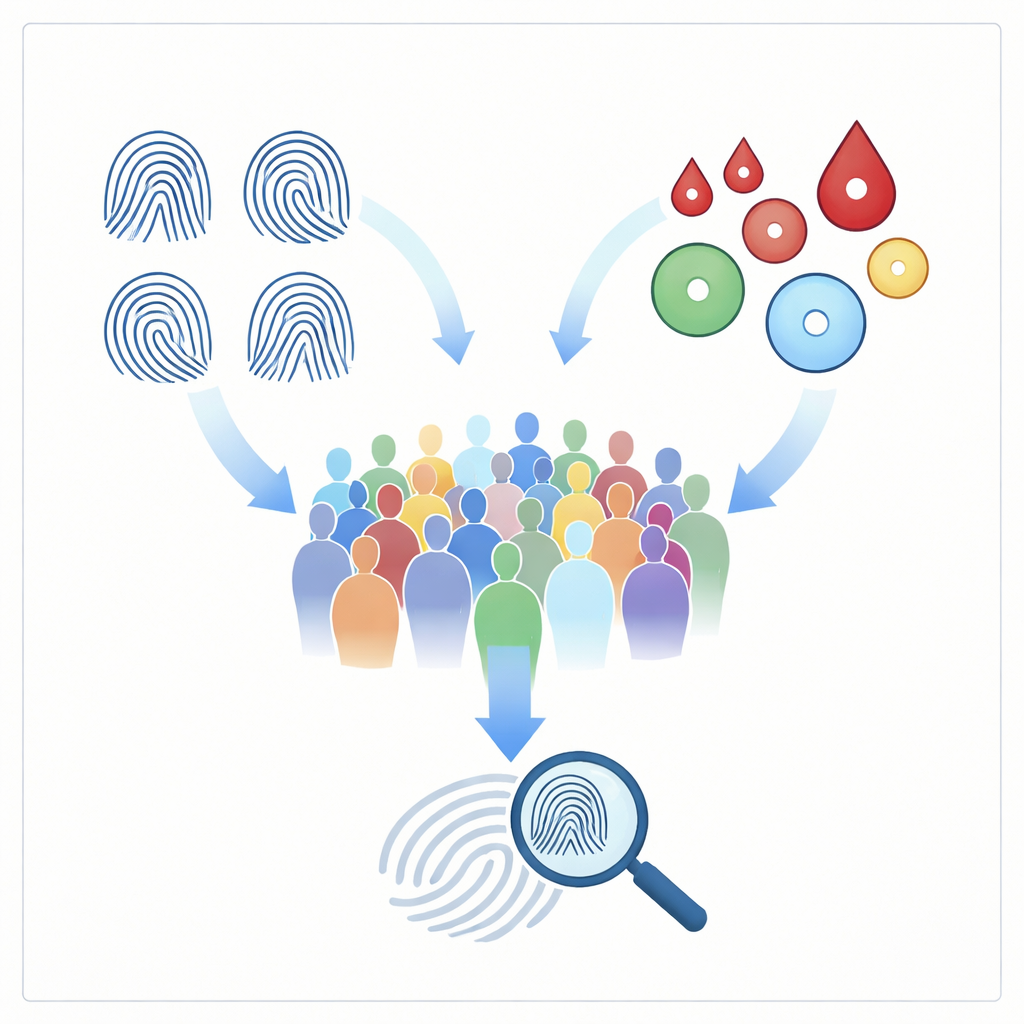
Looking for Hidden Patterns in People
The researchers focused on two stable traits that stay with a person for life: fingerprint patterns and ABO blood groups (A, B, AB, or O, plus the Rh factor, positive or negative). Fingerprints fall into a few basic shapes, often described as loops, whorls, arches, and a handful of rarer mixed forms. Blood groups are set by genes that control tiny markers on red blood cells. Because both fingerprints and blood groups have genetic roots, the team wondered whether certain fingertip patterns would be more common in people with specific blood types.
How the Study Was Carried Out
The team examined 1,040 healthy volunteers between 18 and 28 years old in and around Guwahati, Assam. To get clear prints, each person pressed inked fingers onto paper after washing and drying their hands. A magnifying device was then used to classify each print as a loop, whorl, arch, or accidental pattern. Blood samples were taken with a simple finger prick and tested using standard kits to determine each person’s ABO and Rh blood group. The researchers then used statistical methods to see whether the spread of fingerprint patterns across the sample looked random or showed a consistent link with blood types.
What the Fingertips Revealed
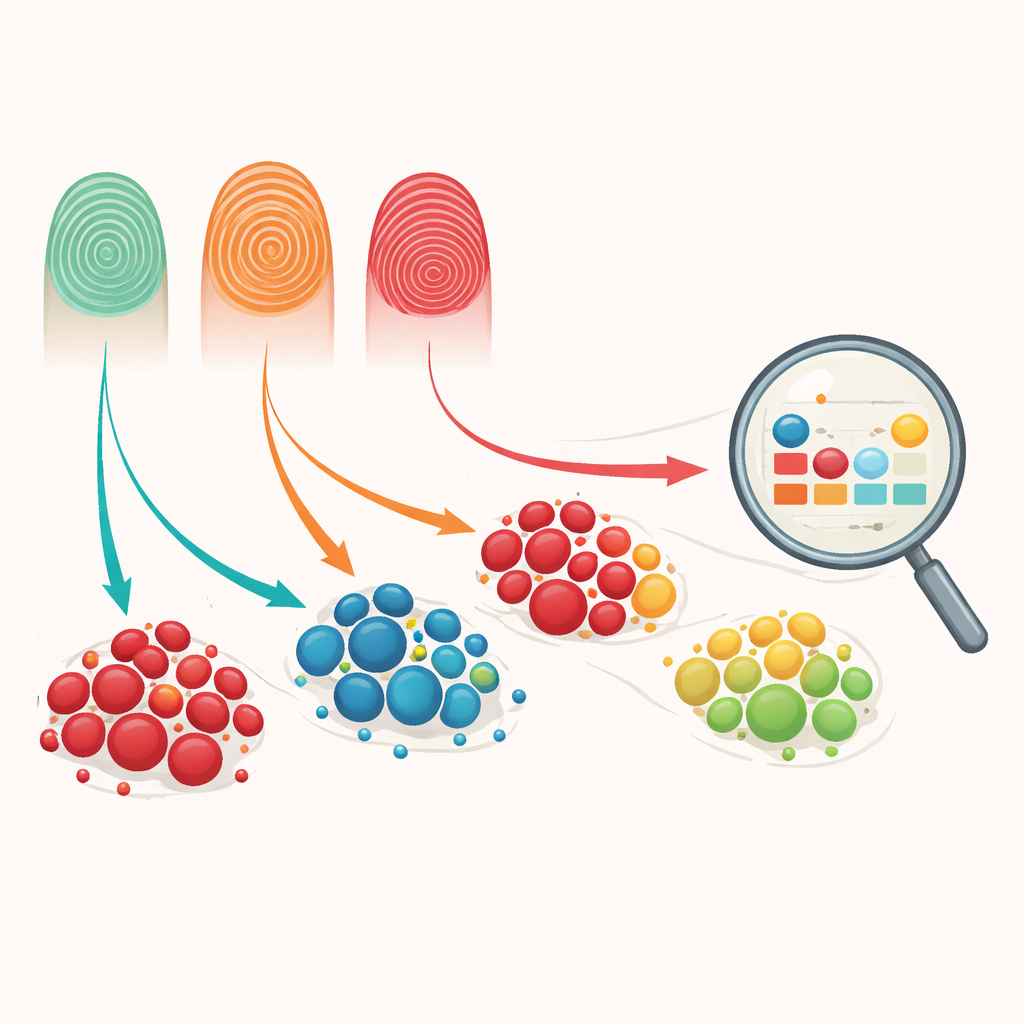
Across the whole group, one fingerprint style clearly dominated: loops made up roughly three-fifths of all patterns recorded, while whorls accounted for about one-third. Arches and accidental patterns were rare. Blood group O was the most frequent type, followed by B, A, and then AB, and most people were Rh positive. When the team compared the two sets of information, a picture emerged. Loops were common across all blood groups, especially among people with O positive blood. Whorls, by contrast, appeared relatively more often in people with the uncommon AB negative blood type. When all patterns and blood groups were considered together, the statistical test suggested that the two traits were linked in a non-random way.
What This Could Mean for Forensic Work
These findings suggest that fingerprint patterns and blood types do not line up purely by chance in this Assamese population. Instead, they show a modest but real tendency to occur together in particular combinations, hinting at shared influences in early development or genetics. In practice, this does not mean that a fingerprint can reveal a person’s exact blood group, or that blood alone can predict someone’s fingertip pattern. But in mass disasters, remote regions, or crime scenes where DNA has degraded, knowing that certain fingerprint shapes are more likely to go with particular blood groups could help investigators narrow options or cross-check other clues more quickly.
A Useful Clue, Not a Crystal Ball
In simple terms, the study shows that in this group of young adults in Assam, loops dominate the fingerprint landscape, while specific blood groups, especially AB negative, tend to carry more whorls. The link is strong enough to show up in statistics but not strong enough to predict any one person’s identity. The authors stress that this tool should be seen as an extra hint alongside fingerprints, DNA, and other evidence, not a replacement for them. With larger and more diverse studies, such quiet connections between the ridges on our fingers and the blood in our veins may add a small but valuable layer of support to both forensic investigations and future medical research.
Citation: Bhan, S., Singh, T.S., Sandhu, S. et al. Forensic examination to determine the correlation between fingerprint patterns and blood groups in the population of Assam. Sci Rep 16, 10845 (2026). https://doi.org/10.1038/s41598-026-42044-7
Keywords: fingerprints, blood groups, forensic identification, biometrics, Assam population