Clear Sky Science · en
Optimization of copper recovery from oxide-sulfide ores through gravity separation and flotation techniques
Why this copper story matters
Copper is woven into nearly everything that powers modern life, from electric cars and smartphones to power grids and data centers. Yet many of the easiest copper deposits have already been mined, forcing industry to turn to lower-grade, more complicated ores that are harder and more costly to process. This study explores how to extract copper more efficiently from one such difficult deposit in Iran by smartly combining two classic separation methods and fine‑tuning the chemistry that makes copper particles float.
A tough rock with tiny valuable specks
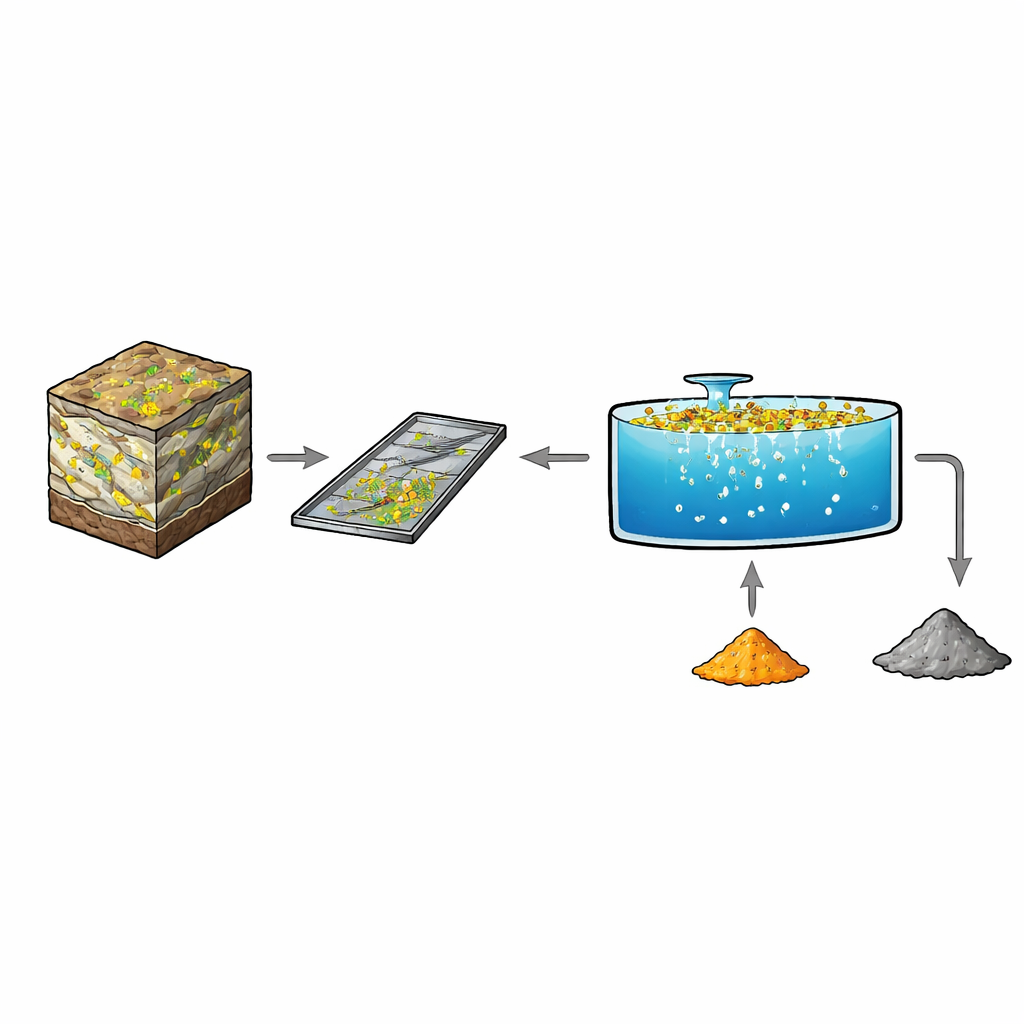
The researchers worked on drill‑core samples from the Ali Goodarz copper area, containing only about half a percent copper overall. Under the microscope, they found a complicated mixture: copper occurred both as a sulfide mineral (chalcopyrite) and as an oxide mineral (malachite), all tightly intergrown with clays and iron oxides. The copper grains were very fine, mostly below 74 micrometers, which means they easily behave like mud in water. This combination of fine size, sticky clays, and mixed mineral types makes it hard to separate copper from the surrounding rock using standard methods.
Looking inside the ore grain by grain
To understand how best to treat this ore, the team first mapped its mineral makeup in detail. They used X‑ray diffraction and X‑ray fluorescence to identify major minerals like quartz, feldspars, carbonates, and several types of clay, and to measure overall chemistry. Atomic absorption tests showed that copper was low in grade and only partly oxidized, while gold was present only in tiny traces. High‑resolution electron microscopes and element maps revealed how copper minerals were attached to iron oxides and clays, and confirmed that most chalcopyrite grains were already free at the target grinding size. This mineral‑by‑mineral view guided the choice of processing steps and operating conditions.
Letting gravity do the first sorting
Because some particles were much denser than others, the researchers first tried a wet shaking table, a device that uses a sloping, vibrating surface and flowing water to sort grains by density. They tested different particle size ranges and found that relatively fine material (down to about 120 micrometers) gave the best compromise between copper grade and recovery. At this stage, gravity separation alone could recover about two‑thirds of the copper into a modestly enriched product, but the copper content was still too low for final use. The gravity step worked better as a pre‑concentration stage, removing obvious waste and feeding a smaller, richer stream to the next process.
Making copper grains float on bubbles
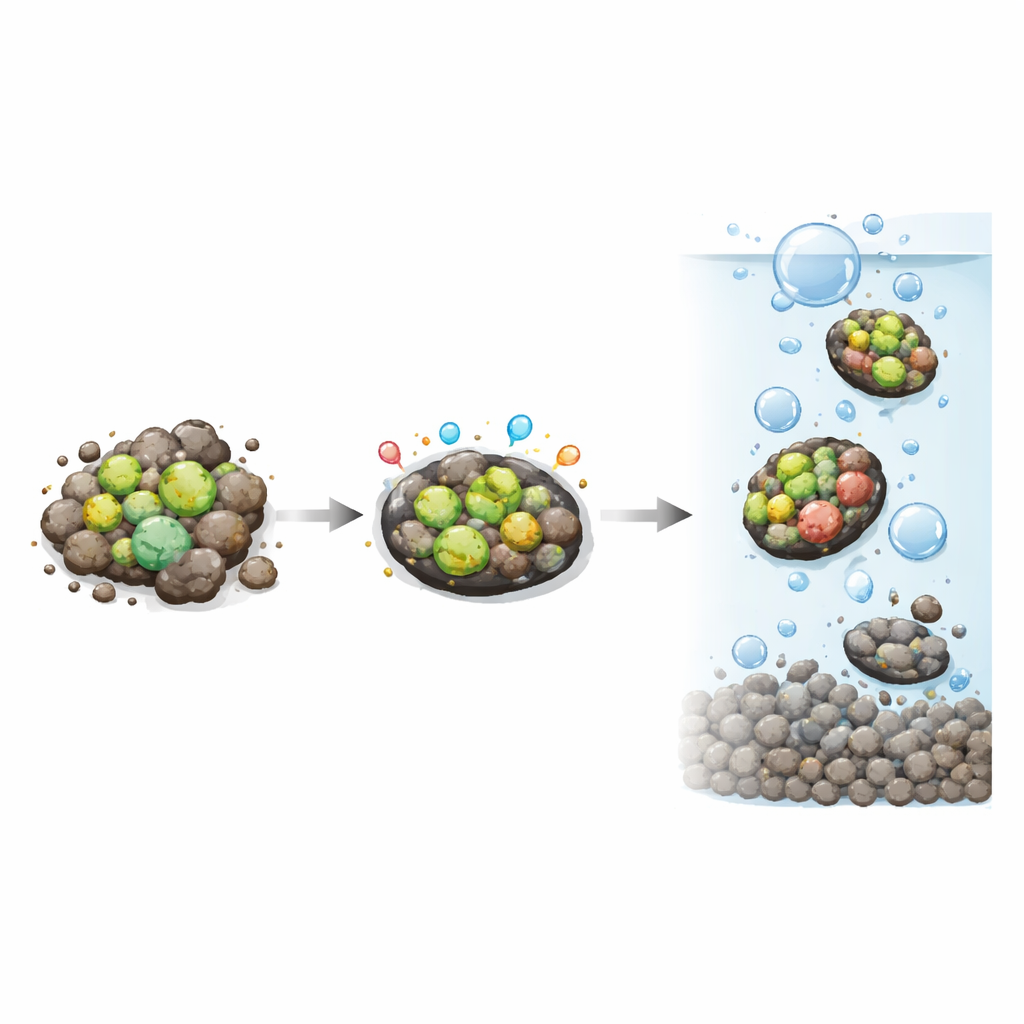
The second stage relied on flotation, where chemicals make copper‑bearing particles water‑repellent so they can attach to air bubbles and rise, while waste minerals sink. Oxide copper minerals like malachite normally do not respond well to the usual collectors, so the team first “sulfidized” their surfaces using sodium hydrosulfide. This treatment coats oxide grains with a thin sulfide‑like layer that the standard xanthate collectors can grab. Through dozens of tests, the researchers adjusted pulp acidity (pH), the mix and amount of collectors, and the dose and type of sulfidizing agent. They showed that a mildly alkaline pH of 9.5, a relatively high combined collector dose, and sodium hydrosulfide instead of sodium sulfide produced a stronger, more controllable response, giving high copper grades and recoveries.
Fine‑tuning for cleaner metal
Once the best rough conditions were known, the team pushed further. Increasing the total collector concentration steadily boosted recovery up to 500 grams per tonne of ore, beyond which returns would likely flatten or bring too much unwanted material. For sulfidation, a sodium hydrosulfide dose of 500 grams per tonne turned out to be a sweet spot: too little left oxide copper unactivated, while too much started to interfere with flotation by over‑coating surfaces. Under these optimized conditions, direct flotation achieved a copper grade of about 22.5% with more than 94% of the copper recovered into the rougher concentrate.
Combining methods for better use of low‑grade ore
By first using the shaking table to remove easy waste and then applying carefully tuned sulfidation–flotation, the researchers produced a final cleanup ("cleaner") concentrate with around 27% copper while still retaining about 70% of the metal initially in the ore. For such a low‑grade, clay‑rich, mixed oxide–sulfide deposit, this is a strong outcome. In plain terms, the study shows that even challenging copper ores can be turned into useful feed for smelters if we understand their microscopic structure and thoughtfully combine physical sorting with tailored chemistry. As high‑grade deposits dwindle, strategies like this will be key to keeping copper supplies flowing without dramatically raising costs or environmental impacts.
Citation: Sobouti, A., Rezai, B. Optimization of copper recovery from oxide-sulfide ores through gravity separation and flotation techniques. Sci Rep 16, 11970 (2026). https://doi.org/10.1038/s41598-026-42015-y
Keywords: copper ore processing, flotation, gravity separation, sulfidation, low-grade ores