Clear Sky Science · en
Effects of biochar amendment on rhizosphere soil available nitrogen and crop growth
Turning Crop Waste into a Soil Booster
Farmers around the world struggle with a basic problem: much of the nitrogen fertilizer they buy never reaches their crops. It leaks into the air and water, wasting money and harming the environment. This study explores a promising way to hold on to more of that nitrogen by turning farm leftovers like corn stalks and grapevine trimmings into biochar—a charcoal-like material—and mixing it into soil used to grow tobacco. The findings suggest that the right kind of biochar blend can help soil feed plants more steadily, leading to stronger growth.
How Burned Plant Matter Becomes a Soil Helper
Biochar is made by heating plant waste at high temperatures with little or no oxygen, producing a black, porous material. Because it is full of tiny holes and has a large surface area, biochar can act like a sponge and a shelter in soil, catching nutrients and giving microbes a place to live. The researchers focused on two types: biochar from corn stalks and from grapevine branches. They wanted to know whether each type, and mixtures of the two, would change how nitrogen moves and is stored in the soil around tobacco roots, and whether those changes would translate into healthier plants.
Testing Biochar Mixes in Potted Tobacco
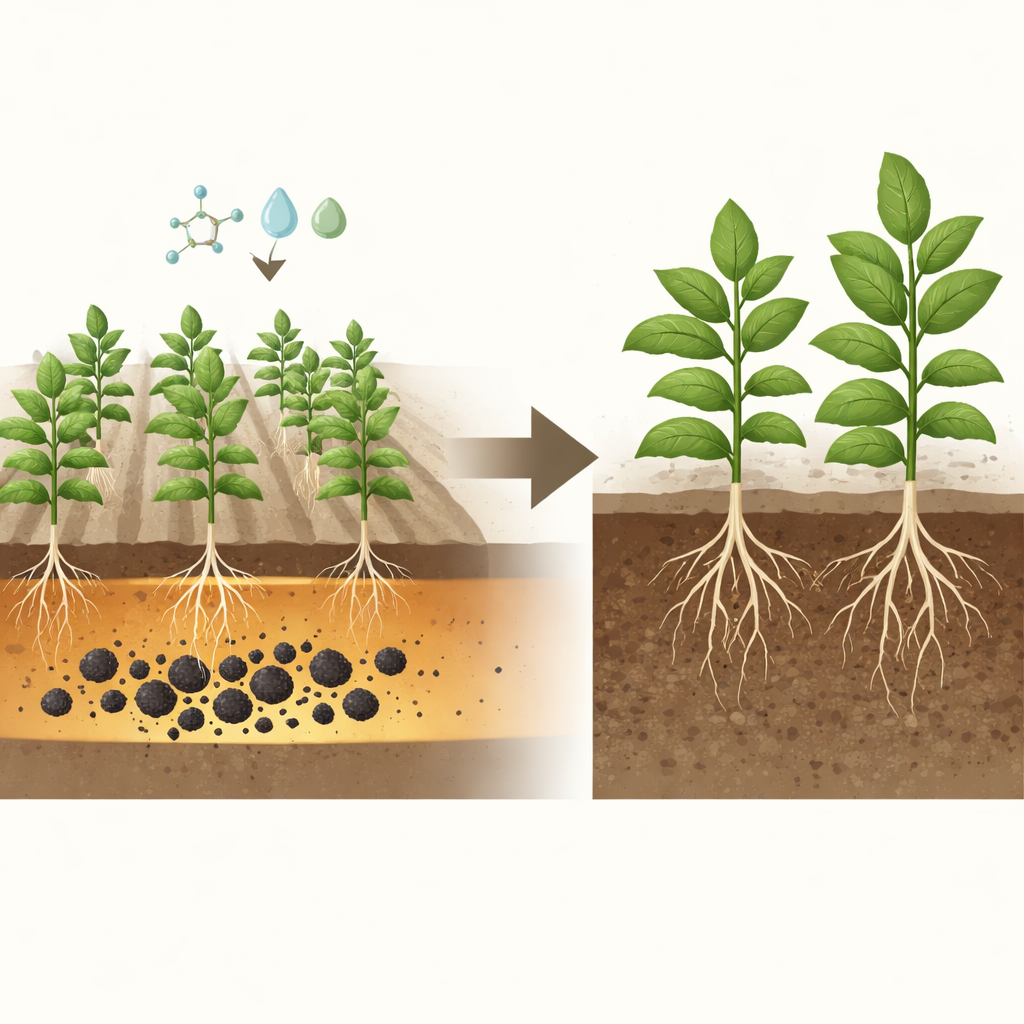
The team carried out a pot experiment in southwestern China using a common local soil and a popular tobacco variety. Each pot received either no biochar or a 2% addition of corn biochar, grapevine biochar, or one of three blends of the two. All pots were fertilized in the same way, mimicking real farm practice. Over the season, at three key stages of plant growth, the scientists sampled two zones: the rhizosphere soil clinging to the roots, and the bulk soil farther away. They measured several forms of nitrogen—such as total nitrogen, plant-ready ammonium and nitrate, nitrogen held in microbes, and dissolved organic nitrogen—as well as the activity of soil enzymes that drive nitrogen transformations.
More Available Nitrogen Where Roots Need It Most
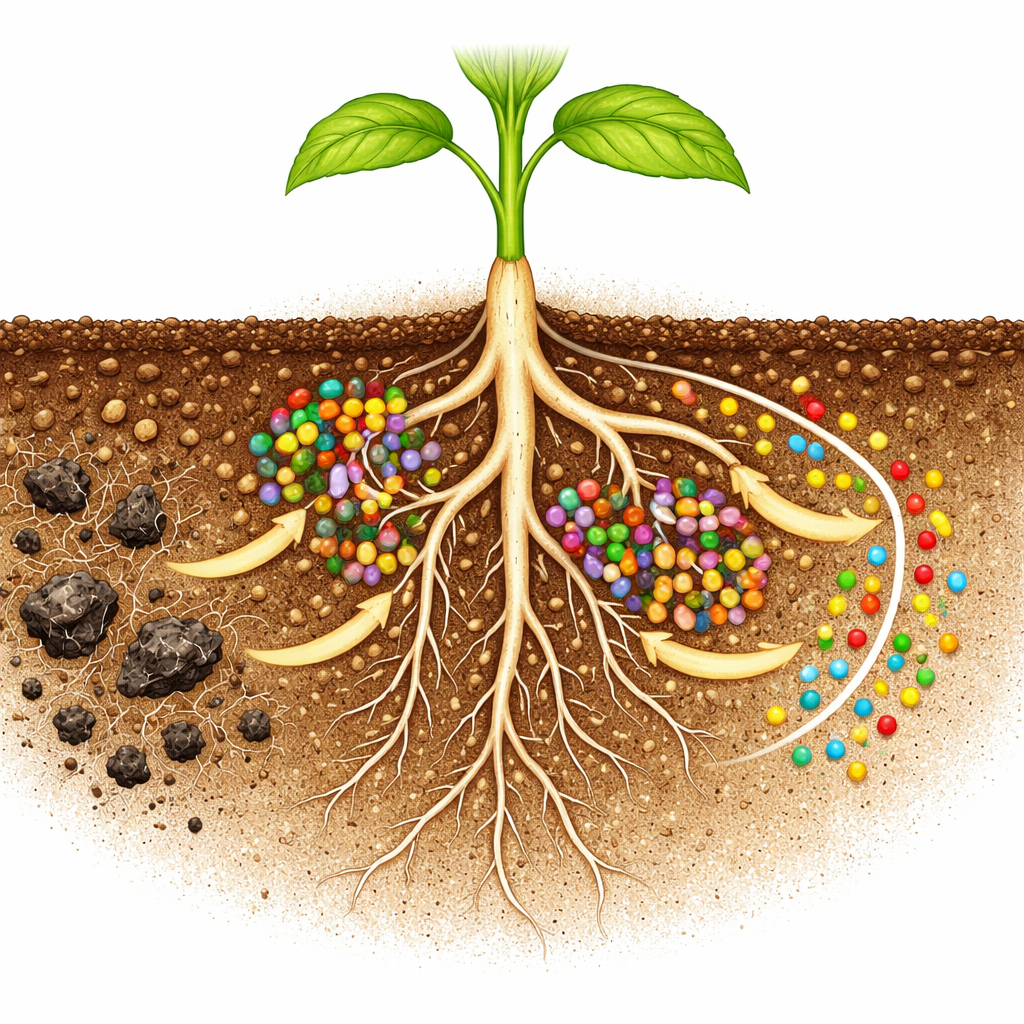
Adding biochar clearly changed the nitrogen picture in the soil. In pots with biochar, especially those with a one-to-one mix of corn and grapevine biochar, the soil near the roots held more total nitrogen and more plant-ready ammonium and nitrate than soil without biochar. Microbial nitrogen and dissolved organic nitrogen also rose, indicating a livelier and more nutrient-rich root zone. Over time, the readily usable ammonium and nitrate still declined as the crop took them up and some nitrogen was lost, but they started from higher levels and remained more available in biochar-treated soils. In the soil farther from roots, biochar increased total nitrogen but seemed to support a different balance, with dissolved organic forms converting into nitrate to help maintain the supply.
Soil Life, Enzymes, and Bigger Tobacco Plants
Biochar did more than simply hold extra nitrogen; it also appeared to speed up the natural machinery that cycles nitrogen in soil. Pots with biochar showed higher activity of nitrogenase, which helps bring new nitrogen into the system, as well as urease and nitrate reductase, which help convert nitrogen between different forms. These boosts were strongest in the rhizosphere and were again most pronounced in the balanced corn–grapevine biochar mixture. As a result, tobacco plants grown with biochar, particularly this blend, had higher leaf nitrogen content and accumulated much more dry matter both above and below ground. The roots grew larger and the shoots heavier, suggesting that the plants could access and use nitrogen more efficiently.
What This Means for Farmers and the Environment
This study shows that not all biochars are created equal, but that a carefully chosen combination of them can make soil work better for crops. By enriching the narrow zone around roots with more usable nitrogen and more active microbes, a one-to-one mix of corn and grapevine biochar helped tobacco plants grow bigger without adding extra fertilizer. For farmers, such tailored biochar blends made from local crop residues could improve yields and reduce nitrogen waste. For the environment, better nitrogen use means less fertilizer running off into waterways or escaping into the atmosphere. Future field trials will be needed, but the results point toward a practical way to turn agricultural waste into a tool for cleaner and more efficient crop production.
Citation: Jiang, H., Zhu, M., Li, J. et al. Effects of biochar amendment on rhizosphere soil available nitrogen and crop growth. Sci Rep 16, 11917 (2026). https://doi.org/10.1038/s41598-026-42014-z
Keywords: biochar, soil nitrogen, tobacco growth, rhizosphere, soil fertility