Clear Sky Science · en
Porphyromonas gingivalis produces a functional HemH ferrochelatase important for its survival in a heme-limited environment
Why a Gum Germ Matters Beyond the Mouth
Deep in the crevices around our teeth lives Porphyromonas gingivalis, a tiny bacterium strongly linked to gum disease and, increasingly, to illnesses far from the mouth, including heart and brain disorders. This microbe depends on a blood‑derived molecule called heme for energy and survival—but it cannot make a full supply on its own. The study summarized here uncovers how P. gingivalis has held on to one key piece of the heme‑making machinery, and how this last fragment helps the bacterium weather times of scarcity in the hostile environment of the mouth.
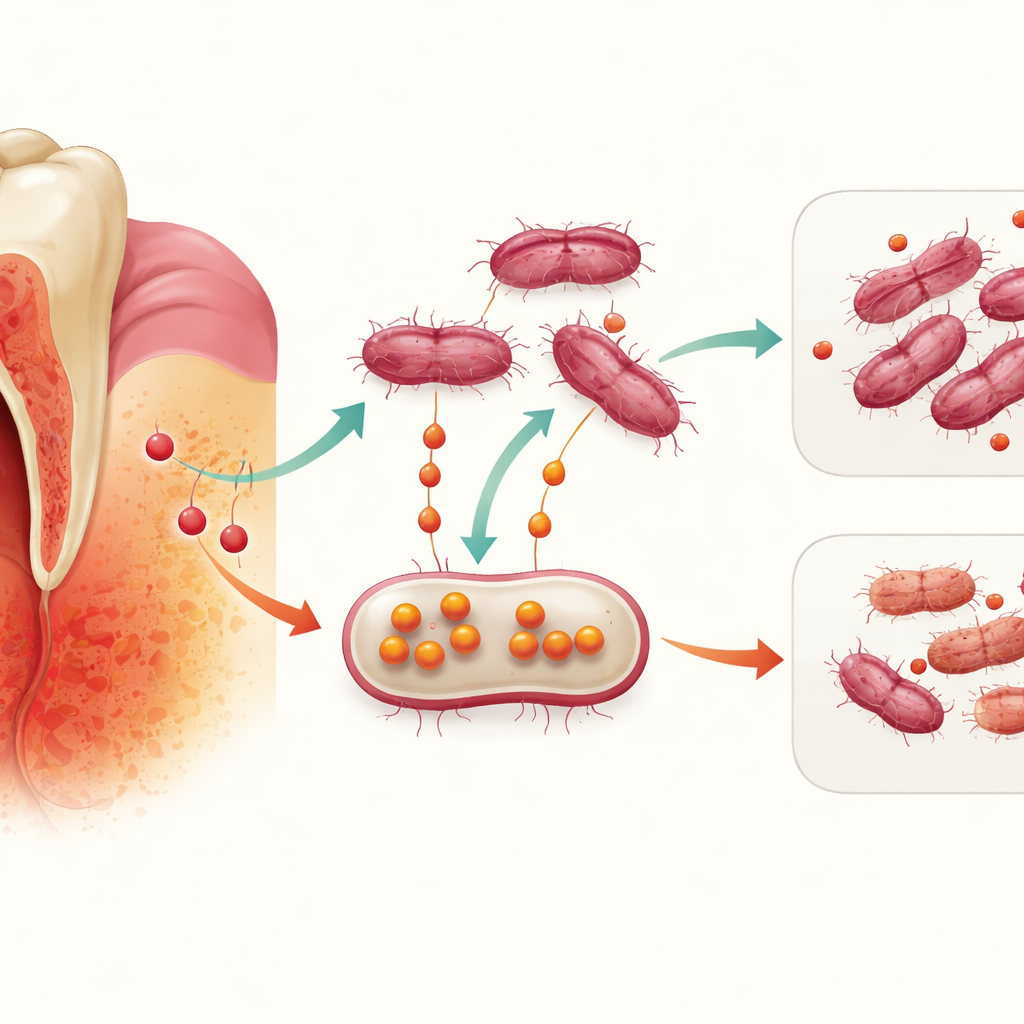
A Germ That Feeds on Our Blood Pigments
P. gingivalis is considered a “keystone” pathogen: even in small numbers it can tip the balance of the oral microbiome toward chronic inflammation and tissue damage. In healthy gums, heme is scarce; only when disease progresses and bleeding increases does heme become plentiful. Unlike many bacteria that can scavenge iron using special molecules called siderophores, P. gingivalis mainly relies on heme itself as an iron source. It captures heme from host proteins in the gum fluid and blood using specialized uptake systems on its surface. Genomic studies showed that, unlike many of its relatives, this bacterium has lost most of the standard enzymes needed to manufacture heme from scratch, yet intriguingly it has retained one enzyme, called HemH, that normally catalyzes the final step of heme production.
The Last Step That Can Still Run
The researchers set out to test whether this lone enzyme, HemH, is still functional and important. In the classic heme‑making pathway, HemH inserts an iron atom into a ring‑shaped molecule known as protoporphyrin IX (PPIX), creating heme. The team compared the HemH protein from P. gingivalis to versions from other bacteria and found that, although the overall sequence has diverged, the critical building blocks at the enzyme’s active center and the three‑dimensional fold are preserved. In test‑tube experiments with purified protein, HemH bound both heme and PPIX and successfully inserted either iron or manganese ions into PPIX, confirming that it behaves as a true ferrochelatase—the enzyme that performs this final, decisive step.
What Happens When the Enzyme Is Removed
To understand HemH’s role inside living cells, the authors engineered a mutant strain lacking the hemH gene and compared it with normal bacteria. When heme was abundant in the culture medium, the mutant grew almost as well as the wild type, because it could import ready‑made heme from outside. But in heme‑free conditions, where only basic nutrients were available, the mutant’s growth collapsed, especially on solid surfaces. Supplying PPIX plus inorganic iron rescued growth, and restoring the hemH gene on a plasmid brought the bacteria’s performance back to normal. These results indicate that HemH allows P. gingivalis to tap internal iron and PPIX reserves to assemble heme when the environment does not provide enough of it.
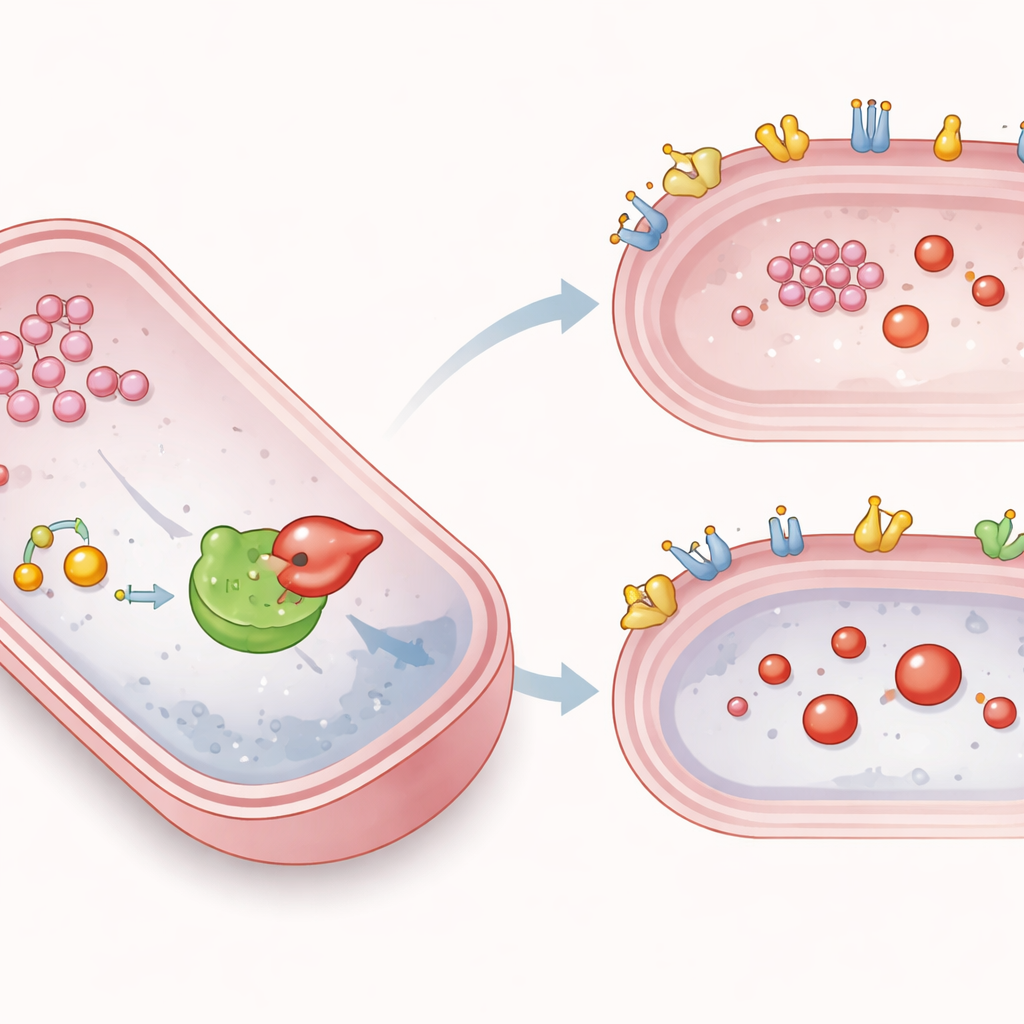
A Starvation Alarm Inside the Bacterium
The team also examined how gene activity across the bacterial genome changes when HemH is missing. Under heme‑poor conditions, deleting hemH triggered a clear “heme‑starvation” response. Genes for the main heme uptake apparatus, especially the Hmu system, switched on strongly, as did several factors associated with virulence, such as proteins that help the bacterium stick to and invade host cells. At the same time, genes for certain transport and surface proteins that tend to be used when heme is plentiful were dialed down. This pattern suggests that without HemH, P. gingivalis senses an internal heme shortage and compensates by grabbing more heme from its surroundings and by changing its surface to better reach host sources of blood and tissue.
How This Hidden Trick Helps a Pathogen Persist
For a non‑specialist, the key message is that P. gingivalis has not entirely given up on making heme; instead, it has streamlined the process to a minimalist backup system centered on HemH. When heme is easy to find, the bacterium simply imports it. When supplies run low—such as early in gum disease or inside host cells—it can fall back on HemH to combine stored iron with heme building blocks and top up its internal heme pool. Losing this single enzyme makes the microbe much more vulnerable in heme‑poor environments and prompts it to become more aggressive in seeking heme from the host. Understanding this last‑step heme‑making trick could point the way toward new treatments that starve P. gingivalis of an essential resource and, in turn, help protect both oral and overall health.
Citation: Śmiga, M., Roszkiewicz, E., Wojtal, N. et al. Porphyromonas gingivalis produces a functional HemH ferrochelatase important for its survival in a heme-limited environment. Sci Rep 16, 12996 (2026). https://doi.org/10.1038/s41598-026-41999-x
Keywords: Porphyromonas gingivalis, heme metabolism, oral microbiome, periodontal disease, bacterial virulence