Clear Sky Science · en
A mixed-methods national study assessing municipal rodent control infrastructure, surveillance capacity and disaster readiness in the United States
Why City Rats Matter to Everyone
Most of us think of rats as a nuisance, but this study argues they are also a warning sign about the health of our cities. Rodents spread dozens of diseases and tend to thrive where trash piles up, buildings decay, and services fall short. By looking at how local governments across the United States manage rodent problems, the researchers show that rat control is not just about comfort—it is tied to disaster preparedness, climate change, and fairness in who gets protection from environmental hazards.
Taking a National Look at Rat Control
The study combined two streams of information to build a national picture. First, the team surveyed 727 pest and environmental health professionals from across the United States between August 2021 and November 2022, a period when the COVID-19 pandemic was reshaping city life. The survey asked whether cities offered rodent control services, which departments were in charge, how often staff received training, and whether there were plans in place for rodent-borne disease. Second, the researchers scanned 147 public documents—from pest advisories to emergency plans and health department websites—to see how clearly rodent control was built into official guidance. Together, these sources reveal not just where rats are a problem, but how well cities are organized to deal with them.
Patchy Services and Hidden Programs
The results show that rodent control is far from universal or transparent. Fewer than half of respondents said their municipality even offered rodent control services, and among those who believed services existed, less than half actually knew the details. Oversight was scattered across health departments, contractors, specialized rodent units, and public works or similar agencies, with nearly a quarter of respondents unable to name any responsible department. Only about one in three reported that their community had a specific plan for dealing with diseases spread by rodents. Many professionals considered rodent control a public health priority, but almost three-quarters said funding did not match that belief, suggesting that programs remain small, reactive, and easy to overlook.
Rats as Clues to Deeper City Problems
The document scan reinforced this uneven picture. Cities were scored using a weighted checklist that rewarded clear oversight, active surveillance of rodent populations, and links to disaster planning. Scores ranged widely: higher-scoring cities had dedicated programs, visible online information, and integration with broader emergency frameworks, while low-scoring ones offered little more than complaint hotlines and vague advice. The authors frame rodents as “ecological sentinels”—their presence points to aging infrastructure, weak sanitation, and neglected neighborhoods. These weaknesses do not affect all communities equally: segregated and lower-income areas, already burdened by poor housing and fewer services, are more likely to face persistent rat problems and higher health risks, especially as climate change and urban redevelopment unsettle local environments.

Building Smarter and Fairer Systems
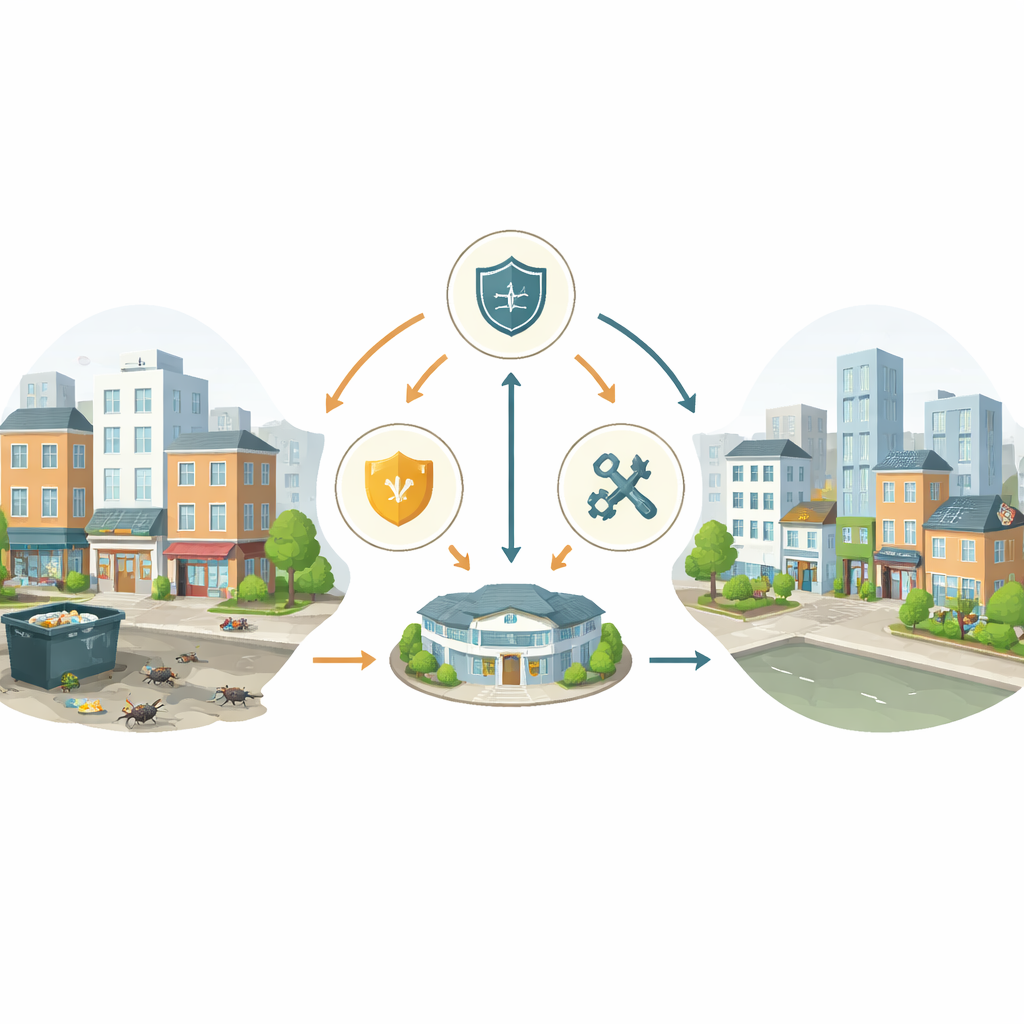
Rather than treating rats as an isolated pest issue, the study urges cities to fold rodent management into larger plans for climate resilience and disaster response. The authors highlight new approaches, such as ecologically based control that focuses on habitat and waste rather than relying only on poisons, and community rapid-response teams that can act quickly during crises like floods or pandemics. From their findings, they propose a seven-part framework that spans better data systems, stronger building and sanitation codes, infrastructure upgrades, community engagement, greener control methods, ongoing evaluation, and clearer policies. They emphasize that national agencies can support these steps through funding, training, and shared standards.
What This Means for Everyday Life
In simple terms, the article concludes that city rat control is a missed opportunity. Local programs already have workers, tools, and community connections that could help protect residents from disease, shore up aging neighborhoods, and prepare for disasters—but they are underfunded, fragmented, and rarely treated as core public health infrastructure. By investing in training, modernizing buildings and waste systems, and involving residents directly, cities can turn rodent control from a quiet back-office function into a frontline defense for healthier, more resilient, and more equitable communities.
Citation: Moise, I.K., Riegel, C., Hurley, J.A. et al. A mixed-methods national study assessing municipal rodent control infrastructure, surveillance capacity and disaster readiness in the United States. Sci Rep 16, 14120 (2026). https://doi.org/10.1038/s41598-026-41987-1
Keywords: urban rodent control, public health preparedness, environmental surveillance, integrated pest management, climate-resilient cities