Clear Sky Science · en
Sustainable dye removal from industrial wastewater using marine algae-derived biosorbents and MOF-based hybrid composites
Turning Colored Wastewater into Clear Water
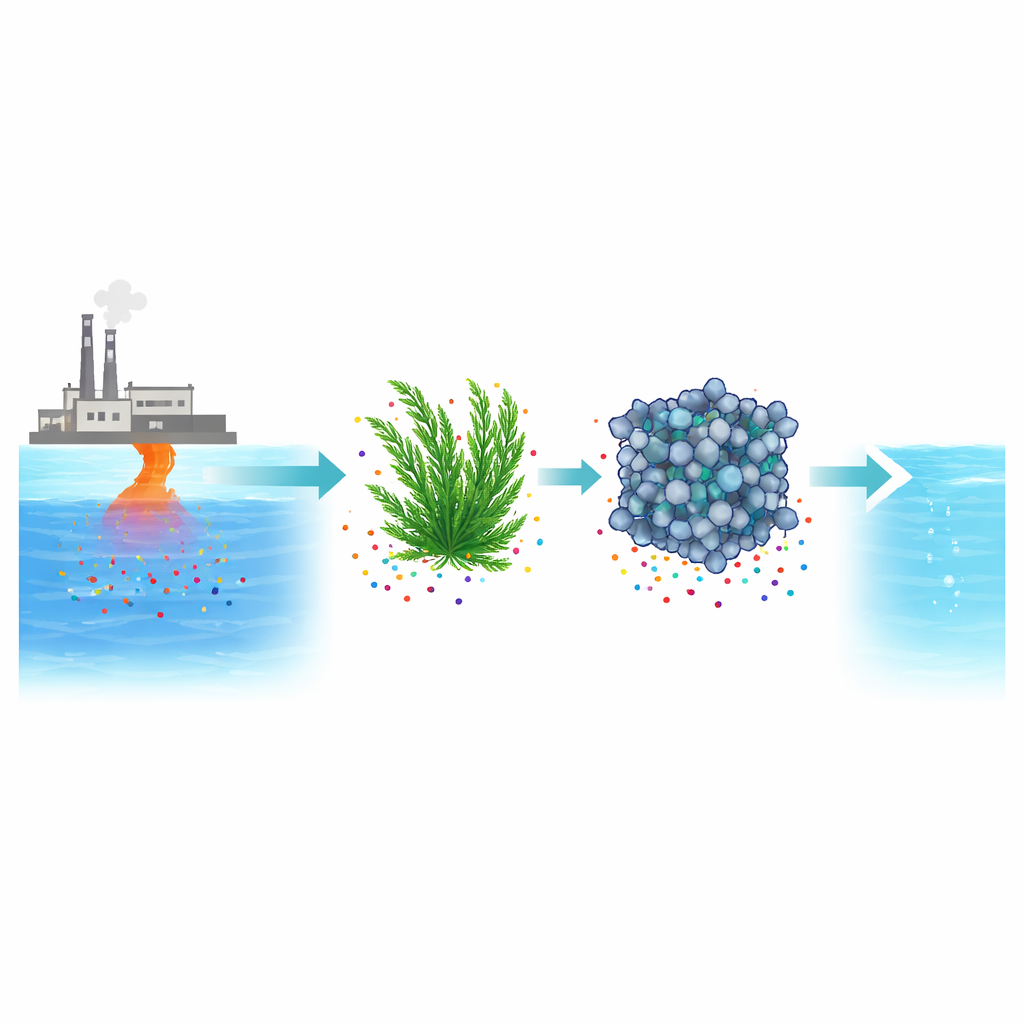
From the clothes we wear to the sheets on our beds, textiles rely on bright synthetic dyes that often end up in rivers and coastal waters. Even tiny amounts of these dyes can block sunlight, harm aquatic life, and may carry toxic or cancer‑linked chemicals. This study explores whether common seaweeds and a modern porous material can work together as a gentler, more sustainable way to strip color from industrial wastewater before it reaches the environment.
Why Textile Dyes Are Hard to Get Rid Of
Reactive dyes are popular in textile factories because they cling tightly to fibers, stay bright after many washes, and dissolve easily in water. Those same strengths become a problem when dye‑laden water is discharged. Conventional treatments such as chemical coagulation, advanced oxidation, or membrane filters can be costly, energy‑intensive, and may create new waste. The authors focused on three widely used dyes—yellow, red, and blue—as stand‑ins for the complex mixtures found in real effluents. Their goal was to compare low‑cost biological materials with a high‑tech adsorbent under the same conditions, to see which options deliver strong cleanup at reasonable cost and with minimal environmental side effects.
Seaweed as a Natural Dye Sponge
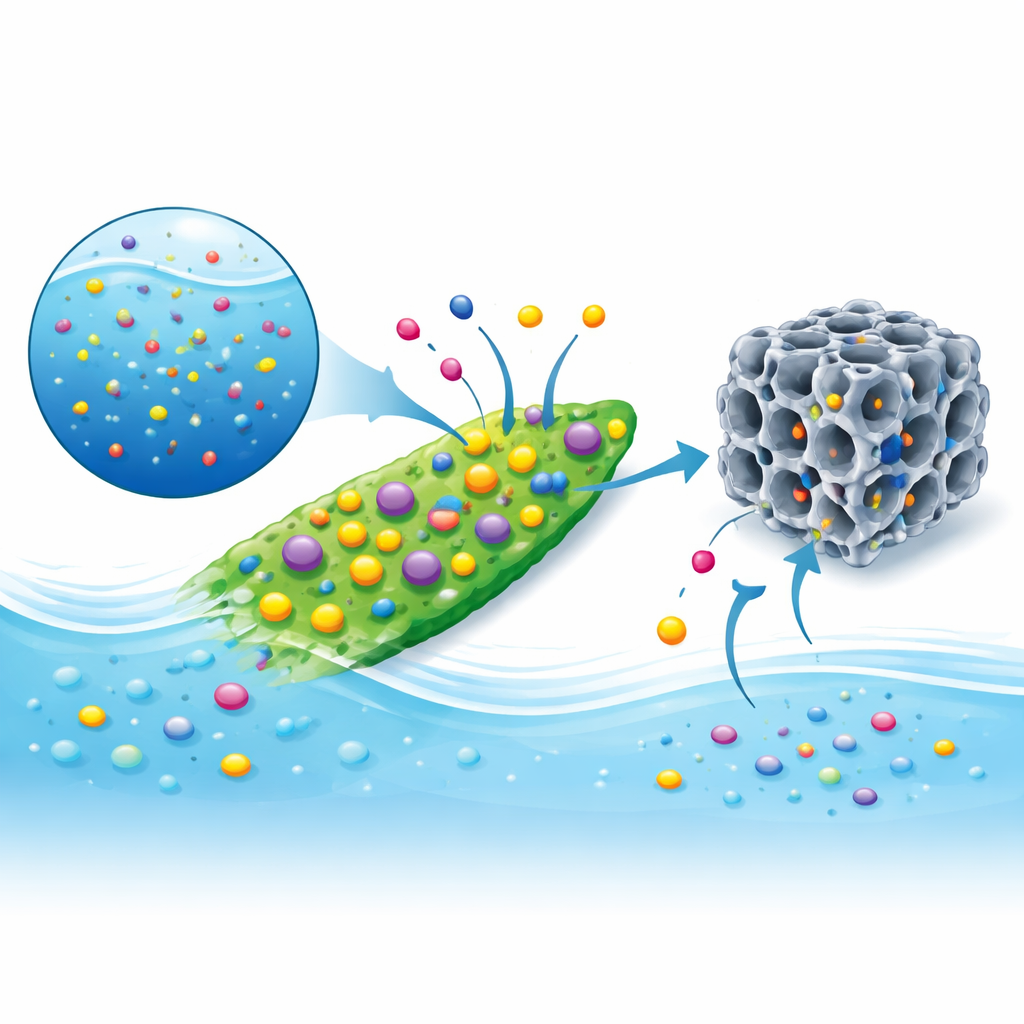
The researchers collected two kinds of marine macroalgae, Ulva fasciata (a green sheet‑like seaweed) and Pterocladia capillacea (a red seaweed), from the Mediterranean coast of Egypt. They tested both fresh, still‑living pieces and dried, powdered forms. When mixed with colored water, the seaweeds gradually pulled dye molecules out of the liquid and held them on their surfaces. This happened mainly through attraction between opposite charges and through weak bonds such as hydrogen bonding. Dried algae consistently outperformed fresh algae, reaching dye removal of over 90% in some cases. Drying increases surface area and exposes more binding sites, making the biomass easier to store, handle, and dose—features that are important for practical treatment systems.
A High‑Tech Porous Crystal Joins the Team
Alongside seaweed, the team synthesized a zirconium‑based metal–organic framework known as UiO‑66‑NH2. This material behaves like a rigid sponge made of metal nodes linked by organic molecules, riddled with tiny, uniform pores. The amine groups on its surface carry positive charge in acidic water and can attract negatively charged dye molecules. Tests showed that this framework has a very high capacity for holding dyes, with removal efficiencies above 95% under optimized conditions. It remained stable in water and could be reused several times, although its performance slowly declined with repeated cycles as some pores became blocked or binding sites weakened.
What Controls How Well the Cleanup Works
The scientists carefully varied several practical factors: how much algae or framework they added, how long it stayed in contact with the wastewater, how concentrated the dyes were, and the acidity (pH) of the solution. In all cases, lower initial dye levels and longer contact times led to higher removal. Acidic conditions around pH 2 gave the best results for both seaweed and the metal–organic framework, because surfaces became positively charged and strongly attracted the negatively charged dyes. For fresh algae, higher amounts of biomass improved performance up to about 5 grams per 100 milliliters of water; for dried algae, just 2.5 grams was enough to achieve similarly high removal. The framework also showed better performance as more material was added, although gains leveled off once most accessible sites were filled. When the approach was tested on real textile wastewater, both algae and the framework sharply reduced color, and the framework in particular cut organic pollution levels nearly in half.
Bringing Nature and Materials Science Together
The study concludes that common seaweeds and porous framework crystals each offer powerful but complementary routes to cleaning dye‑polluted water. Dried marine algae stand out as cheap, biodegradable, and widely available “green” sponges, while the metal–organic framework provides a highly efficient, tunable material that can polish water to very low color levels. Used alone or in combination, these adsorbents can transform vividly stained industrial effluents into much clearer water with less reliance on harsh chemicals. For non‑specialists, the key message is that pairing marine biology with advanced materials could make future wastewater treatment both cleaner for the planet and more accessible to resource‑limited regions.
Citation: Abdel‑Razik, S.A.R., Abdel‑Kareem, M.S., El‑Agawany, N.I. et al. Sustainable dye removal from industrial wastewater using marine algae-derived biosorbents and MOF-based hybrid composites. Sci Rep 16, 11349 (2026). https://doi.org/10.1038/s41598-026-41983-5
Keywords: industrial wastewater, textile dyes, marine algae, metal-organic frameworks, biosorption