Clear Sky Science · en
Friction properties of 5PK belt made by various manufacturers
Why the Belts in Your Car Matter
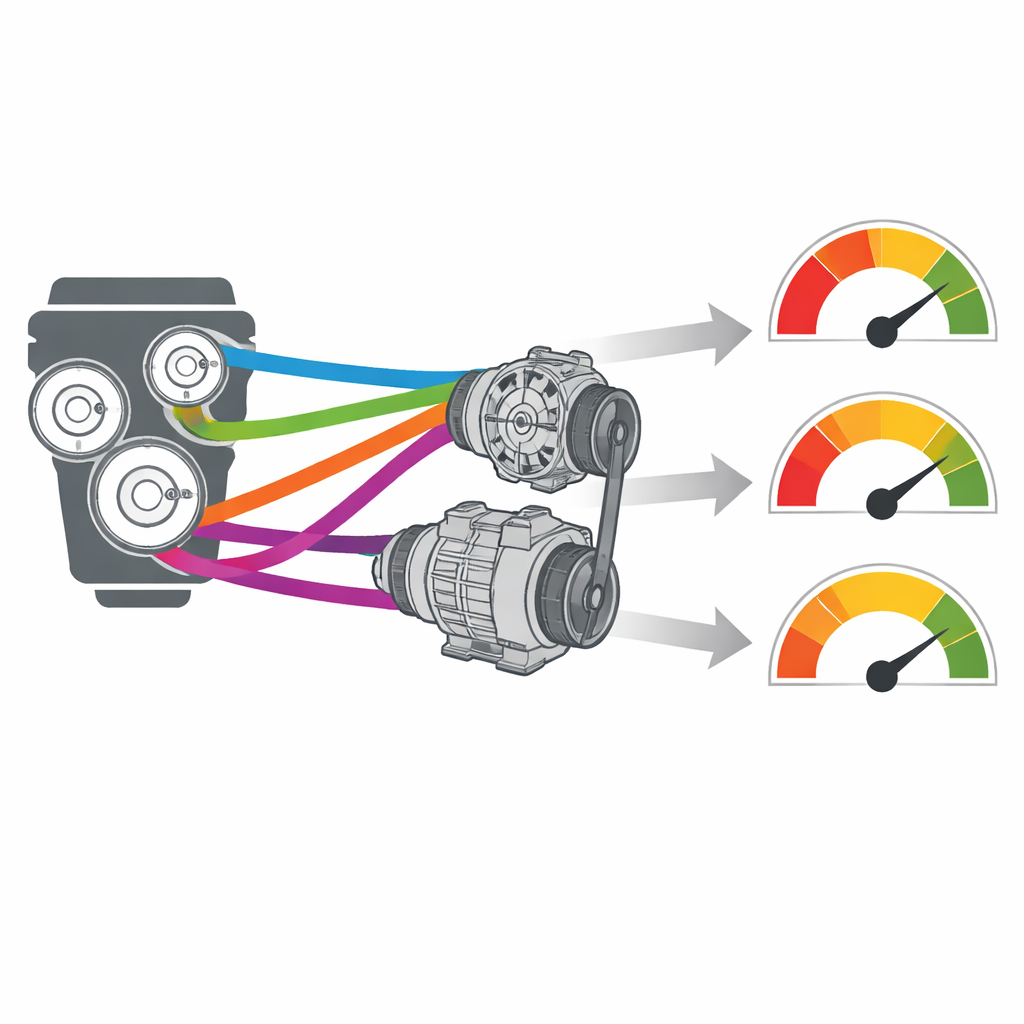
Under the hood of a modern car, thin ribbed belts quietly spin the alternator, air‑conditioning pump, and other add‑ons. They all look similar, so mechanics and drivers often treat them as interchangeable. This study asks a simple but important question: if you replace one of these belts with a look‑alike from another manufacturer, does it behave the same way when it grips and slips on the pulleys, or can small hidden differences change how the whole drive system works?
Belts That Look Alike but Behave Differently
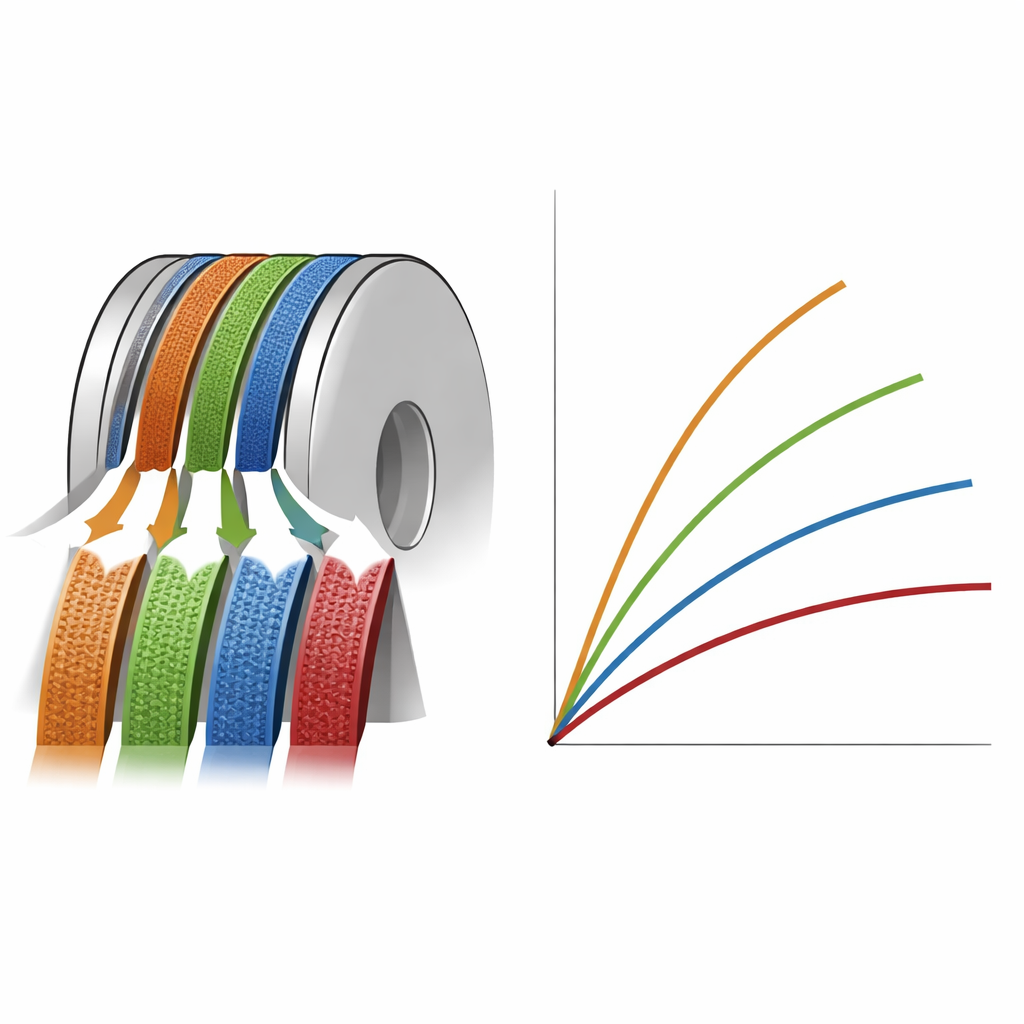
The research focuses on a common “5PK” ribbed belt used in so‑called front engine accessory drive (FEAD) systems, which power parts like the alternator and air‑conditioning compressor. Ten belts from different manufacturers, all intended for the same car layout, were examined. At first glance, they share the same size and general construction: synthetic fibers set in rubber with multiple small ribs that sit in matching grooves on the pulleys. Under a closer view, however, the surface that actually touches the pulley varies. In some belts the reinforcing fibers stick out clearly from the rubber; in others the fibers are shorter; in still others they are almost completely buried. These subtle surface differences raise the suspicion that the belts will not all grip the pulleys in the same way.
Testing How Hard the Belts Grip Before They Slip
To probe this, the author first measured what engineers call static friction: how much twisting force a pulley can apply before a belt that is wrapped around it starts to move. A special test stand held a short belt segment around a single pulley with a known tightening force, then slowly increased the drive torque until the belt finally slipped. From the measured forces and rotation, the researcher calculated an effective friction value for each belt and for various initial tensions. The results showed clear spread: some belts gripped much more strongly than others, and the way friction changed as tension increased was not the same from belt to belt. For most belts, more tension meant a higher friction level, but one brand actually showed a slight drop in friction as it was pulled tighter, highlighting that there is no single “standard” friction value even for this one belt type.
Watching Slip Grow in a Complete Drive
Next, the study examined dynamic friction in a full two‑pulley drive, closer to how a car actually runs. Here an uncut belt joined a driving pulley and a driven pulley of equal size. Both pulleys were powered by separate motors so their speeds could be adjusted independently, letting the experimenter control and measure how much the belt slipped while also tracking the resisting torque. As the load on the driven pulley was ramped up, slip stayed small at first but then rose sharply once a certain torque threshold was passed. This turning point, and the overall curve linking slip to torque, differed significantly among the ten belts. Some slipped a lot with relatively little load, while others kept good grip until much higher torque. Increasing the initial tension generally pushed the onset of heavy slip to higher loads, but again, belts clustered into groups with distinctly different behavior.
Building a Simple Model for Real‑World Drives
Using these measurements, the author built a simplified computer model of a belt drive with two rotating pulleys and a massless, stretchy, and slightly damped belt. Instead of trying to capture every microscopic detail, the model feeds in an experimentally determined relationship between slip and resisting torque for each belt. When the same driving conditions were simulated with different belts, the predicted pulley speeds and slip levels changed in line with the measurements: belts that slipped more in the lab also produced lower driven‑pulley speeds and greater loss in the simulations. This confirms that even modest changes in belt friction curves can substantially alter how a real accessory drive responds to load.
What This Means for Drivers and Designers
For non‑specialists, the takeaway is clear: belts that look identical and fit the same pulleys are not automatically equivalent in how they transmit power. Their hidden surface structure and material details change how firmly they grip, how they slip under load, and how sensitive they are to belt tension. The study concludes that designers and maintenance technicians should not assume a single friction figure for a given belt size or swap in a different brand without considering its friction behavior. Instead, ranges of friction values and belt‑specific data should be used in models and in practice. In everyday terms, choosing a different belt can subtly change how reliably your alternator, air‑conditioning, and other belt‑driven components are powered, especially under heavy loads.
Citation: Kubas, K. Friction properties of 5PK belt made by various manufacturers. Sci Rep 16, 10933 (2026). https://doi.org/10.1038/s41598-026-41982-6
Keywords: belt friction, automotive accessory drive, poly-V belt, belt slip, tribology