Clear Sky Science · en
Maternal immunity and post-vaccination sero-monitoring in small ruminants for peste des petits ruminants eradication in North Shewa, Ethiopia
Why protecting sheep and goats matters
In many parts of Ethiopia, families depend on sheep and goats for milk, meat, income, and savings. A highly contagious disease called peste des petits ruminants (PPR) threatens these animals, killing large numbers and pushing vulnerable households deeper into poverty. Ethiopia has committed to wiping out PPR by 2027 using targeted vaccination. This study from North Shewa Zone asks a simple but crucial question: are current vaccination efforts really giving flocks, and their newborn lambs and kids, enough protection to stop the virus from spreading?
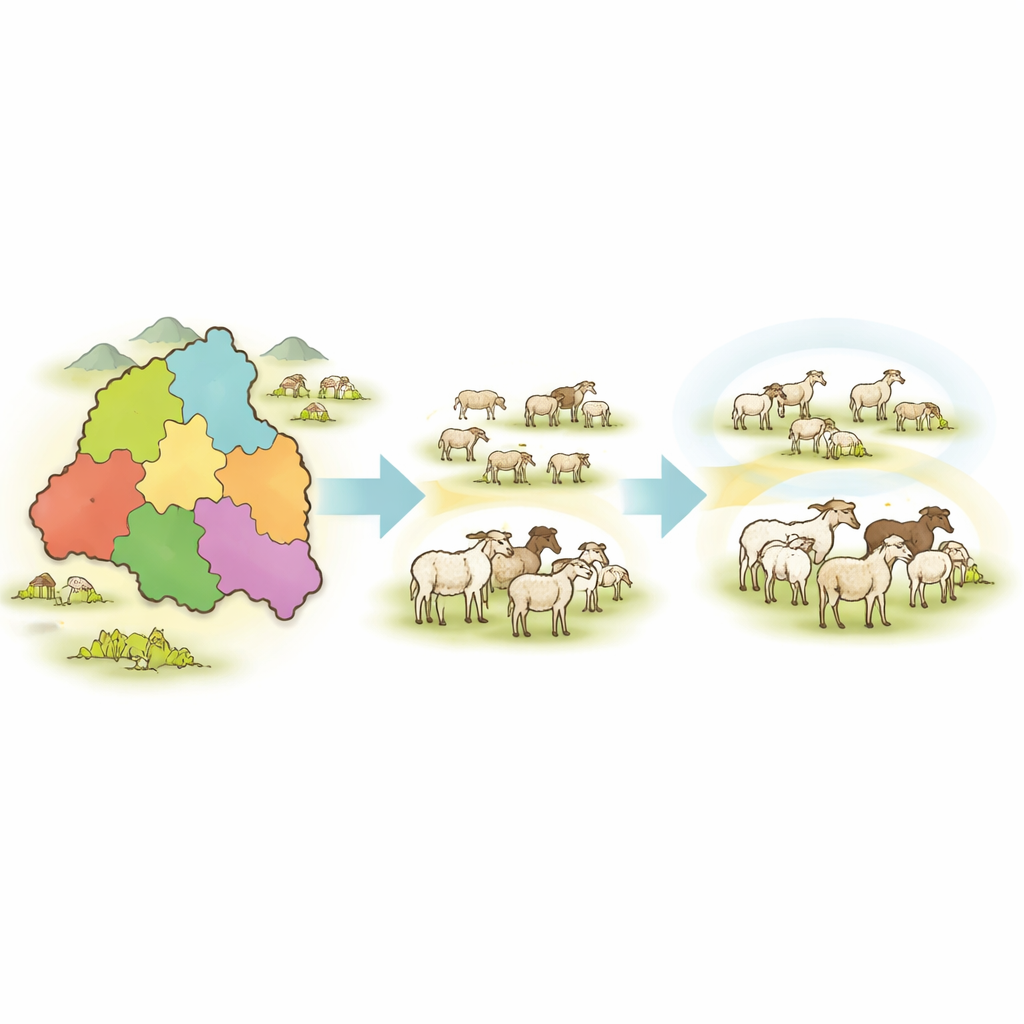
Checking the shield in real-world herds
The researchers carried out a field survey in four districts of North Shewa in early 2024, focusing on traditionally managed sheep and goats that had been vaccinated during recent government campaigns. Using a blood test that detects antibodies—the proteins that signal past infection or successful vaccination—they measured how many animals showed signs of protection. They looked at both the overall flock and the youngest animals, which depend on antibodies passed from their mothers. In total, they collected 594 blood samples, including 508 from vaccinated adults and older youngsters, and 86 from lambs and kids three months of age or younger.
How well adult animals were protected
Across all four districts, about two out of three sampled animals (65%) had detectable antibodies against the PPR virus. While this might sound encouraging, it falls short of the roughly 80% immunity level that experts say is usually needed in a flock to halt disease transmission. When the team looked flock by flock, the picture was even more worrying: only 6 of the 22 sampled flocks reached or exceeded that 80% mark. Protection also varied strongly by location. Animals in Basona-werena district showed the highest immunity (around 79%), whereas those in Menz-mama were notably less protected (about 57%), suggesting uneven performance of vaccination efforts across the zone.
Age gaps and local differences in protection
Within flocks, age turned out to be a key factor. Adult sheep and goats were roughly three times more likely to have antibodies than younger animals, and older animals were about four times more likely. This pattern likely reflects repeated vaccination over several years, natural exposure to the virus, or both. It also points to a serious gap: the animals that are newest to the flock—and often most vulnerable—are the least protected. The study’s statistical models confirmed that both age and district were independently linked to whether an animal had antibodies, even after accounting for other factors such as species, sex, body condition, and local climate.
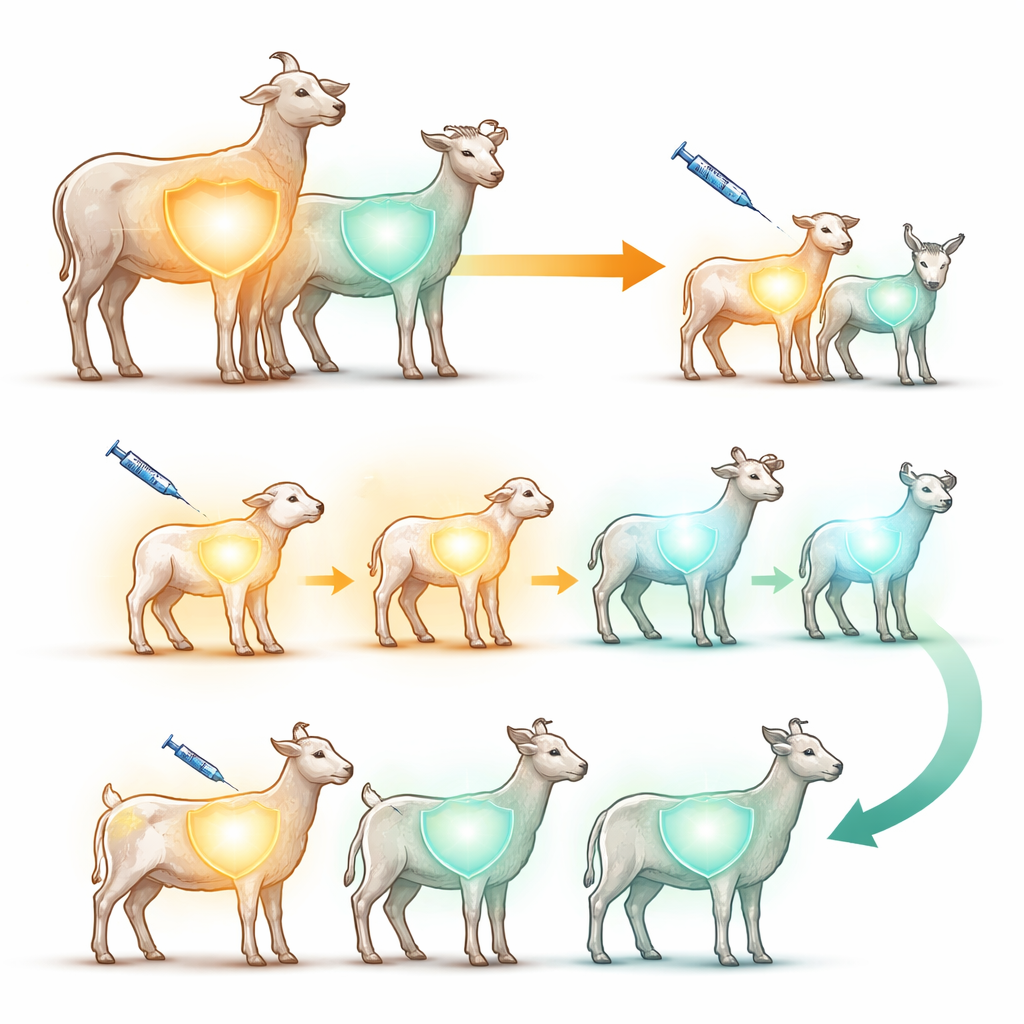
How well mothers pass protection to newborns
The team then examined maternal immunity in 86 lambs and kids born to vaccinated mothers. Just over half of these young animals (52%) carried maternal antibodies. The highest levels were found in the youngest age group, less than one month old, where about two-thirds had antibodies. By two to three months of age, only about one in three still appeared protected, showing how quickly this borrowed shield fades. Goat kids tended to have higher antibody levels than lambs, but the study’s sample size was not large enough to be certain this difference was real. Overall, the results suggest that many newborn animals in vaccinated flocks still pass through a “danger window” before they can be safely and effectively vaccinated themselves.
What this means for ending the disease
For a lay reader, the main message is clear: current vaccination campaigns in North Shewa, while substantial and improving over time, are not yet strong or even enough to stop PPR from circulating. Too few flocks reach the high protection levels needed to block the virus, and many lambs and kids lose their early maternal protection before they are actively vaccinated. The authors recommend tightening vaccine delivery and cold-chain systems, giving special priority to young animals and low-immunity districts, and regularly checking antibody levels to guide where efforts should be intensified. If these steps are taken, Ethiopia’s ambitious goal of eradicating PPR—and safeguarding the livelihoods that depend on healthy sheep and goats—will be far more achievable.
Citation: Alamerew, E.A., Sibhatu, D., Cherenet, T. et al. Maternal immunity and post-vaccination sero-monitoring in small ruminants for peste des petits ruminants eradication in North Shewa, Ethiopia. Sci Rep 16, 11275 (2026). https://doi.org/10.1038/s41598-026-41977-3
Keywords: peste des petits ruminants, sheep and goat vaccination, maternal immunity, Ethiopia livestock health, flock antibody monitoring