Clear Sky Science · en
A multiplex allele-specific polymerase chain reaction assay for rapid and affordable detection of APOL1 risk variants
Why Kidney Genes Matter for Everyday Health
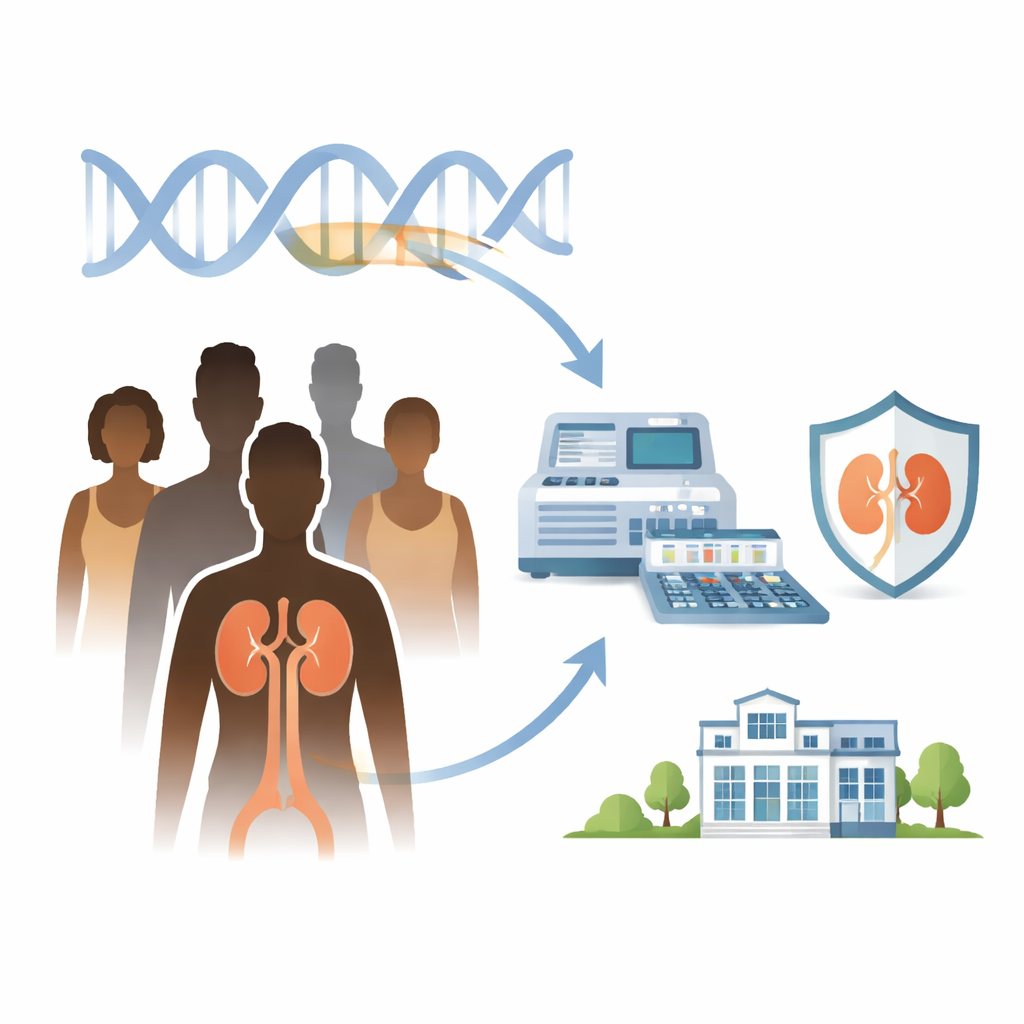
Chronic kidney disease is quietly rising around the world, and people with recent African ancestry carry a particularly heavy burden. Scientists have discovered that changes in a gene called APOL1 can sharply increase the risk of kidney failure, especially in children and adults already facing illnesses like HIV or sickle cell disease. Yet the genetic tests that reveal who is at risk are often too expensive and complex for the regions where they are needed most. This study introduces a simple, low-cost laboratory test that could bring life‑saving genetic information within reach of clinics across sub‑Saharan Africa.
A Hidden Genetic Trade-Off
The story begins with a remarkable genetic trade‑off. Certain versions of the APOL1 gene, called G1 and G2, help protect against a deadly parasite that causes African sleeping sickness. Because of this benefit, these variants are common in many African populations. But there is a catch: when a person inherits two copies of these risk versions—either G1/G1, G2/G2, or one of each—they face up to a fourfold higher chance of developing serious kidney disease. These APOL1 “high‑risk” genotypes have been linked to forms of kidney scarring, HIV‑related kidney damage, sickle‑cell‑related kidney problems, and kidney failure not caused by diabetes. Spotting carriers early could allow closer monitoring, tailored treatment, and more informed decisions about kidney donation.
Why Current Tests Fall Short
Modern APOL1 tests usually rely on high‑end methods such as quantitative PCR or DNA sequencing. These approaches are accurate but costly, slow, and dependent on advanced machines and highly trained staff. In many laboratories in sub‑Saharan Africa—where APOL1 risk variants are most frequent—such resources are limited or absent. Newer cutting‑edge tools that use CRISPR technology, while promising, add even more technical complexity. The result is a sharp mismatch: the people who would benefit most from APOL1 testing are often the least likely to have access to it.
A Simpler Genetic Test in a Single Tube
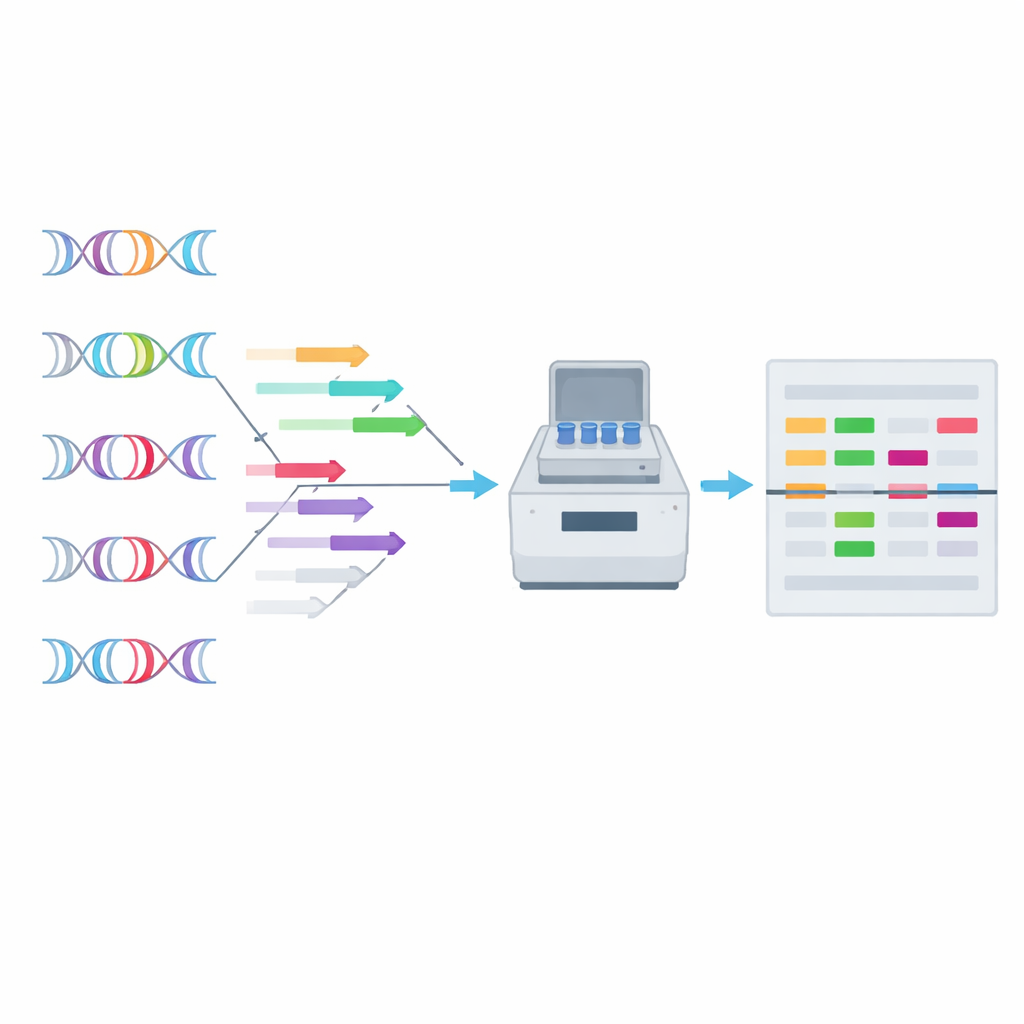
The researchers set out to build a practical alternative using a classic method called allele‑specific PCR. This technique takes advantage of the fact that a short starter piece of DNA, known as a primer, will only “grab onto” and copy a target if its tip matches perfectly. By designing pairs of primers that fit either the normal or risk versions of APOL1, the team created a way to reveal whether G1 or G2 variants were present simply by checking if a DNA band appears on a gel after the reaction. They refined the primers so that just one standard PCR machine and a basic gel electrophoresis setup—common in many modest labs—were enough. Several primer reactions were then combined into a single “multiplex” tube, allowing all key APOL1 risk patterns to be checked at once.
Putting the New Assay to the Test
After first confirming that each primer pair correctly picked out its intended target, the team optimized them to work together in one reaction. They focused on the most informative APOL1 changes, simplifying the design where two variants are almost always inherited together. The final assay could distinguish among six clinically important APOL1 genotypes, including people with no risk variants and those with one or two risk copies. To test its accuracy, the researchers ran the new assay and gold‑standard Sanger sequencing side by side on 50 DNA samples from children with HIV, sickle cell disease, and healthy controls. The results matched in 48 out of 50 cases—a 96% agreement rate. The two conflicting cases were rerun and came into line with sequencing, underscoring the robustness of the new method.
Bringing Genetic Insight Within Reach
Because this assay relies only on widely available reagents and machines, it can cut the cost of APOL1 testing from roughly hundreds of dollars to about the price of a routine lab test, while returning results in days rather than weeks. It could also be adapted to use dried blood spots, making sample collection and shipping far easier in remote areas. Although experts continue to debate exactly how APOL1 genotyping should guide patient care, the stakes are high for transplant decisions, early kidney‑disease detection, and the management of high‑risk groups such as people living with HIV or sickle cell disease. This study offers a practical tool that can help move those discussions from theory to action in the places where they matter most.
Citation: Adebayo, O.C., Bongaers, I., Levtchenko, E. et al. A multiplex allele-specific polymerase chain reaction assay for rapid and affordable detection of APOL1 risk variants. Sci Rep 16, 11860 (2026). https://doi.org/10.1038/s41598-026-41971-9
Keywords: APOL1, kidney disease, genetic testing, allele-specific PCR, sub-Saharan Africa