Clear Sky Science · en
A hybrid machine learning approach for predicting the flexural strength of concrete reinforced with waste aluminium fibres
Turning Trash Metal into Tougher Concrete
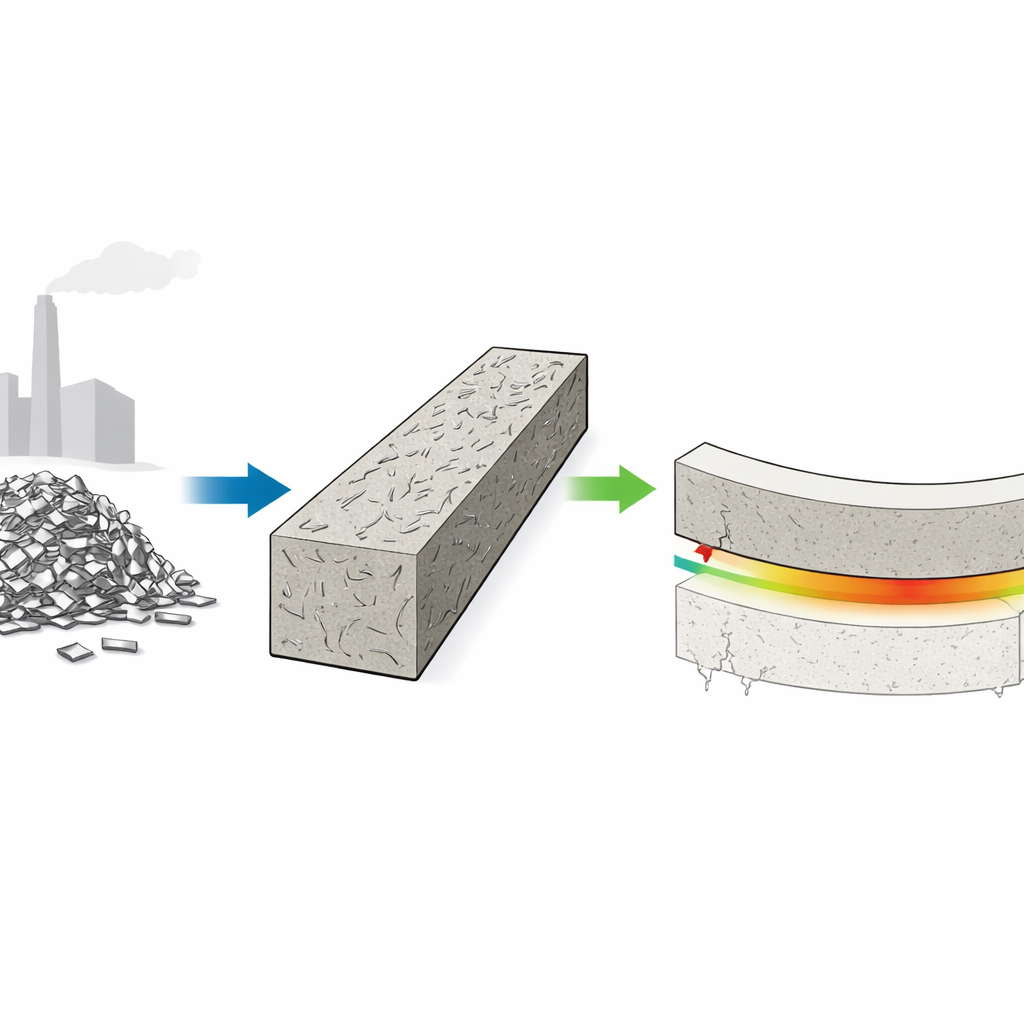
Every year, factories and households generate mountains of aluminium scraps from cans, wires, and machining offcuts. Much of this waste is hard to dispose of safely, yet aluminium is light, strong, and durable. This study explores a simple question with big implications: can we turn that troublesome scrap into tiny fibers that make concrete both greener and better at resisting bending and cracking, while using smart computer models to predict how strong the new material will be?
Why Bending Strength Matters
Concrete is excellent at carrying heavy loads when squeezed, but it is far weaker when bent. Roads, floors, bridge decks, and runways often fail first by bending and cracking rather than by pure crushing. Adding fibers is one way to help concrete stretch and hold together when it starts to crack. The researchers in this work focused on waste aluminium fibers cut from used beverage cans and other scraps. They mixed these fibers into concrete at different amounts between 1% and 5% of the volume and tested how well small beams resisted bending. They found a clear sweet spot: at about 3% fibre content, the beams carried the highest bending load and showed tighter, more controlled cracking; beyond that level, extra fibers actually made things worse by clumping and reducing the fresh concrete’s workability.
Building a Smarter Way to Predict Strength
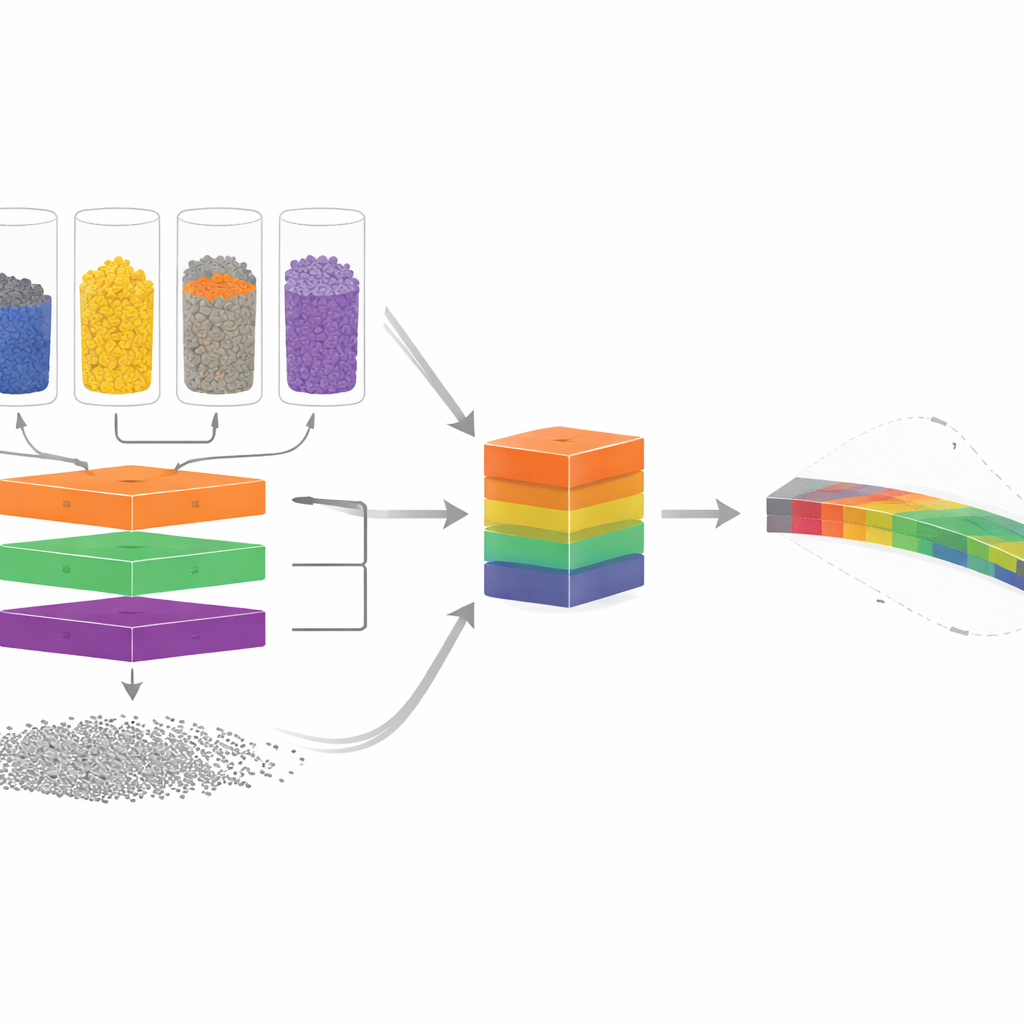
Designing concrete with waste fibers is not just a matter of guessing a fiber percentage. Many ingredients—cement, water, sand, gravel, special powders, curing time, and fibre content—interact in complex ways. To move beyond trial-and-error, the team assembled a data set of 195 test results from their own experiments and earlier studies, all involving aluminium waste fibers. They then trained three different types of machine learning models to predict the bending strength from eight basic mix and curing variables: a Random Forest (many decision trees averaged together), an Extreme Gradient Boosting model, and an Artificial Neural Network inspired by how brain cells connect. Each model is good at capturing different patterns in the data.
Combining Models and Opening the Black Box
Instead of choosing a single “best” model, the researchers stacked them. In this hybrid approach, the three models each make their own prediction, and a final combining layer learns how to weight them to get the most accurate answer. This stacked system predicted bending strength with very high accuracy: it explained more than 99% of the variation in the training data and about 96% in new, unseen tests. To make sure the system was not just a mysterious black box, they turned to an explanation tool called SHAP. This method assigns each input—such as curing age or gravel content—a share of responsibility for the predicted strength. The analysis showed that curing age and aggregate contents were especially important, while aluminium fiber percentage, though beneficial, played a smaller overall role than the solid skeleton of sand and gravel that carries loads inside the concrete.
What Matters Most Inside the Mix
Digging into the explanation results, the study found that longer curing times consistently pushed bending strength upward, confirming the value of slow, moist curing for real projects. Coarse and fine aggregates together emerged as key players: their amounts and size balance control how cracks start and spread under bending. Water and cement had a more nuanced effect—too much water weakens the bond between paste and stones, while too much cement can make the material brittle. Waste aluminium fibers helped by bridging cracks and improving the concrete’s ability to carry tension, but only up to around 3% by volume; above that, the mix became harder to place and less uniform, offsetting the benefits of extra reinforcement. The model’s guidance translated into practical recommendations for ranges of aggregate, cement, water, and fibre content that engineers can target when designing mixes.
From Laboratory Insight to Greener Structures
For a general reader, the key message is straightforward: it is possible to turn discarded aluminium into a useful ingredient that helps concrete resist bending, while also diverting waste from landfills and reducing the need for new steel fibers. By pairing careful experiments with a transparent, multi-model learning system, the researchers created a kind of "calculator" that can predict how strong a given waste-fibre concrete mix will be and explain why. Their results suggest that a well-designed mix with about 3% aluminium waste fibers can improve bending strength, cut material costs, and lower environmental impact. If scaled up and refined with more data, this approach could help engineers confidently use industrial scrap in everyday infrastructure, making bridges, pavements, and floors both sturdier and more sustainable.
Citation: Boursas, F., Boufarh, R., Altowaijri, Y. et al. A hybrid machine learning approach for predicting the flexural strength of concrete reinforced with waste aluminium fibres. Sci Rep 16, 10763 (2026). https://doi.org/10.1038/s41598-026-41961-x
Keywords: waste aluminium fibres, flexural strength, sustainable concrete, machine learning models, recycled construction materials