Clear Sky Science · en
Integrated biochemical, histological, and transcriptomic analyses reveal dose-dependent effects of sodium alginate on the physiology of Meretrix meretrix
Why seaweed sugars matter for seafood lovers
As global demand for seafood rises, farmers are searching for gentle ways to help shellfish grow faster and stay healthier in crowded ponds. One promising aid is sodium alginate, a natural sugar-like compound extracted from brown seaweeds and already used in foods and medicines. This study asks a simple but crucial question: how much of this "good" additive is actually good for Asian hard clams—and when does it quietly start to do harm?
Helping clams grow in a changing coastline
The Asian hard clam, Meretrix meretrix, is a key farmed shellfish in coastal China, valued for its fast growth and rich taste. Modern farms often pack many animals into small areas and face swings in temperature, salinity, and water quality. Under these pressures, clams can grow more slowly and become more vulnerable to disease. Natural polysaccharides such as sodium alginate have been promoted as eco-friendly feed additives that may boost growth, digestion, and natural defenses, but there has been little information on safe and effective dose ranges for clams.
Testing low, medium, and high doses in the farm tank
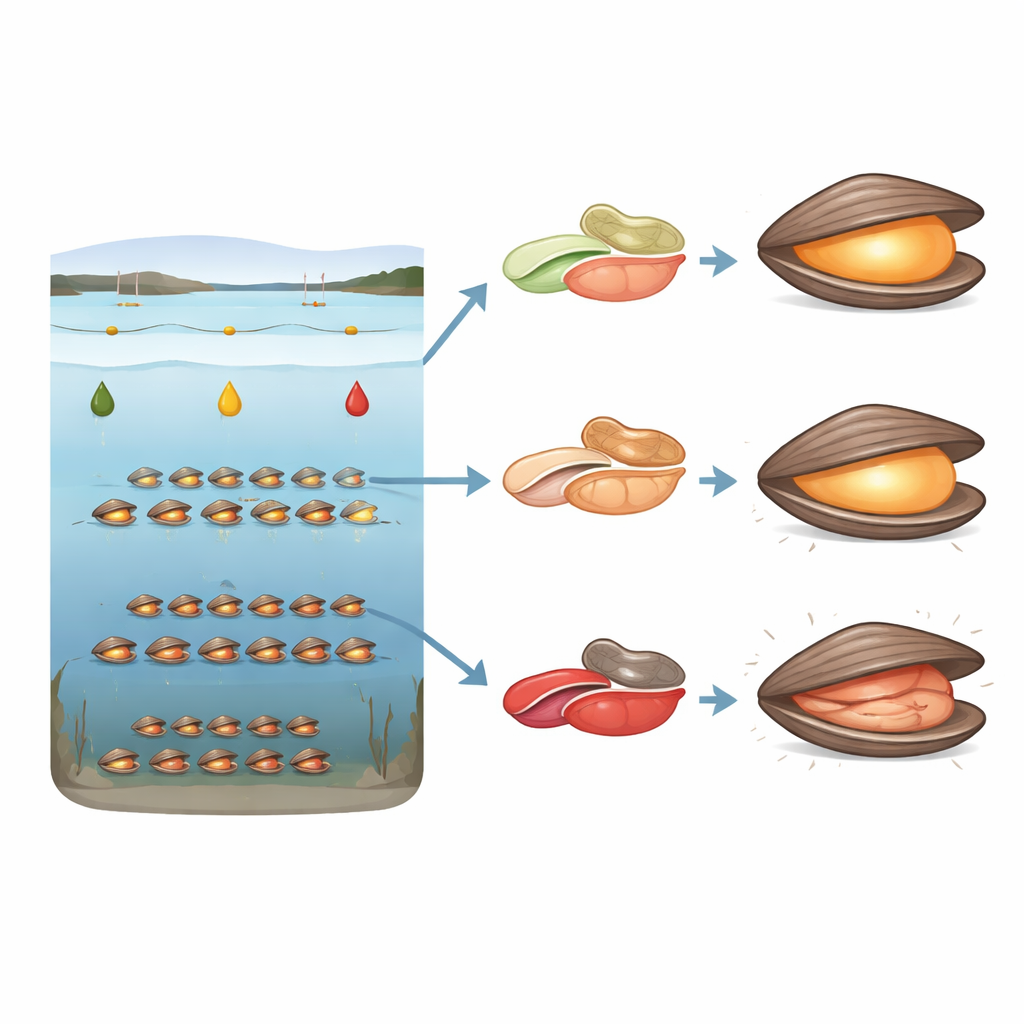
The researchers raised clams for 60 days in tanks with three sodium alginate levels in the water: none, a moderate dose (10 milligrams per liter), and a higher dose (20 milligrams per liter). They tracked shell length, body weight, survival, and calculated growth rates over time. At the end of the trial, they examined the clams’ intestines under the microscope, measured key antioxidant enzymes that protect cells from damage, and sequenced thousands of genes from the digestive gland to see how internal biology shifted with dose.
Finding a sweet spot for growth and gut health
The moderate dose clearly stood out. Clams exposed to 10 milligrams per liter grew the fastest throughout most of the experiment, with shell length, body weight, and two measures of growth rate all higher than in untreated clams. A simple curve fit suggested an ideal concentration of about 11 milligrams per liter. Under the microscope, intestines from this group looked healthy: finger-like villi were long and orderly, and mucus-making goblet cells appeared normal, suggesting good digestive and barrier function. By contrast, the high-dose group still showed some growth benefit compared with no additive, especially late in the trial, but their intestines told a different story. Villi were shortened and disordered, villus tips were damaged, and goblet cells became vacuolated, all signs of chronic tissue stress that could undermine long-term health and nutrient absorption.
Hidden cost of too much: oxidative stress and emergency defenses
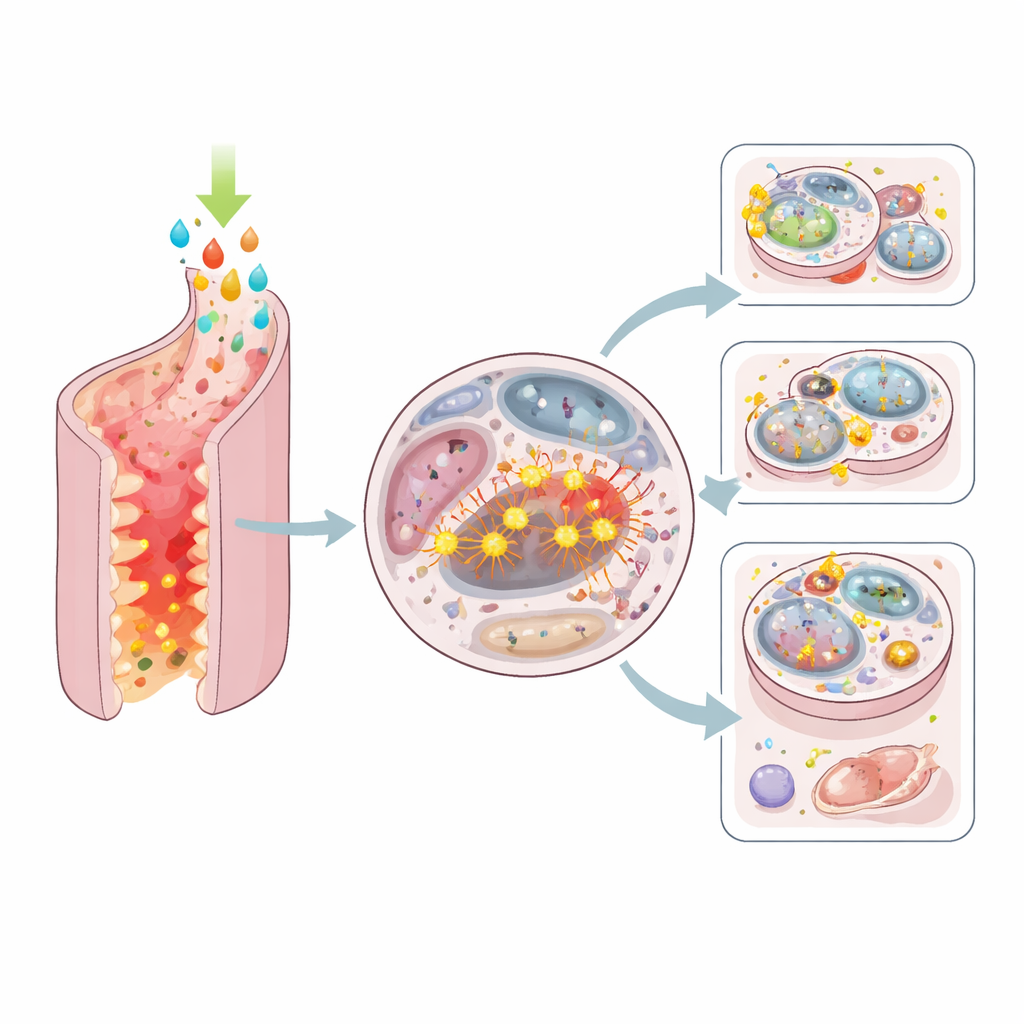
Chemical tests and gene data revealed why high doses were risky. Both additive-treated groups showed boosted activities of protective enzymes such as superoxide dismutase, catalase, and glutathione peroxidase, which help neutralize harmful oxygen by-products. However, only the high-dose clams showed a clear rise in malondialdehyde, a marker of fat and membrane damage, indicating that their defenses were being pushed to the limit. Deep sequencing of gene activity showed that high-dose clams rewired many pathways linked to breakdown and clean-up inside cells, including lysosomes, autophagy, and phagosome formation. At the same time, genes that usually drive programmed cell death were broadly dialed down, while genes that block cell suicide were turned up. Together, these patterns suggest that the animals were experiencing strong oxidative stress but were actively trying to survive by ramping up cleanup systems and holding apoptosis in check.
What this means for future clam farming
For farmers and consumers, the message is reassuring but cautionary. A modest amount of sodium alginate from seaweed can safely boost growth, strengthen antioxidant defenses, and preserve gut structure in hard clams, making it a promising tool for more sustainable aquaculture. Yet pushing the dose higher starts to backfire: even if the clams still grow reasonably well, their intestines show damage and their cells enter a costly emergency mode, constantly fighting off oxidative injury. Over time, that hidden strain could erode health, resilience, and yield. The study therefore argues for carefully optimized dosing—around 10 to 11 milligrams per liter in this case—so that seaweed-derived additives work as allies rather than silent stressors in shellfish farms.
Citation: Wang, Y., Zhang, Z., Chen, S. et al. Integrated biochemical, histological, and transcriptomic analyses reveal dose-dependent effects of sodium alginate on the physiology of Meretrix meretrix. Sci Rep 16, 11588 (2026). https://doi.org/10.1038/s41598-026-41950-0
Keywords: hard clam aquaculture, sodium alginate, oxidative stress, intestinal health, seaweed polysaccharides