Clear Sky Science · en
Reliability prediction of crane brakes based on the bayesian method
Why stopping heavy loads safely matters
Every time a tower crane lifts and lowers tons of steel or concrete, its brakes quietly keep workers and bystanders safe. If those brakes fail, the results can be deadly. Yet for many crane models, we have very few real-world failure records, and the braking force slowly weakens in ways that are partly random. This paper shows how engineers can still make trustworthy predictions about when crane brakes should be serviced, even when only small amounts of test data are available.
How crane brakes slowly lose their grip
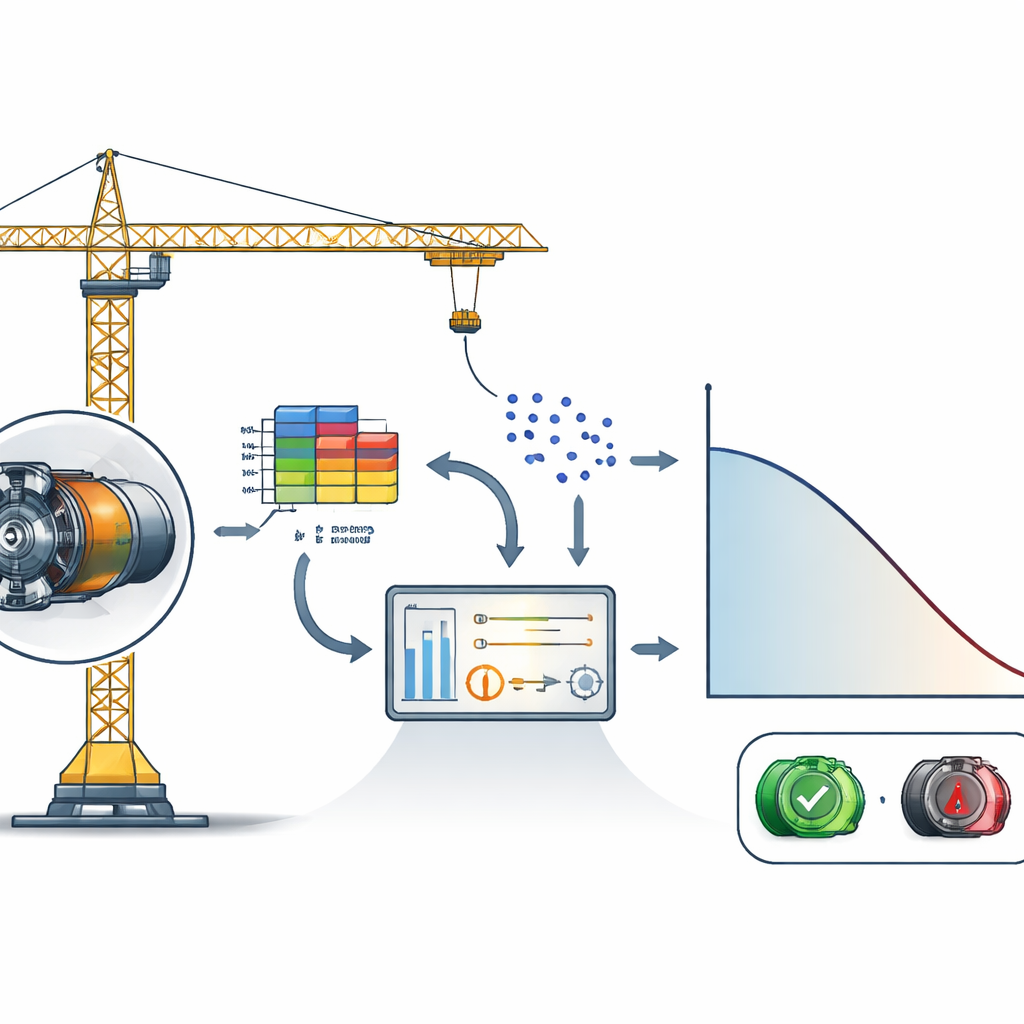
Crane brakes work by pressing friction surfaces together to create a braking torque that resists motion. Over months of use, these surfaces wear, heat cycles damage materials, and the contact between parts gradually worsens. The result is a growing “degradation quantity” of braking torque: the amount by which the actual braking force falls short of its original capability. China’s safety rules now require that the braking torque never drop below 90% of its rated value, so knowing when a brake is likely to cross that limit is crucial for planning maintenance and preventing accidents.
Making the most of scarce and scattered data
The authors face a practical problem: on-site measurements from working cranes are few and expensive, but manufacturers possess richer test data from the development stage of the same type of brake. Instead of discarding one source in favor of the other, the study combines them. First, the team collects historical test results from 15 manufacturers for the same crane brake model, measured at multiple days of simulated service. For each manufacturer and time point they compute the average and spread of the torque loss. These summaries behave in a regular way: the averages look roughly bell-shaped across manufacturers, and the spreads follow a skewed pattern typical of certain engineering uncertainties.
From past experience to updated expectations
Building on this structure, the authors use a Bayesian framework, which treats the unknown “true” behavior of torque degradation as something that can be updated as new evidence arrives. The historical manufacturing data are translated into a prior description of what values of average degradation and variability are plausible. Then, a small set of real factory measurements from a handful of cranes is taken at several service times. These fresh readings are blended mathematically with the prior using rules that naturally give more weight either to prior experience or to new data, depending on how much of each is available. The result is an updated picture of how quickly torque tends to degrade and how uncertain that estimate is.
Turning degradation into time left in service
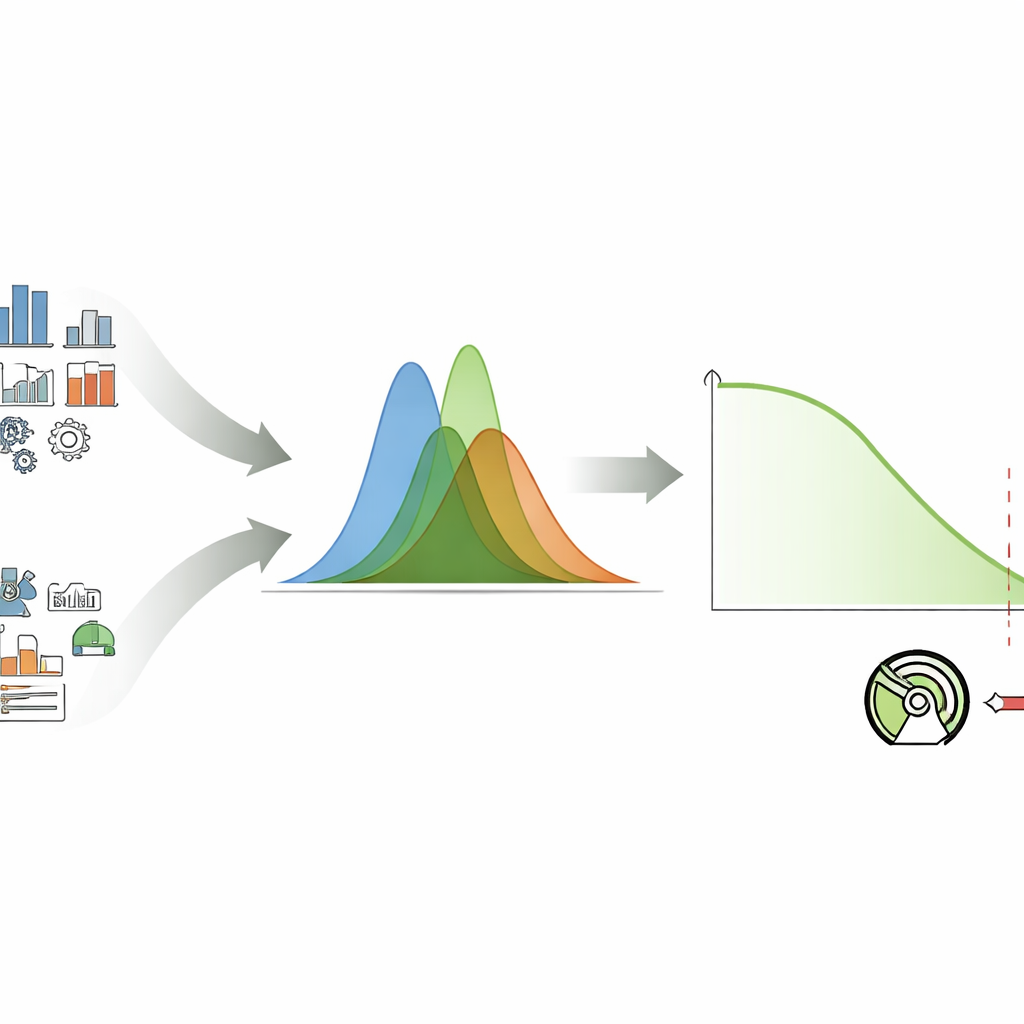
Knowing the distribution of torque loss at specific times is only half the story; maintenance planners need to know how long a brake can operate before it is likely to fall below the safety threshold. To answer this, the authors link their updated degradation estimates to a widely used lifetime pattern called the Weibull curve, which captures how mechanical components wear out. By matching the predicted reliability at each measurement time to this curve, they extract parameters that describe the entire service life. Applied to a real crane brake with a defined torque-loss limit, the method estimates that there is a 90% chance the brake will still meet the standard up to about 291 days of service, after which maintenance is recommended.
How well the method works and what it means
The study compares three ways of predicting brake reliability: using only historical test data, using only the new on-site measurements, and using the proposed combined approach. All three give similar trends, but the Bayesian method sits between the other two and fits the observed data slightly better, with smaller prediction errors. It also behaves stably when the underlying assumptions are nudged, which suggests that the results are not overly sensitive to hidden modeling choices.
Safer cranes from smarter statistics
For non-specialists, the key message is that it is possible to make sound, transparent maintenance decisions for critical safety parts like crane brakes even when full failure statistics are unavailable. By intelligently pooling past test results with a modest number of field checks, the method provides a clear estimate of how long brakes can be used before the risk of unsafe torque loss becomes too high. This allows operators to schedule timely maintenance, regulators to set evidence-based rules, and manufacturers to design safer equipment—all without waiting for a long and dangerous history of failures to accumulate.
Citation: Du, X., Lan, P., Zhao, X. et al. Reliability prediction of crane brakes based on the bayesian method. Sci Rep 16, 12146 (2026). https://doi.org/10.1038/s41598-026-41923-3
Keywords: crane safety, brake reliability, Bayesian estimation, mechanical degradation, preventive maintenance