Clear Sky Science · en
Mechanism of action of Astragalus membranaceus for treating diabetic foot ulcers based on single-cell RNA sequencing data and network pharmacology
Why stubborn foot wounds matter
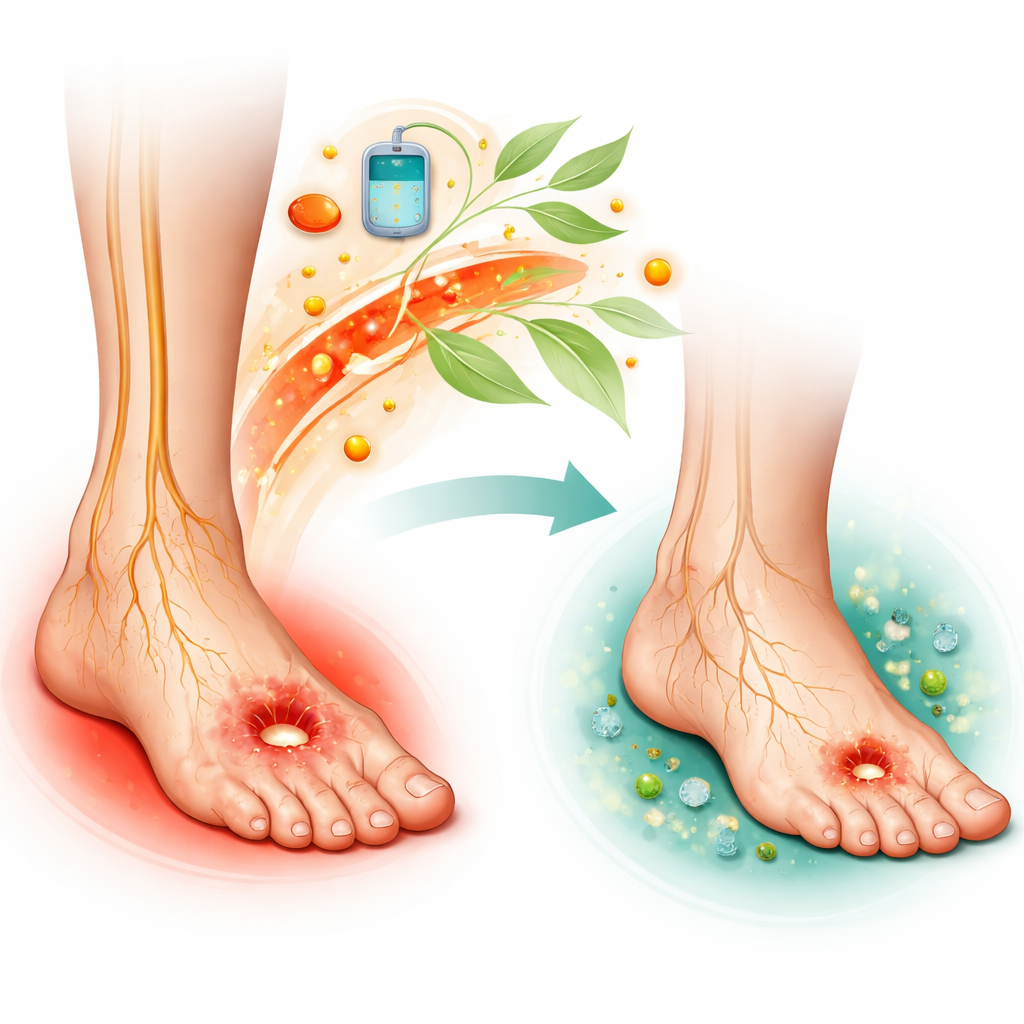
For many people with diabetes, a small sore on the foot can turn into a stubborn, dangerous wound that refuses to heal. These diabetic foot ulcers not only threaten limbs but are linked to survival rates similar to some cancers. Doctors urgently need better ways to understand why these wounds linger and how to coax them to close. This study looks at both the immune cells inside these ulcers and how a traditional Chinese herbal medicine, Astragalus membranaceus, might help, using cutting‑edge single‑cell genetics and computer‑based drug analysis.
Looking closely at every single cell
The researchers began by examining small pieces of skin from the edges of foot wounds in people with and without diabetes. Instead of averaging signals across all cells, they used single‑cell RNA sequencing, a technique that reads which genes are switched on in thousands of individual cells one by one. This produced a detailed map of nearly 5,000 cells, including immune cells, blood vessel cells, skin cells, and supporting tissue cells. Within this complex mix, the team focused on macrophages, immune cells that normally clean up debris, fight germs, and coordinate healing.
The many faces of key immune cells
Macrophages turned out to be surprisingly diverse. In total, 972 of these cells were grouped into seven subtypes, each with its own gene activity pattern and likely role in the wound. In non‑diabetic tissue, certain macrophage groups were more common and showed signals linked to calming inflammation, presenting germs to the immune system, and helping tissue repair. In diabetic ulcers, other macrophage groups dominated; these favored genes tied to strong inflammation and altered metabolism. A timeline analysis suggested that one subtype sat at an early, more balanced state, while others represented more extreme, disease‑skewed forms.
Broken conversations inside the wound
Healing depends not only on which cells are present but also on how they “talk” to each other through signaling molecules. Using computer tools, the team reconstructed communication networks between macrophages and other cells. In diabetic ulcers, there were more frequent contact signals overall, but many of the messages that normally promote repair—especially those involving growth factors that stimulate new blood vessels and skin regrowth—were weakened. In contrast, certain inflammation‑linked signals became more prominent. This pattern suggests that macrophages in diabetic ulcers are not simply inactive; instead, they are stuck sending the wrong kinds of messages for healing.
How an old herb might act on a modern problem
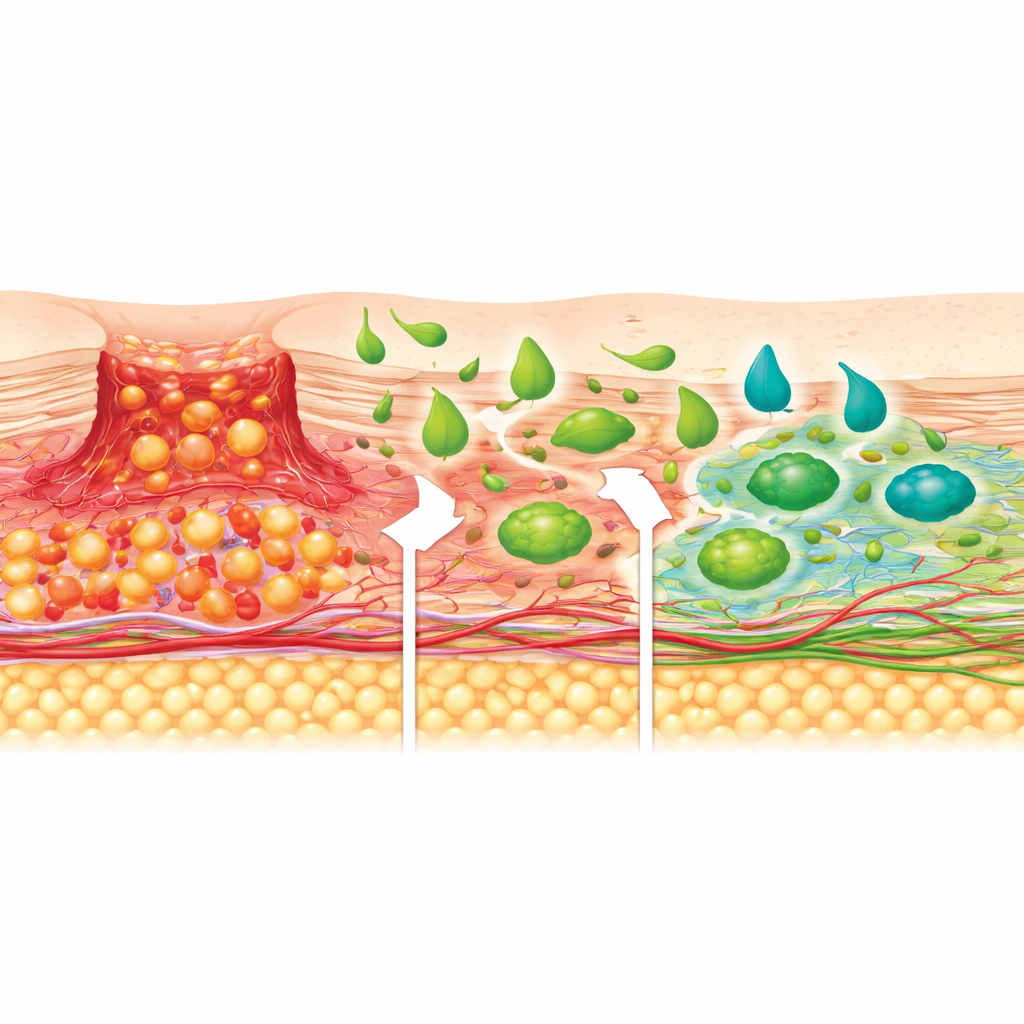
Astragalus membranaceus, a long‑used medicinal root, has been reported to reduce inflammation and aid tissue repair, but its precise actions in diabetic foot ulcers were unclear. The researchers compiled 14 likely active compounds from Astragalus and predicted thousands of human proteins they might bind using network pharmacology databases. They then compared these predicted targets with genes that were actually altered in ulcer‑associated macrophages, finding 537 overlaps. Many of these genes clustered in pathways linked to infection responses, inflammation, metabolism, and controlled cell death. By building a protein interaction network, the team highlighted eight “hub” genes—including MMP9, TP53, STAT1, SRC, and BCL2—as central players where Astragalus compounds and ulcer biology intersect.
Testing predicted targets in the lab
To move beyond computer predictions, the researchers selected five of these hub genes and measured their activity in fresh wound‑edge skin from another group of patients. They found that MMP9 and TP53 were more active in diabetic ulcers, while SRC and STAT1 were less active, matching the single‑cell data. Next, they performed molecular docking simulations, a kind of virtual chemistry experiment, showing that certain Astragalus compounds—especially quercetin and a related flavonoid—could theoretically fit tightly into pockets on the TP53 and STAT1 proteins. Together, these results suggest that Astragalus components might directly influence key switches controlling inflammation, tissue breakdown, and cell survival in macrophages.
What this could mean for future care
This study does not prove that Astragalus membranaceus cures diabetic foot ulcers, and the patient groups were relatively small. However, it offers a detailed picture of how immune cells are altered in these wounds and proposes specific molecules through which this traditional herb might nudge macrophages back toward a more healing‑friendly state. For patients and clinicians, the work points toward a future where herbal therapies are not just used by tradition, but are guided by precise maps of cell behavior and drug targets, potentially leading to better‑designed treatments for one of diabetes’s most serious complications.
Citation: Li, X., Dong, Y., Huang, C. et al. Mechanism of action of Astragalus membranaceus for treating diabetic foot ulcers based on single-cell RNA sequencing data and network pharmacology. Sci Rep 16, 12959 (2026). https://doi.org/10.1038/s41598-026-41921-5
Keywords: diabetic foot ulcer, macrophages, Astragalus membranaceus, wound healing, single-cell RNA sequencing