Clear Sky Science · en
Slope stability prediction via TrAdaBoost transfer learning: integrating physics and data into a double-driven framework
Why keeping hillsides safe matters
Steep slopes overlook many of our roads, towns, and mines. When they fail, landslides can bury homes, block transport routes, and cause loss of life. Engineers have methods to check whether a slope is likely to hold or collapse, but these approaches either demand heavy field work and expert knowledge or rely on past data that are often scarce. This study presents a new way to predict which slopes are safe and which are risky by blending computer-simulated physics with real-world observations in a single learning system.
Two ways to judge a hillside
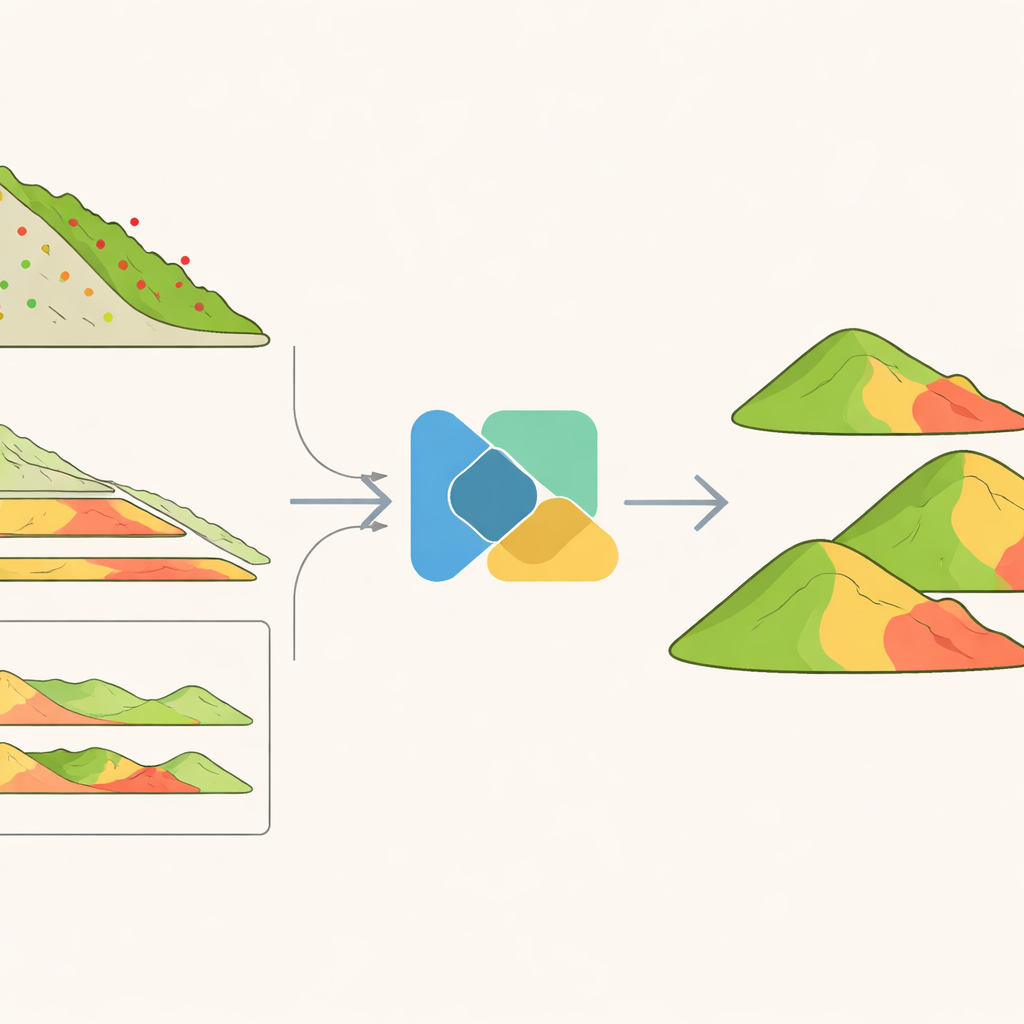
Traditionally, slope safety is checked in one of two ways. Physics-based methods use equations from soil and rock mechanics to simulate how a hillside might deform or slide. They are trusted and grounded in science, but require detailed site surveys and intensive calculations for every new case. Data-driven methods, in contrast, treat slope safety as a pattern-recognition problem: they feed past cases into machine learning algorithms and let the computer learn which combinations of soil strength, slope angle, water pressure, and other factors usually lead to failure. These models can be fast once trained, but they stumble when only a small number of real failure cases are available, which is typical in practice.
Borrowing strength from virtual slopes
The authors tackle this data scarcity problem by using transfer learning, a family of techniques that reuse knowledge from one setting to help another. They first create 150 “virtual” slopes using finite element simulations, a standard tool that mimics how soil and rock respond to gravity and water. Each simulated slope has six basic characteristics: how heavy the soil is, how well it sticks together, how rough its grains are, the slope angle, the slope height, and how much water pressure is present. They then collect 98 real slopes from published case histories that share the same six descriptors. The simulated slopes form a source pool of physically consistent examples, while the real slopes are the target cases we ultimately care about.
Teaching the model what to trust
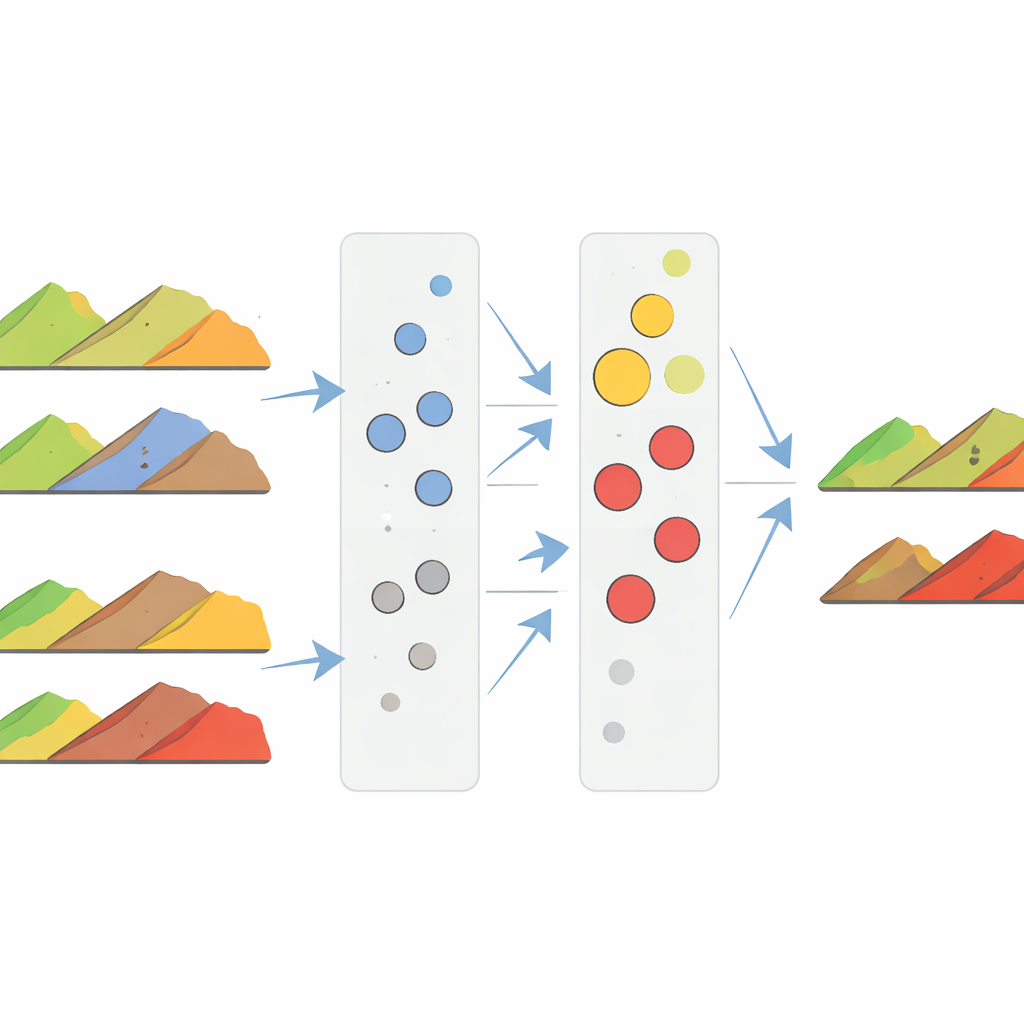
Not all simulated slopes resemble real sites, so the study uses a specific transfer learning algorithm called TrAdaBoost to decide which examples help and which mislead. This method starts by training several standard classifiers—support vector machines, logistic regression, decision trees, and random forests—on a mixture of simulated and a small subset of real cases. During many training rounds, it automatically increases the influence of simulated cases that behave like the real slopes and decreases the weight of those that do not. At the same time, it pays extra attention to real slopes the model gets wrong, forcing the system to learn from its mistakes and sharpen its ability to recognize truly unstable situations.
How well the new approach works
The researchers compare four versions of this transfer-learning scheme, each built around a different core classifier. They evaluate them on 74 real slopes that were held back for testing. The best performer combines TrAdaBoost with a support vector classifier. This model correctly predicts slope stability in nearly 88 percent of cases and is especially good at catching dangerous slopes, correctly identifying about 93 percent of unstable examples. Its overall ranking score, which balances hits and false alarms, is also high. When tested against earlier methods from the literature, including neural networks and other ensemble models trained only on field data, the new double-driven framework consistently matches or surpasses their accuracy despite using relatively few real-world cases.
What this means for everyday safety
In practical terms, the study shows that computer-generated physics cases and sparse real observations can be woven together into a single learning tool that is both reliable and efficient. By letting the algorithm selectively transfer only the most relevant simulated knowledge, engineers can build better early-warning systems and design checks for slopes even when field data are limited. The authors emphasize that their framework can be extended by adding more factors, such as earthquakes or rainfall, and adapted to other geotechnical problems. For a layperson, the key takeaway is that smarter use of simulations and data can help flag risky hillsides earlier and more accurately, reducing both the chance of disaster and the cost of unnecessary reinforcement.
Citation: Ren, M., Xu, X., Dai, F. et al. Slope stability prediction via TrAdaBoost transfer learning: integrating physics and data into a double-driven framework. Sci Rep 16, 11883 (2026). https://doi.org/10.1038/s41598-026-41919-z
Keywords: landslide prediction, slope stability, transfer learning, geotechnical engineering, machine learning