Clear Sky Science · en
Investigation of diesel post injection using diesel/biodisel/methanol/DTBP: a path towards ultra-low smoke emissions and improved fuel economy
Cleaner trucks and tractors
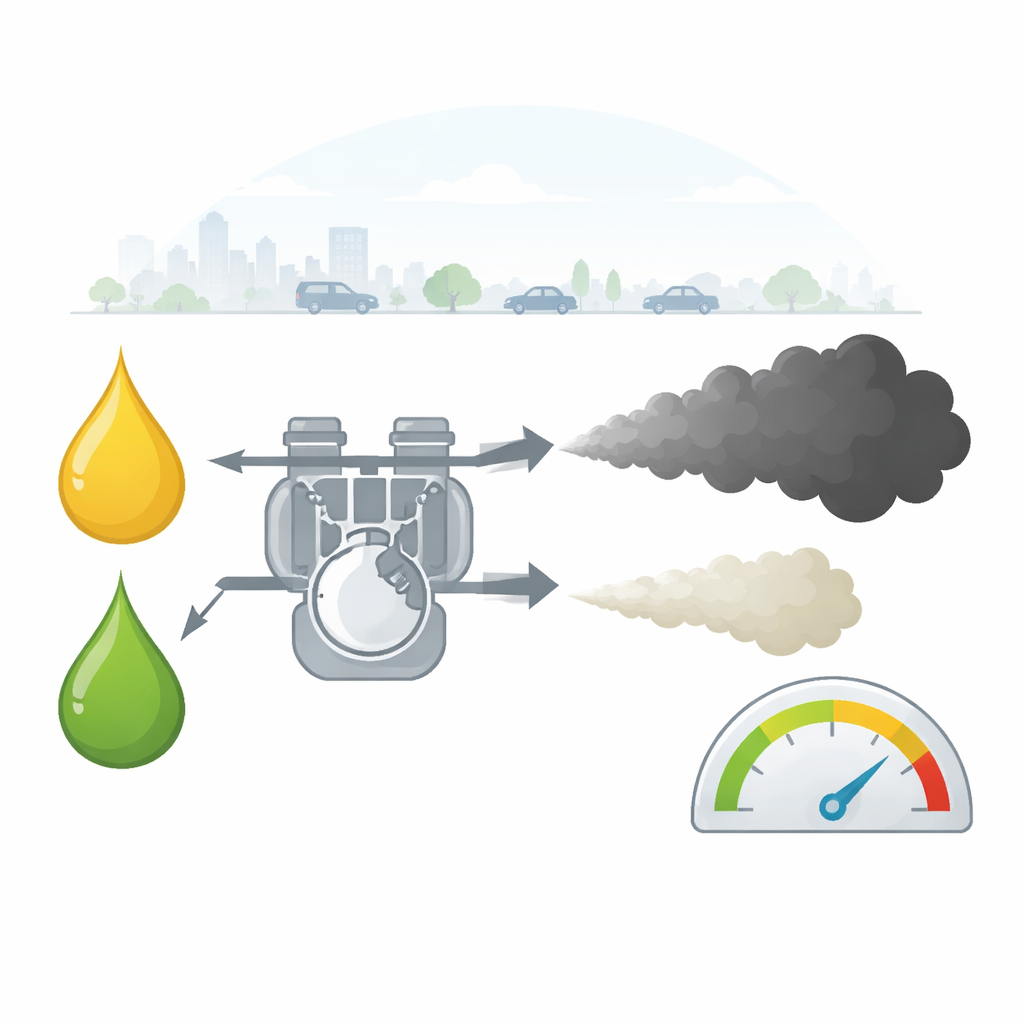
Diesel engines power delivery trucks, farm equipment and generators around the world, but their exhaust still contains soot and other pollutants that threaten air quality and human health. This study explores a practical way to make existing diesel engines much cleaner and slightly more fuel‑thrifty by smartly reshaping both the fuel recipe and the way it is injected into the engine, without needing a complete hardware redesign.
Why diesel smoke is hard to tame
Conventional diesel engines are popular because they deliver strong pulling power and good fuel economy, but they tend to emit high levels of smoke (soot), carbon monoxide and unburned hydrocarbons. One modern in‑cylinder trick to cut smoke is called “post injection”: a small extra squirt of fuel is added late in the power stroke. This extra burning raises the temperature of the exhaust inside the cylinder just long enough to help burn away soot. The catch is that the added fuel does not do much useful work on the piston, so post injection usually worsens fuel consumption even while it cleans up the exhaust.
Blending cleaner fuels from waste oil and alcohol
The researchers started from a realistic fuel that many fleets already use: a mix of 70% regular diesel and 30% biodiesel made from waste cooking oil. Biodiesel naturally contains oxygen in its molecules, which helps burn soot, but it can raise fuel use and nitrogen oxide emissions. To push smoke levels even lower, the team blended in 10% methanol, an alcohol with very high oxygen content and relatively little carbon. Because methanol does not mix well with straight diesel, combining it with biodiesel solved that problem. However, methanol also makes the fuel harder to ignite quickly inside a diesel engine, especially for that late post‑injected portion, so some of the extra fuel risks leaving the cylinder only partly burned.
A small chemical nudge for better burning
To overcome this ignition problem, the authors added a tiny amount (0.5% by volume) of a substance called di‑tert‑butyl peroxide, a “cetane improver” that helps diesel‑type fuels ignite more easily. They tested three fuels in a single‑cylinder common‑rail diesel engine: the base diesel–biodiesel blend, the same blend plus methanol, and the methanol blend plus the cetane improver. For each fuel they carefully adjusted when and how much post‑injected fuel was added, while running the engine at a realistic operating point (medium speed, high load). They measured how heat was released during combustion, the pressure inside the cylinder, exhaust temperature, fuel use and key pollutants including smoke, carbon monoxide, hydrocarbons and nitrogen oxides.
What happens inside the cylinder
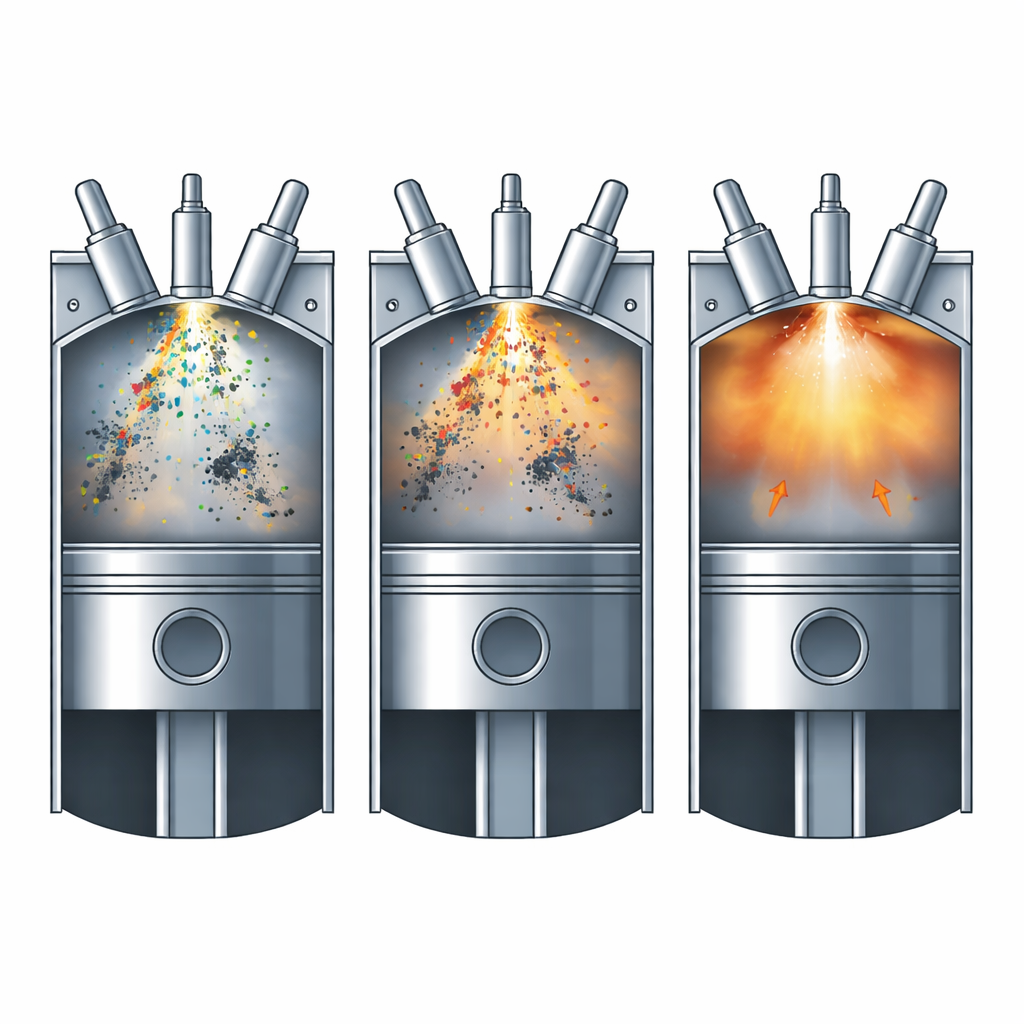
Adding methanol changed the way the fuel burned. The main part of the combustion became more intense and slightly earlier, raising cylinder pressure and exhaust temperature and sharply reducing smoke. At the same time, the late post‑injected fuel from the methanol blend was harder to burn completely, so its ability to clean up leftover soot and other carbon‑based emissions weakened, and overall fuel use rose. When the cetane improver was included, ignition timing shifted closer to the ideal moment near the top of the piston stroke, and the post‑injected portion burned more fully, even though it arrived late in the cycle. This combination improved how efficiently energy was turned into useful work and strengthened the “self‑cleaning” effect on soot and carbon‑rich gases.
Cleaner exhaust with less fuel
Among all the tested settings, a particular post‑injection case using the methanol–biodiesel–diesel fuel plus cetane improver stood out. Compared with a standard single‑injection case using only the diesel–biodiesel blend, smoke was cut by about 85%, carbon monoxide by 83% and unburned hydrocarbons by 65%, while nitrogen oxides also dropped modestly. Crucially, this cleaner exhaust came with about a 4% improvement in fuel consumption instead of the usual penalty seen with post injection. In simple terms, by carefully tuning both what is injected and when, the engine burned its fuel more completely and wasted less of it as pollution or unused heat.
What this means for everyday engines
The study shows that an existing diesel engine can be made much cleaner and slightly more economical by using a waste‑oil‑based biodiesel, a modest dose of methanol and a trace of ignition‑boosting additive, combined with an optimized late fuel pulse inside the cylinder. For drivers and equipment operators this approach could mean clearer exhaust with less smoke, a small gain in mileage and progress toward stricter emission rules—without replacing the engine or adding complex exhaust treatment systems. Future work can explore other methanol and additive levels, but this pathway already points toward cleaner, more efficient workhorses on roads and farms.
Citation: Dave, H., Chan, C.K., Sonawane, C. et al. Investigation of diesel post injection using diesel/biodisel/methanol/DTBP: a path towards ultra-low smoke emissions and improved fuel economy. Sci Rep 16, 12007 (2026). https://doi.org/10.1038/s41598-026-41917-1
Keywords: diesel engines, biodiesel, methanol fuel, post injection, soot emissions