Clear Sky Science · en
Novel fatty acid metabolism risk score model for guiding treatment in endometrial endometrioid cancer
Why fat and womb cancer belong in the same story
Endometrial cancer, which begins in the lining of the uterus, is one of the most common cancers in women. Doctors have long known that extra body weight and disordered metabolism raise the risk of this disease, especially for the most frequent subtype called endometrioid endometrial cancer. This study asks a simple but powerful question: can the way tumour cells handle fat help doctors sort patients into clearer risk groups and choose treatments more wisely?
Looking inside tumour fuel use
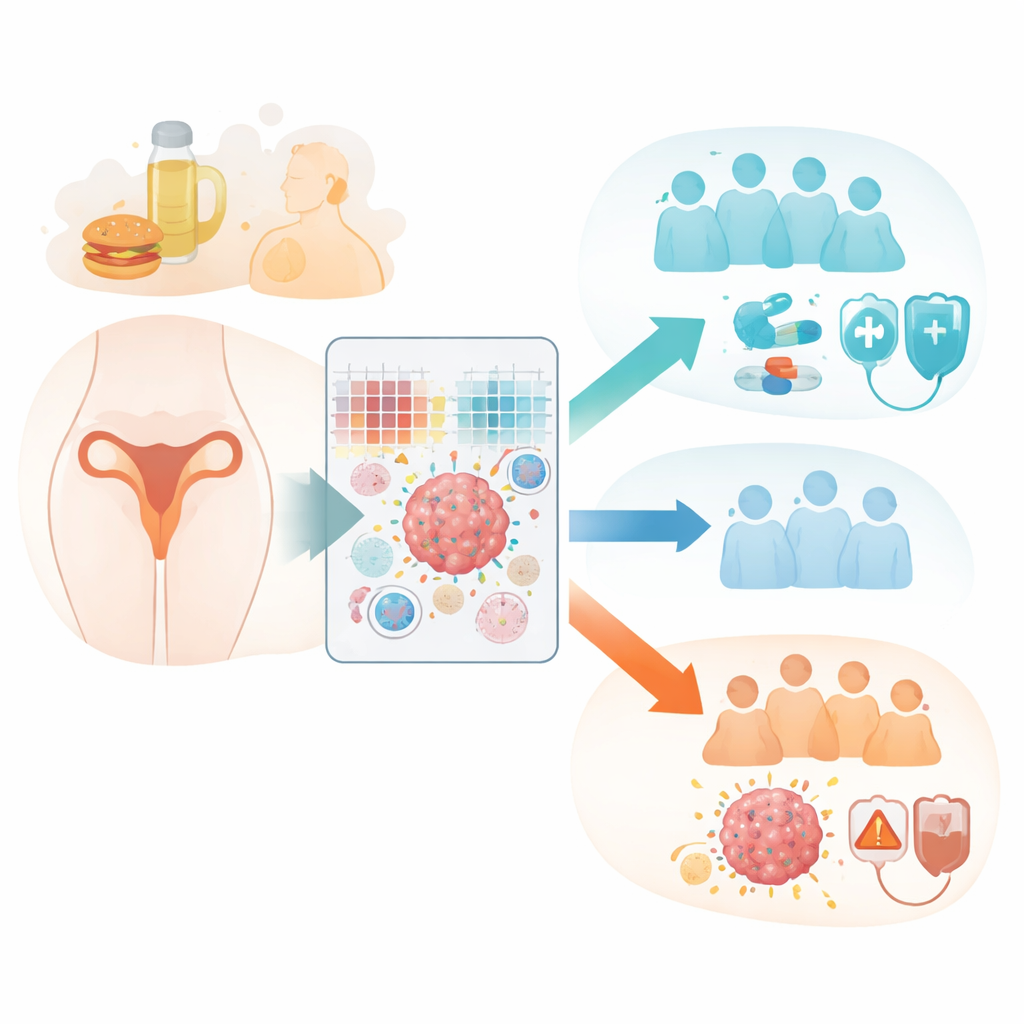
Cancer cells do not use food like healthy cells do. In the cramped, low-oxygen environment inside a tumour, they often shift toward burning fats and changing their surroundings to support growth. The researchers tapped into large public databases containing genetic readouts from hundreds of tumour samples and normal uterine tissue. They focused on genes involved in how cells make, break down and use fatty acids. By comparing tumour tissue with normal tissue, they found 127 fat-related genes that were switched on or off differently in cancer, hinting that altered fat handling is a hallmark of this disease.
Building a score that separates patients
From this long list, the team used statistical tools to identify a small group of genes whose activity levels tracked with how long patients lived and how long they stayed free of disease. Six genes, including ones that influence cell energy, acidity and lipid processing, were combined into a single “risk score.” Each patient’s tumour received a score based on how strongly these genes were expressed. When patients were split into high- and low-score groups, the two groups showed clearly different survival curves: low-score patients tended to live longer and have their cancer controlled for more years, while high-score patients faced earlier return of disease and death.
What the score reveals about tumour behaviour
The fat-metabolism score did more than sort patients by outcome. High-score tumours were more likely to carry certain genetic flaws, including defects in DNA repair systems and mutations in the TP53 gene, changes that are often linked to aggressive cancers. These tumours also showed signs of unstable chromosomes and stress during cell division, suggesting that the altered fat pathways are intertwined with deep changes in how tumour cells grow and maintain their DNA. In contrast, low-score tumours were enriched for hormone-related signalling and other pathways more typical of less aggressive, hormone-sensitive disease. Together, this suggests that the score captures a broad biological “personality” of each tumour, not just a few isolated lab values.
Clues for the body’s defenses and for drug choice
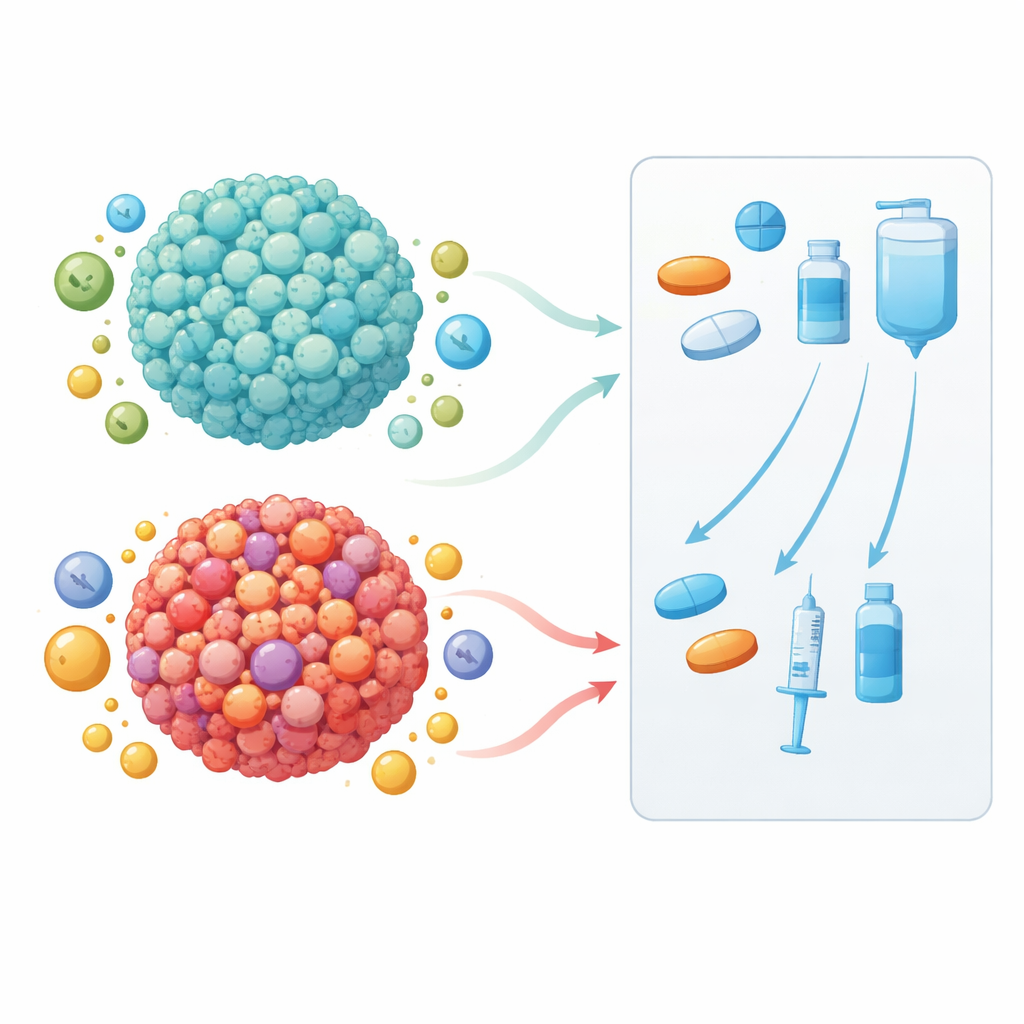
The study also examined how the score related to the immune cells that enter the tumour and to potential responses to treatment. High-score tumours showed a pattern of immune features associated with escape from attack, and a computer model predicted that they would be poor candidates for modern immunotherapy drugs that aim to unleash T cells. Low-score tumours, while not obviously packed with attack-ready immune cells, appeared less shielded against immune responses. When the authors modelled how nearly 200 cancer drugs might work in these two groups, they found distinct patterns: some chemotherapies and targeted medicines looked more promising in low-score tumours, while a different set looked better suited to high-score tumours. This hints that a simple gene-based score could one day guide personalised drug choices.
Key genes that drive growth and spread
Digging deeper, the researchers highlighted four individual genes that stood out across several datasets: CA2, NTS, CLDN6 and APOD. Tumours with high levels of CA2, NTS and CLDN6 tended to be higher grade and behave more aggressively, while APOD showed the opposite pattern and seemed protective. In laboratory experiments, turning down CA2 or NTS in cultured endometrial cancer cells slowed their growth, movement and ability to invade through a barrier, and reduced proteins linked to proliferation and tissue invasion. These findings suggest that some of the fat-linked genes in the score are not just markers but may actively help drive tumour progression, making them potential direct drug targets.
What this means for patients and the road ahead
For lay readers, the message is that how a uterine tumour “eats” fat and manages its internal chemistry can give important clues about how dangerous it is, how it will interact with the immune system and which drugs might work best. The authors’ fatty-acid-metabolism-based risk score is an early but promising tool for sorting endometrial endometrioid cancers into biologically distinct groups that call for different treatment strategies. Because this work relies heavily on computer analyses and a modest number of tissue samples, it is not yet ready to steer clinical decisions on its own. With further testing in larger, diverse patient groups and in animal models, however, this kind of metabolism-focused scoring system could become part of a more precise, personalised approach to caring for women with endometrial cancer.
Citation: Xu, X., Wu, Q., Liu, L. et al. Novel fatty acid metabolism risk score model for guiding treatment in endometrial endometrioid cancer. Sci Rep 16, 14223 (2026). https://doi.org/10.1038/s41598-026-41912-6
Keywords: endometrial cancer, fatty acid metabolism, tumor microenvironment, cancer risk score, immunotherapy resistance