Clear Sky Science · en
Structural characteristics and environmental impact factors of submerged macrophytes communities during the natural restoration period of urban lakes with different trophic levels
Why the Life Under the Lake Surface Matters
Across many cities, lakes that once had clear water and lush underwater plants are now choked with murky, green water. This study looks beneath the surface of six urban lakes in Wuhan, China, to understand how underwater plants respond when pollution is reduced and the lakes are allowed to heal on their own. By tracking these hidden plant communities and the changing water conditions over a year, the researchers show what helps a sick lake move back toward clear water, richer life, and more stable ecology.
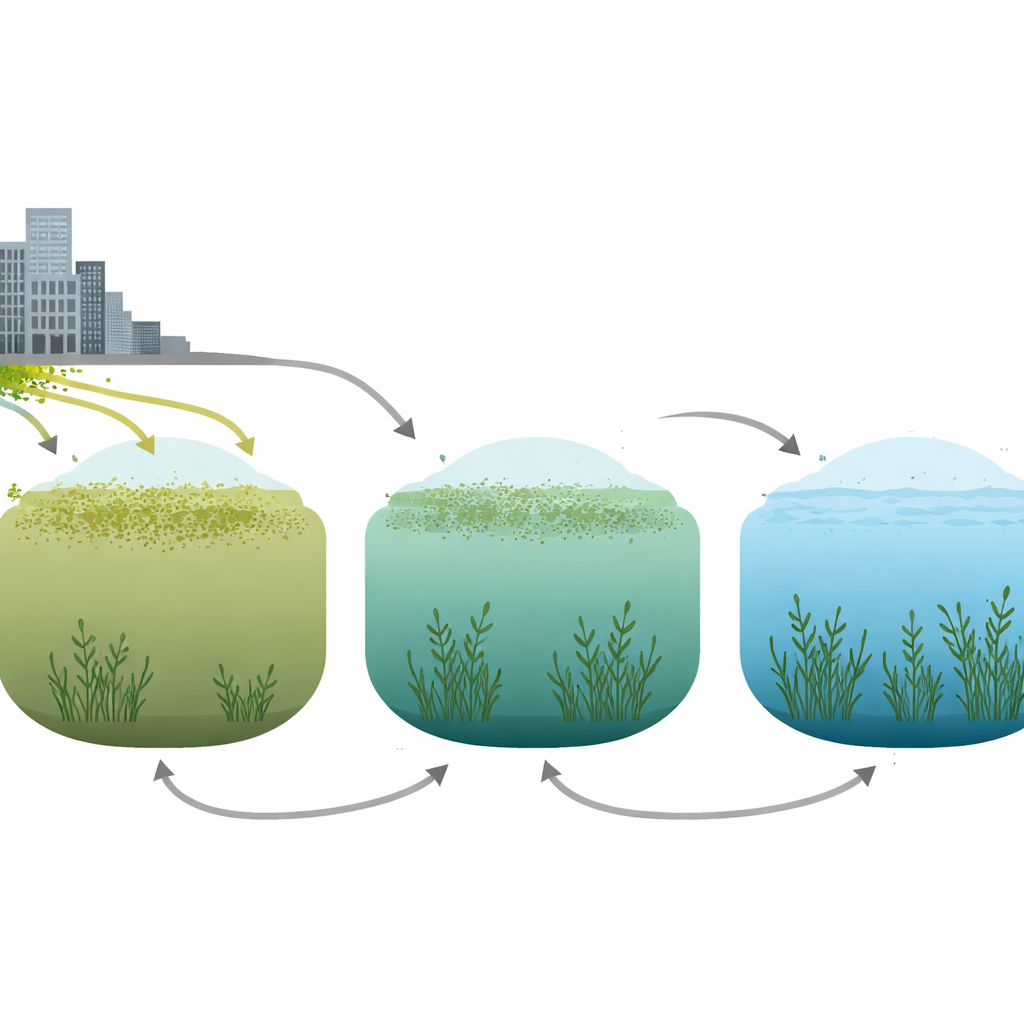
From Murky Water to Clearer Shores
The team focused on “submerged macrophytes” – rooted plants that grow entirely underwater and act as the foundation of lake ecosystems. These plants soak up nutrients, stabilize muddy bottoms, and provide food and shelter for fish and invertebrates. The researchers chose six lakes that had all undergone basic pollution control but still differed in how nutrient‑rich they were: some only moderately enriched, others mildly or moderately heavily enriched. Over four seasons between 2023 and 2024, they measured water quality – including nutrients, algae, clarity, and oxygen – and harvested plants at shoreline sites to weigh their biomass and record how many species were present.
More Nutrients, Fewer Underwater Plants
Across the six lakes, only eight species of submerged plants were found, with three species dominating most sites. Yet their success varied sharply with nutrient levels. In the cleaner, moderately enriched lakes, there were typically seven to eight species and plant biomass was high, forming dense underwater meadows. In the more polluted lakes, plant life was greatly reduced: one lake with moderate eutrophication supported only two species with very low biomass. Measures of diversity confirmed this pattern – richer, more even communities thrived where nutrient loads were lower, while heavily enriched lakes were dominated by just a few tough species that could tolerate murky, algae‑filled water.
How Environment Shapes Hidden Plant Communities
To understand why communities differed, the authors linked plant data with many environmental measurements. They found that the “trophic level” – how nutrient‑rich a lake is – strongly shaped community structure and how it changed across seasons. In cleaner lakes, physical conditions such as water temperature and how cloudy the water was played a major role in plant growth. In mildly enriched lakes, chemical signals of organic pollution and forms of nitrogen became more important. In the most nutrient‑rich lakes, algae‑driven cloudiness and low oxygen near the bottom strongly limited plant recovery. Across all lakes, nitrogen – especially nitrate – emerged as the key driver: higher nitrogen was closely tied to poorer plant performance. A co‑occurrence network of species also suggested that as nutrients rise, competition intensifies and communities simplify, leaving only a few dominant, pollution‑tolerant plants.
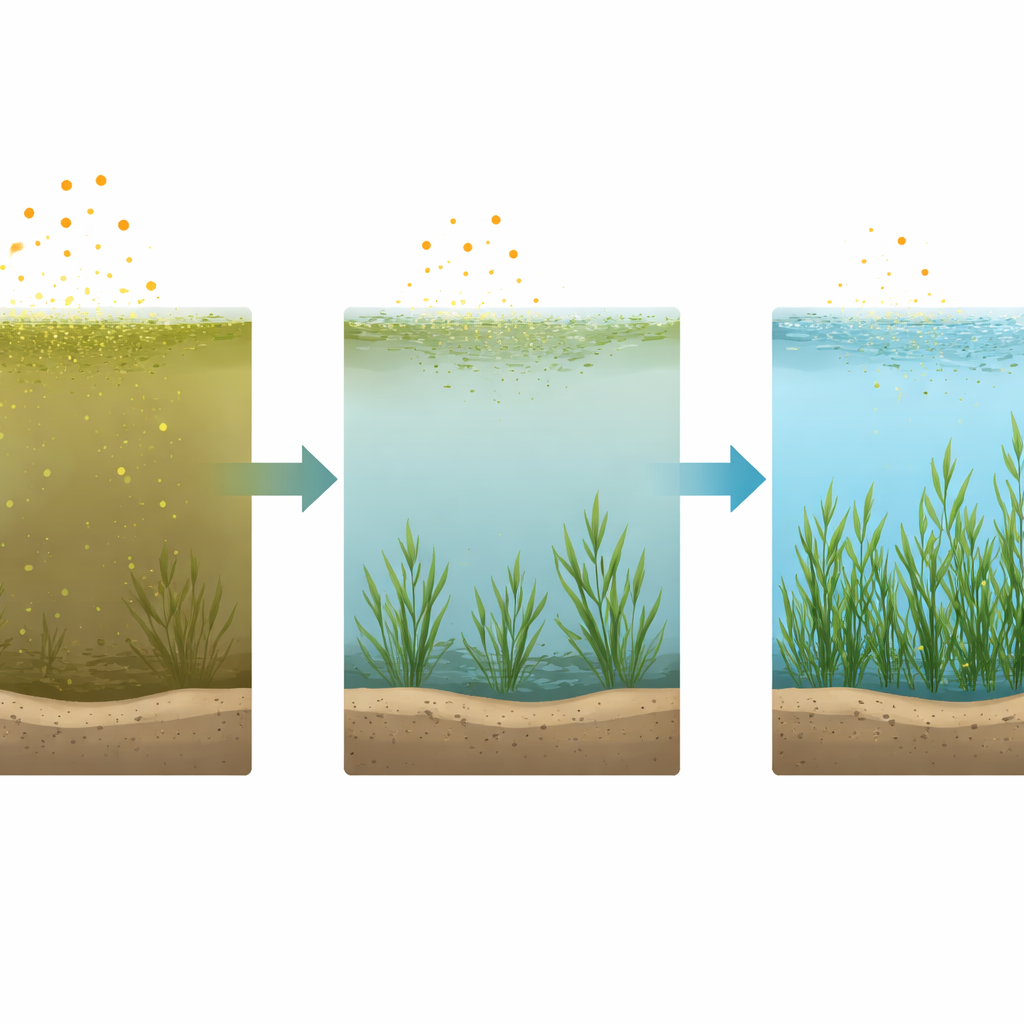
The Chain from Nutrients to Light and Life
Using advanced statistical models, the study traced how nutrients indirectly undermine underwater plants. Extra nitrogen and phosphorus boost algal growth, measured as chlorophyll in the water. These algae make the water more turbid, blocking sunlight that submerged plants need for photosynthesis. The model showed that nutrients have a strong overall negative effect on plant biomass mainly by increasing turbidity and algae. Water temperature, in contrast, tended to help plant growth within the observed range, likely by speeding up metabolism and extending the growing season. Together, these results outline a clear cause‑and‑effect chain: more nutrients mean more algae and cloudier water, which in turn means fewer and weaker underwater plants.
What This Means for Restoring Urban Lakes
For city managers and the public, this work offers a hopeful but cautious message. Once obvious pollution sources are controlled, underwater plants can recover, especially in lakes where nutrient levels are brought down toward moderate conditions. As this happens, plant communities become richer and more stable, helping to lock in clearer water and healthier ecosystems. But the study also shows that nitrogen, in particular, must be carefully managed, and that improvements in water clarity and basic physical conditions are crucial. In simple terms, to bring back the underwater gardens that keep lakes clear and vibrant, cities must focus on reducing nutrient inputs, especially nitrogen, and giving lakes time to shift from algae‑dominated murk back to plant‑dominated clarity.
Citation: Tang, H., Yuan, Y., Zhu, L. et al. Structural characteristics and environmental impact factors of submerged macrophytes communities during the natural restoration period of urban lakes with different trophic levels. Sci Rep 16, 13602 (2026). https://doi.org/10.1038/s41598-026-41902-8
Keywords: urban lakes, underwater plants, eutrophication, lake restoration, nutrient pollution