Clear Sky Science · en
Asymmetric effects of heating and cooling degree days on carbon dioxide emissions in Germany using cross quantile regression
Why the weather matters for your carbon footprint
When we think about climate change, we often picture smokestacks, cars, and power plants. But the temperature outside your window – how hot your summers are and how cold your winters get – quietly steers how much energy we use, and therefore how much carbon dioxide we release. This study looks at Germany and asks a simple but important question: how do unusually hot and cold days change the country’s emissions, and are these effects stronger in years when emissions are already high? The answer turns out to be yes, and in ways that matter for how we plan buildings, cities, and energy systems for a warming world.
Hot days, cold days, and everyday energy use
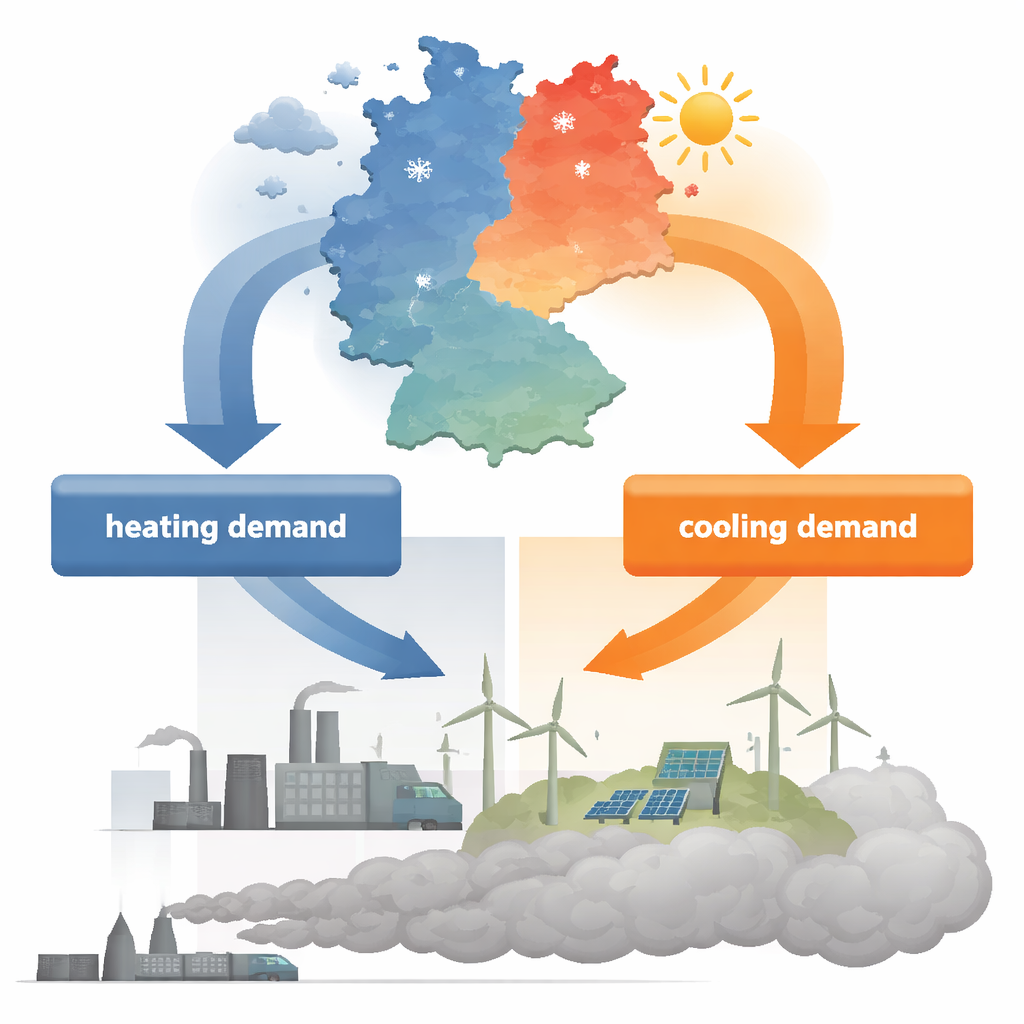
The authors focus on two practical measures that energy planners use: heating degree days and cooling degree days. These indicators translate weather into energy needs. A colder-than-comfortable day adds to the tally of heating degree days, signalling more fuel burned to keep homes and offices warm. A hotter-than-comfortable day adds to cooling degree days, signalling more electricity use for fans and air conditioning. Because heating and cooling make up a large share of how we use energy, especially in a country with chilly winters like Germany, tracking these measures tells us a lot about how weather and emissions are linked.
Germany’s push to go green under weather pressure
Germany is an ideal test case. It has long, cold winters that demand a lot of heating, and in recent decades it has also seen more frequent and intense summer heatwaves, raising the demand for cooling. At the same time, the country is in the midst of an ambitious energy transition, aiming for climate neutrality by 2045. Electricity has become much cleaner as wind and solar expand, yet many buildings still depend on natural gas and oil for heating, and peak power on very hot days still partly comes from fossil fuels. This mix means that swings in temperature can either undermine or reinforce the progress Germany is making in cutting emissions.
Looking beyond averages to the extremes
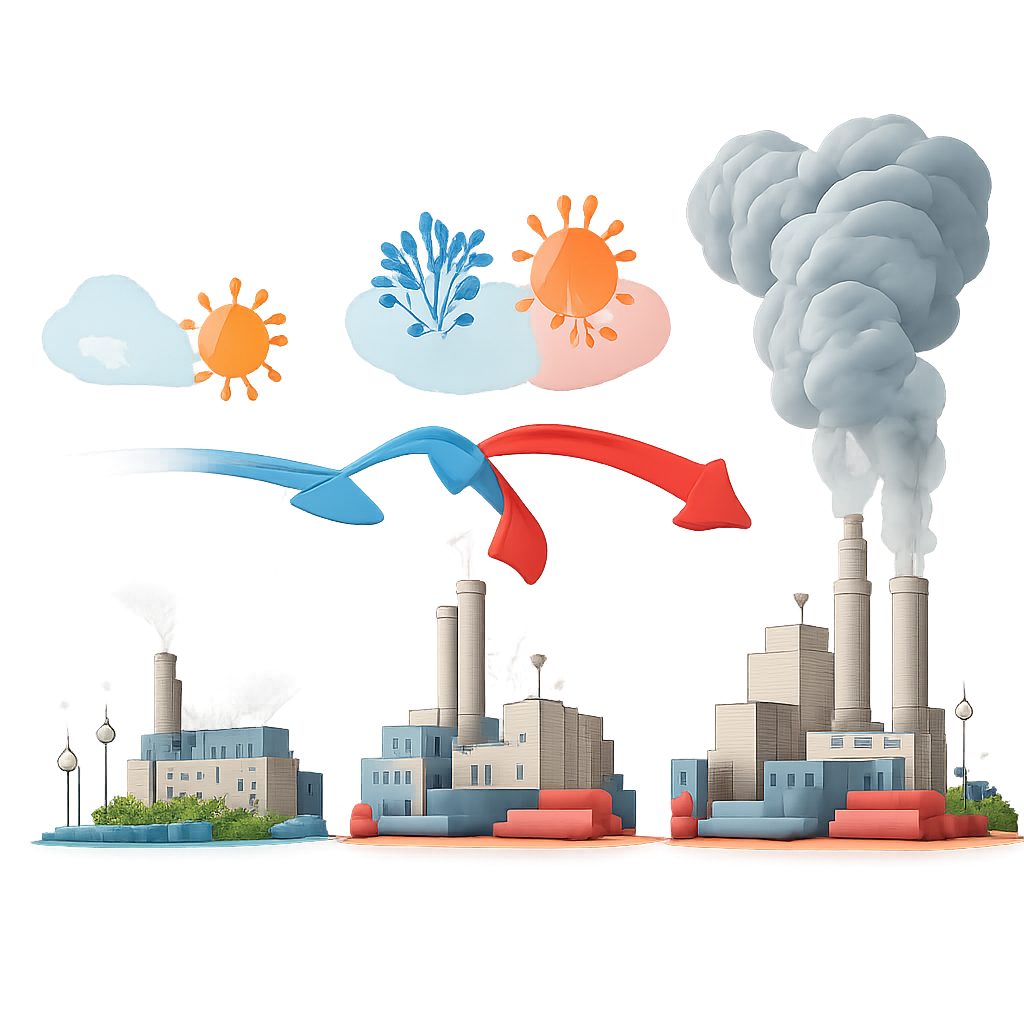
Most earlier studies used methods that look only at average effects – for example, asking how a typical change in temperature affects a typical level of emissions. This study goes further by using a technique that examines what happens across the full range of emission levels, from unusually low to unusually high. In practical terms, the researchers ask: do extra heating or cooling needs matter more in already dirty years than in cleaner ones? They find that both cold and hot conditions push emissions up, but the push is much stronger in the upper part of the emissions range, when the system is already under strain. Mild winters can slightly reduce emissions, but severe cold spells and intense heatwaves cause disproportionate spikes.
How cities, wealth, and nature shape the impact
The study also shows that the weather–emissions link depends on how society is organised. Where energy use is high and still based on fossil fuels, extra heating and cooling needs translate directly into higher emissions. Higher incomes and a cleaner power mix can soften this effect by encouraging better insulation, efficient appliances, and more renewable energy. On the other hand, densely built cities and regions with a heavy ecological footprint tend to amplify the problem: heat islands make summers hotter, and tightly packed buildings concentrate energy demand. In these settings, extreme temperatures trigger larger jumps in emissions than the national average would suggest.
What this means for future climate policy
By combining these strands, the authors estimate that temperature extremes can impose welfare losses on the order of roughly one to a few hundred euros per person each year, mainly through the extra emissions they cause. The key lesson for a lay reader is that climate risk is not just about gradual warming, but about how our homes, cities, and energy systems respond when the weather swings to the extremes. Policies that only target average conditions miss where the damage is concentrated. The study argues that Germany, and countries like it, will need targeted strategies for very cold and very hot periods – such as better-insulated buildings, low-carbon heating and cooling, and cooler city designs – if they are to keep emissions in check while the climate becomes more volatile.
Citation: Akadiri, S.S., Özkan, O. & Hamza, F. Asymmetric effects of heating and cooling degree days on carbon dioxide emissions in Germany using cross quantile regression. Sci Rep 16, 11574 (2026). https://doi.org/10.1038/s41598-026-41897-2
Keywords: heating and cooling degree days, Germany energy and climate, temperature and CO2 emissions, climate adaptation in buildings, urban heat and cooling demand