Clear Sky Science · en
Explainable LSTM-AdamW based fault diagnosis of aircraft rotating components using airborne acoustic signals under dynamic operating conditions
Listening for Trouble in Aircraft Engines
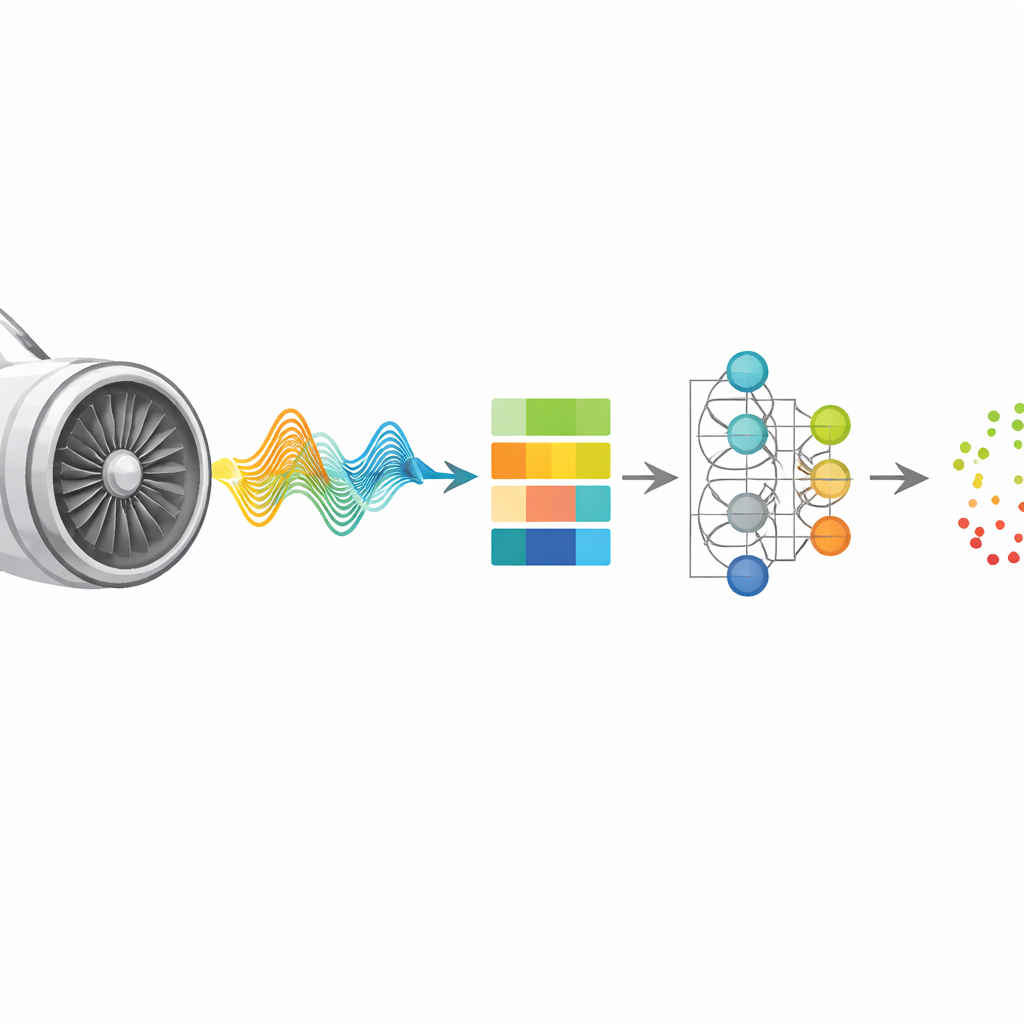
Modern aircraft rely on spinning parts that must work flawlessly at high speed and under shifting loads. Instead of waiting for a part to fail, engineers increasingly try to “listen” for early signs of trouble in the sounds these machines emit. This study shows how a new kind of listening system, based on advanced yet explainable artificial intelligence, can detect subtle faults in rotating components using airborne sound alone—even when the engine speed is constantly changing.
Why the Sounds of Machines Matter
Rotating parts such as bearings, shafts and disks generate characteristic sound patterns as they spin. When cracks begin to form or surfaces start to wear, the sound changes in short, sharp bursts that the human ear usually cannot distinguish from background noise. Traditional monitoring methods often rely on contact sensors bolted to the machine, or on simple thresholds that work best when the machine runs at a steady speed. In real aircraft, however, engines accelerate, decelerate and face varying loads, which makes the sound highly irregular and noisy. That complexity has limited the reliability of older diagnostic methods and created a need for intelligent tools that can cope with real-world conditions.
Teaching a Neural Network to Hear Faults
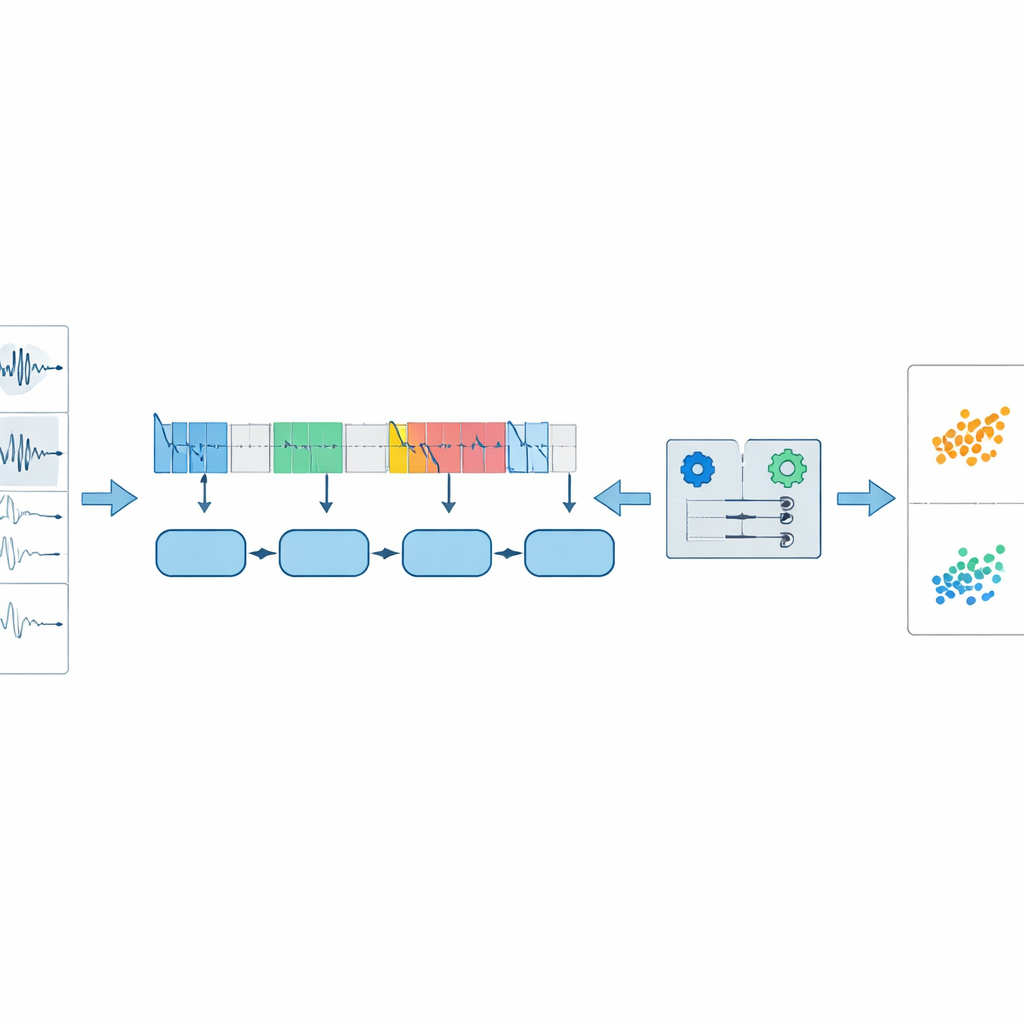
The researchers built a listening system around a long short-term memory (LSTM) network, a type of neural network designed to handle time-series data. They trained and tested it on publicly available recordings from a laboratory test rig with rolling bearings that were either healthy or had defects on the inner race, outer race or rolling elements. Only four 12-second audio clips were available, each sampled at a high rate while the shaft speed varied over time. To make the most of this limited data, the team chopped the recordings into thousands of short, non-overlapping sound snippets, each lasting about 0.02 seconds, and ensured that training and testing snippets came from completely different recordings to avoid hidden leakage of information.
Finding the Best Way to Learn from Sound
To see whether the LSTM really offered an advantage, the authors compared three recurrent models side-by-side: a basic recurrent neural network, a gated recurrent unit (GRU) and their LSTM tuned with a modern optimization method called AdamW. All three models received exactly the same input snippets and were trained under identical settings. The LSTM–AdamW combination clearly stood out: it reached about 99.3 percent accuracy and the same macro-averaged F1 score, a stricter measure that balances performance across all four classes. The GRU performed well but slightly worse, while the basic recurrent network both overfit the training data and confused certain fault types. Additional tests showed that the LSTM model retained strong performance even when it was trained on one speed profile and evaluated on a different, more dynamic one—an important sign of robustness.
Opening the Black Box of AI Decisions
Because aircraft safety demands more than raw accuracy, the team also focused on making the model’s decisions understandable. They applied two explainable AI techniques: LIME, which explains single predictions, and SHAP, which summarizes feature importance across many cases. Both methods pointed to short, localized bursts within the sound snippets as the most influential regions for classification. In other words, the network was not relying on arbitrary noise but on brief, high-impact events that match known physical behaviors of damaged bearings, such as impacts and micro-slips. A statistical tool called a Taylor diagram further showed that the model’s outputs track the temporal structure of the reference signals closely, reinforcing that it is learning meaningful patterns rather than spurious correlations.
From Lab Bench to Flight Deck
Although the study used controlled laboratory data, the proposed framework is designed to be compact and fast enough for embedded hardware, with inference times compatible with near real-time monitoring. Its reliance on airborne sound makes retrofitting easier than with contact sensors, and its explainability tools help engineers relate AI decisions back to physical fault mechanisms. The authors note that true flight environments will add more noise and complexity, and they plan future work with real in-flight data and multiple sensor types. Still, their results suggest that carefully designed, explainable neural networks can turn ordinary sound into a powerful early-warning tool for aircraft health, catching problems in spinning components long before they become dangerous.
Citation: Özüpak, Y., Aslan, E. & Zaitsev, I. Explainable LSTM-AdamW based fault diagnosis of aircraft rotating components using airborne acoustic signals under dynamic operating conditions. Sci Rep 16, 11449 (2026). https://doi.org/10.1038/s41598-026-41889-2
Keywords: aircraft health monitoring, acoustic fault detection, bearing diagnostics, explainable AI, deep learning