Clear Sky Science · en
Coupling MgSO4-assisted SALLE with a fluorimetric turn-off strategy for the determination of cinacalcet HCl in pharmaceutical and human matrices
Why this matters for everyday medicines
Many people with serious kidney or parathyroid problems rely on the drug cinacalcet to control harmful calcium levels in the blood. To keep these patients safe, pharmacists and clinicians must measure tiny amounts of this medicine accurately in tablets and in blood or urine. The challenge is to do this without using harsh chemicals or expensive machines. This study introduces a gentler, cheaper, and more environmentally friendly way to detect trace levels of cinacalcet, using common Epsom salt and a food-grade pink dye.
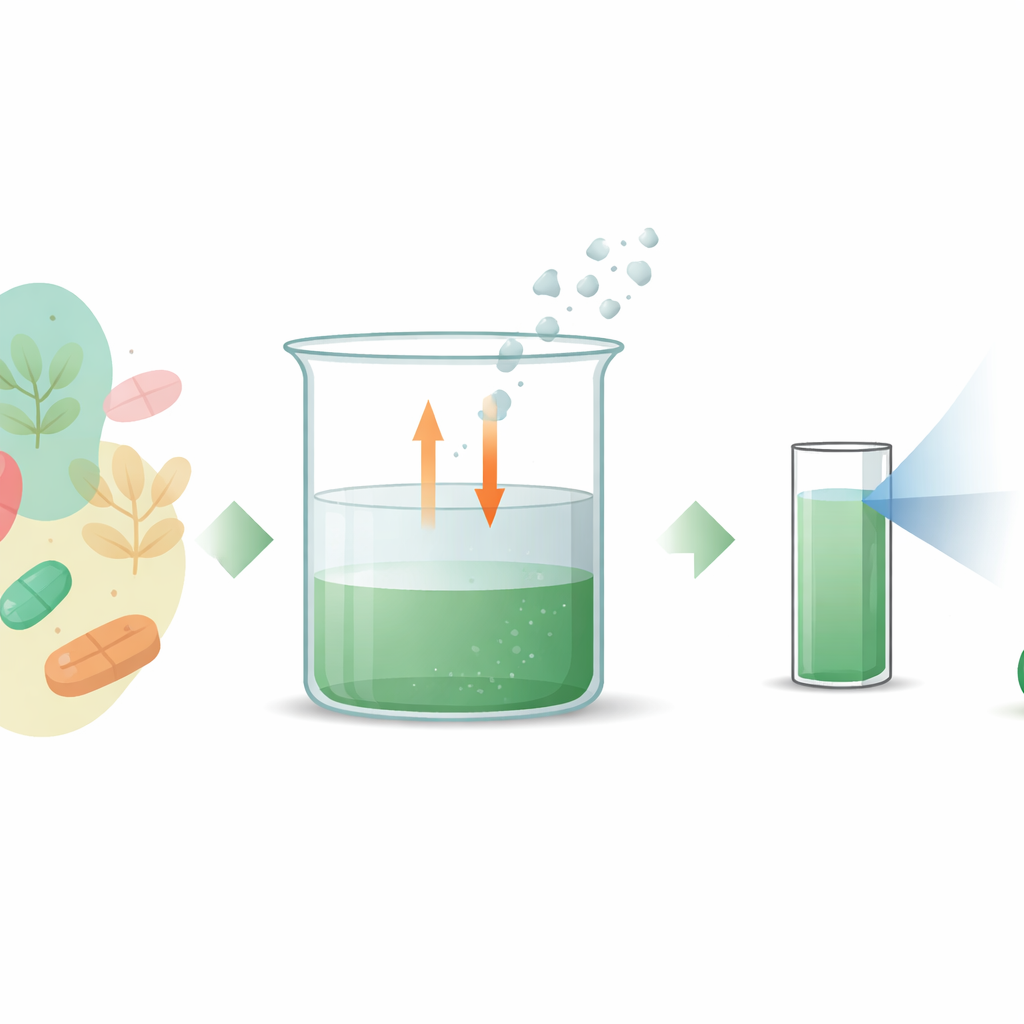
A gentler way to pull the drug out
To find cinacalcet in a complex mixture like blood, the drug first needs to be separated from all the other substances that could confuse the measurement. The researchers used a technique called “salting-out” extraction, in which adding a salt forces a water-mixed liquid to split into two layers, concentrating the drug in one of them. Here they chose magnesium sulfate, better known as Epsom salt and widely used in food and personal care products. When mixed with acetonitrile and a small blood or urine sample, this salt helps create a clean upper layer rich in cinacalcet, while proteins and other unwanted components stay behind. Compared with traditional extraction methods, this approach is faster, uses less hazardous solvent, and relies on a salt that is inexpensive, non-toxic, and environmentally benign.
Using a safe dye as a light-based sensor
The second key idea in this work is to turn a safe food coloring into a sensitive light sensor for the drug. The dye, called Celfia Pink B, normally glows strongly under specific light. Cinacalcet carries a positively charged group in mildly acidic water, while the dye carries a negative charge. When they meet, they form a tight pair, and this pairing quietly “switches off” much of the dye’s glow. By shining light of one color onto the mixture and measuring how much of another color comes out, the scientists can tell how much of the dye’s light has been quenched. The more cinacalcet is present, the more the glow fades. This simple change in brightness becomes a precise yardstick for drug concentration.
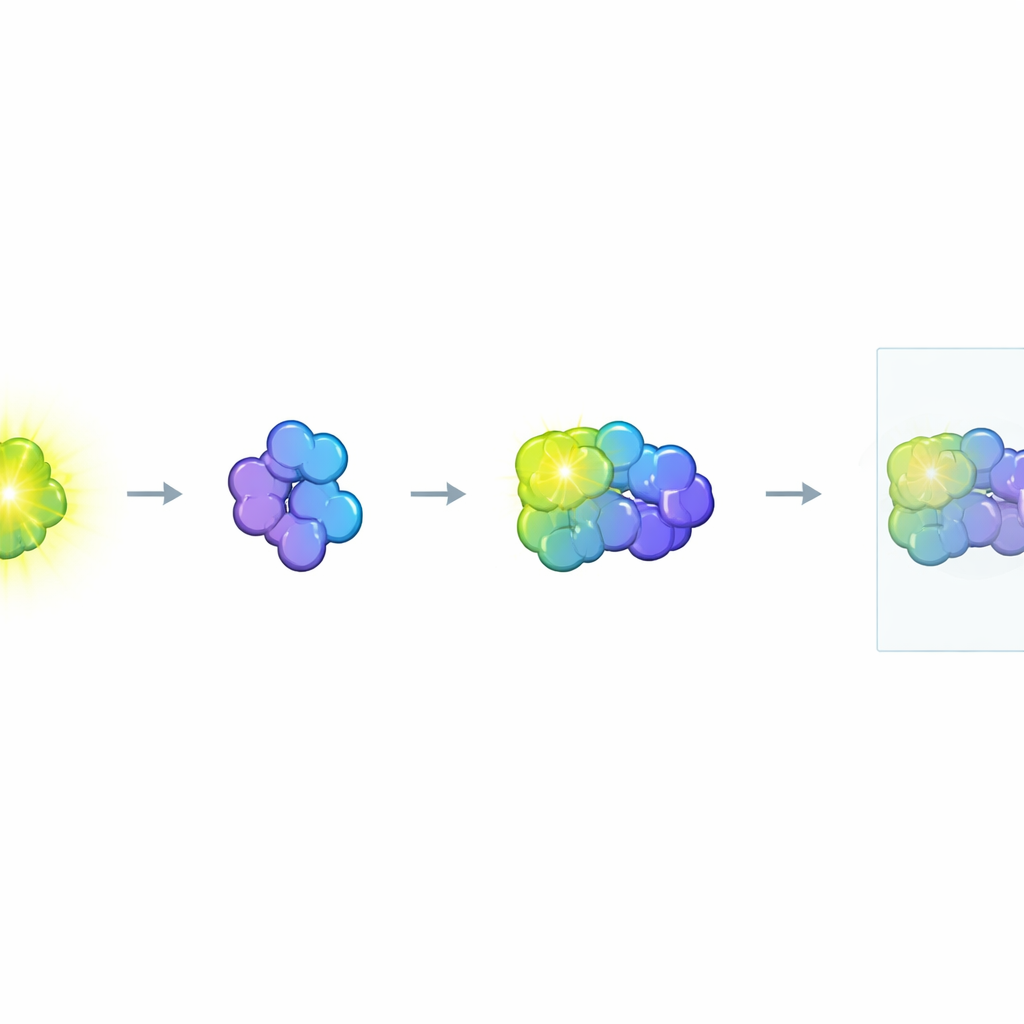
Tuning and testing the method for real-world use
The team carefully adjusted the conditions to get the most reliable signal. They found that a slightly acidic solution (around pH 4.2) gave the strongest interaction between the drug and the dye, that a specific amount of buffer and dye was needed to avoid self-interference, and that ordinary water worked better than organic solvents as the main medium. They showed that the complex between dye and drug forms quickly at room temperature and stays stable long enough for easy measurement. Statistical analysis confirmed that the glow decreased in a straight-line fashion as cinacalcet levels increased over a broad range. The method could detect extremely low amounts of the drug, well below typical levels found in treated patients.
From tablets to blood and urine
Beyond controlled laboratory solutions, the researchers applied their technique to real pharmaceutical products and to human biofluids. They accurately measured cinacalcet in several tablet strengths and confirmed that individual tablets within a batch contained nearly identical amounts of drug, an important quality-control requirement. Using the salting-out step with Epsom salt and acetonitrile, they also extracted and measured cinacalcet added to human plasma and urine. The recoveries were close to 100%, with very small variation, showing that the method works reliably even in biologically complex samples without interference from common tablet ingredients or natural body components.
How green and practical is this approach?
Modern analytical chemistry increasingly asks not only "Does it work?" but also "Is it safe, sustainable, and affordable?" The authors evaluated their method using several established "green" scoring systems. These tools consider factors such as solvent toxicity, waste volume, energy use, operator safety, and cost. Across many independent metrics, the new method scored highly: it relies mainly on water and a small amount of relatively safe solvent, uses a food-grade dye and Epsom salt instead of hazardous reagents, generates low waste, and requires only a standard fluorescence instrument rather than complex chromatography systems. Overall, the method was classified as "white," meaning that it balances environmental friendliness, analytical performance, and economic practicality.
What this means for patients and the environment
In simple terms, this study shows that we can monitor an important kidney and hormone therapy drug using a process that is both sensitive enough for medical needs and gentle on people and the planet. By combining Epsom salt–based extraction with a harmless pink dye that dims in the presence of cinacalcet, the researchers created a tool that can check tablet quality and measure drug levels in blood or urine without resorting to harsh chemicals or costly machinery. This strategy could be adapted to other medicines with similar properties, opening the door to safer and more sustainable testing in hospital labs, quality-control facilities, and even resource-limited settings.
Citation: Hamad, A.A., Ali, M.A.M., Chaudhary, A.A. et al. Coupling MgSO4-assisted SALLE with a fluorimetric turn-off strategy for the determination of cinacalcet HCl in pharmaceutical and human matrices. Sci Rep 16, 13756 (2026). https://doi.org/10.1038/s41598-026-41887-4
Keywords: cinacalcet monitoring, green analytical chemistry, fluorescence quenching, salting-out extraction, pharmaceutical quality control