Clear Sky Science · en
Processing-induced modulation of nutraceutical and anti-nutritional profiles of beetroot variants targeting enhanced iron retention
Why this beetroot study matters
Iron deficiency anemia affects billions of people worldwide, leaving them tired, short of breath, and more vulnerable to illness. Many turn to beetroot juice as a “natural” iron booster, but the way beetroot is prepared can quietly change how much iron – and other helpful or harmful compounds – our bodies actually use. This study explores how common kitchen methods, like steaming and pressure cooking, alter beetroot’s mix of supportive nutrients and iron-blocking substances, and identifies a preparation that offers a better balance for iron absorption rather than just the highest iron content.
From raw roots to different kitchen versions
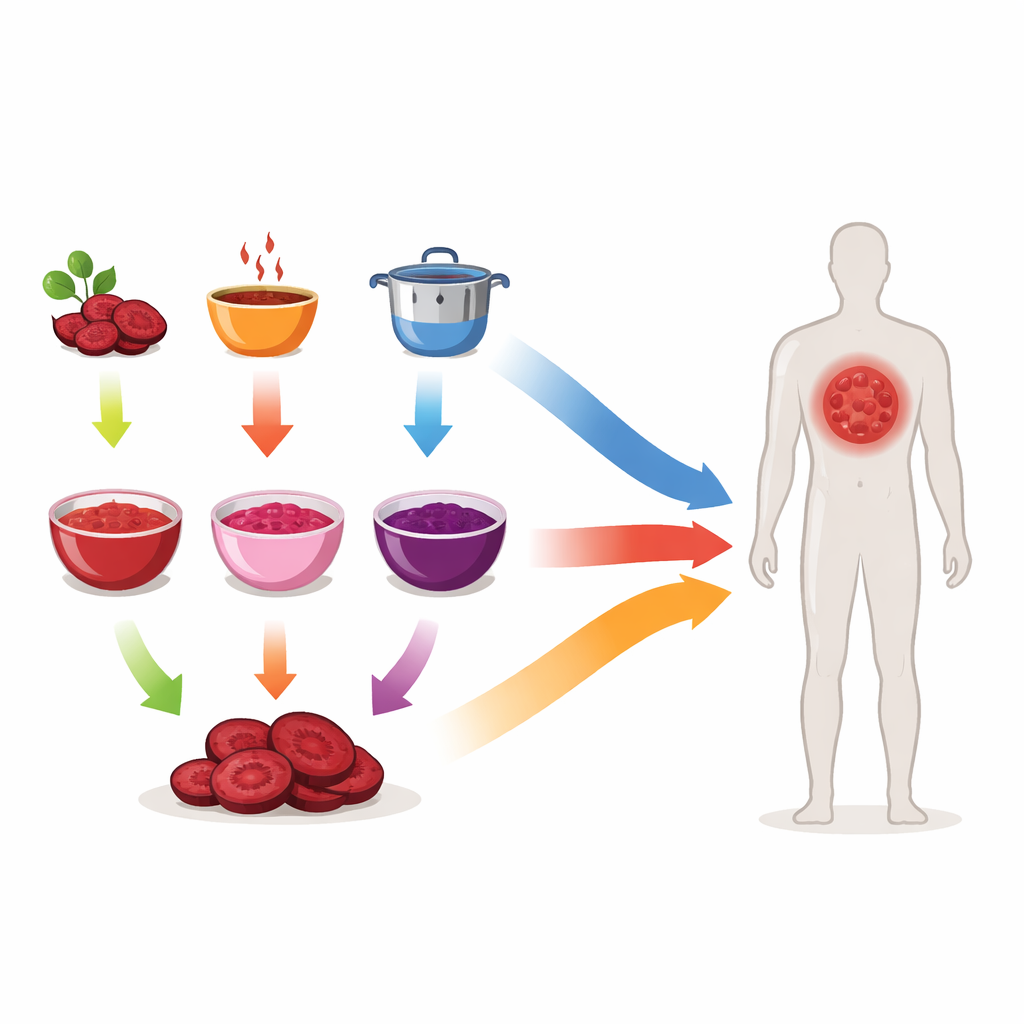
The researchers started with a deep red beetroot variety and processed it in ways that mirror home cooking: raw, pressure-cooked, steamed, and cooked in an open pan. Each batch was then separated into three forms: clear juice, fibrous residue (pulp), and juice with residue combined. In total, they created 12 beetroot variants. All samples were freeze-dried and carefully analyzed for vitamins, plant pigments, minerals, and plant chemicals that can either help or hinder iron absorption.
Good plant helpers and troublemakers
Beetroot naturally contains many helpful compounds, including antioxidants, folate, beta-carotene, and nitrates, as well as saponins and colorful pigments called betalains. It also carries antinutrients such as oxalates, tannins, and calcium, which can bind iron and make it harder for the body to absorb. The study showed that gentle heating, especially steaming and pressure cooking, often increased the ease with which beneficial phenols and flavonoids could be extracted into the juice. Saponins generally rose after cooking, especially in the juice-with-residue form. At the same time, pressure cooking substantially lowered several iron-blocking agents: oxalates, tannins, and calcium all declined compared with raw beetroot, meaning fewer roadblocks for iron uptake.
Trade-offs between iron content and absorption
Not all changes were positive. Total iron and some eye-catching pigments decreased with heat, particularly in pressure-cooked samples. Open pan cooking tended to keep more iron in the solid residue but did less to reduce inhibitors. By contrast, pressure-cooked juice with residue lost some iron and colorful pigments yet gained more folate, beta-carotene, saponins, and citric acid, while cutting down on oxalates, tannin, and calcium. The team used statistical optimization software to weigh these trade-offs, aiming to lower inhibitors and raise promoters of iron absorption simultaneously. This approach singled out pressure-cooked juice with residue as the most promising compromise formulation.
Testing how much iron cells actually take up
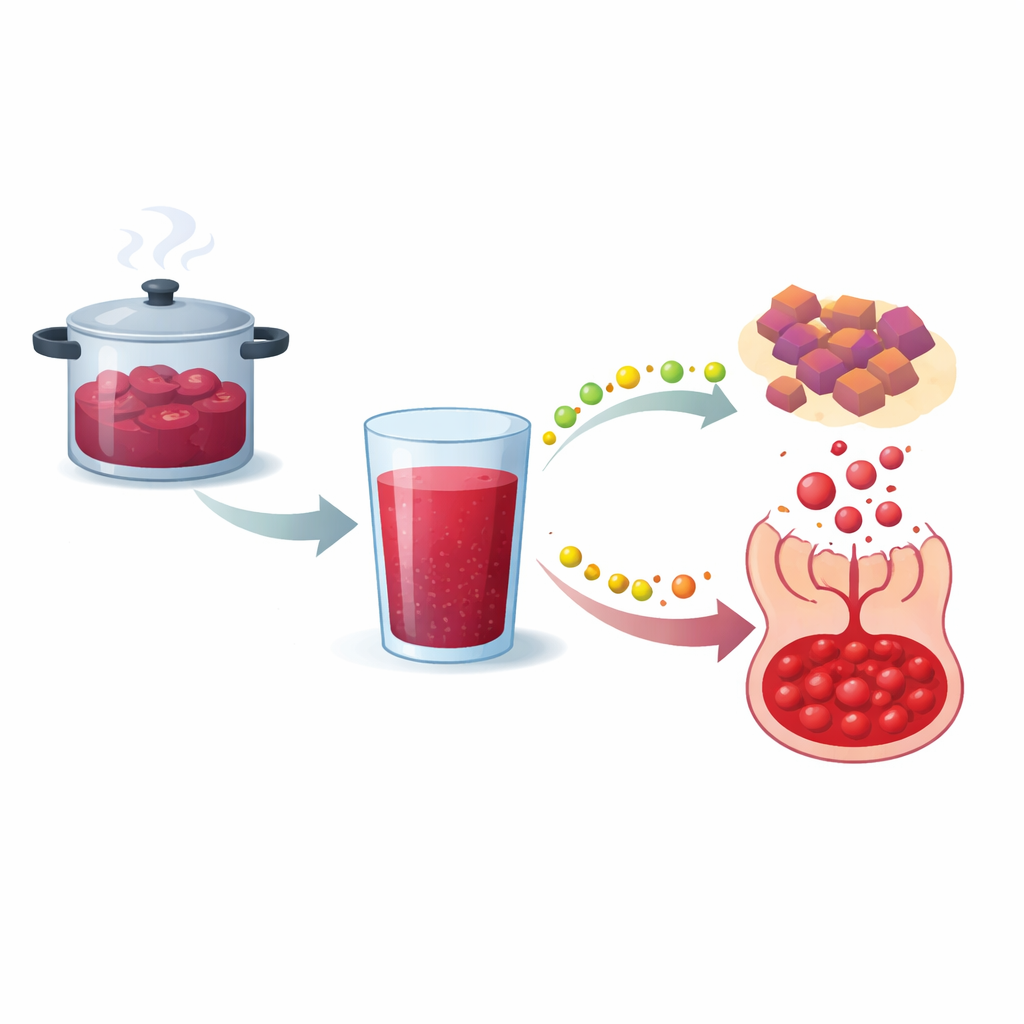
To move beyond test-tube chemistry, the researchers simulated digestion and then exposed human intestinal cell models to the digested beetroot. This allowed them to measure how much iron actually entered the cells, a closer reflection of what might happen in the human gut. Pressure-cooked juice with residue achieved an iron bioavailability of about 4.4 percent – modest in absolute terms but similar to or better than some other iron-rich plant foods once their own inhibitors are considered. Importantly, the study confirmed that simply having more total iron in the vegetable does not guarantee more iron reaching the bloodstream; the surrounding mix of organic acids and antinutrients matters greatly.
What this means for everyday eating
For people using beetroot as a natural support against anemia, this work suggests that a blended drink containing both juice and pulp from pressure-cooked beetroot may offer a better overall profile for iron uptake than relying solely on raw juice, even though it contains somewhat less iron. Steaming and other cooking methods can preserve many healthful plant compounds, but they differ in how they handle the iron blockers. The study concludes that pressure-cooked juice with residue strikes a practical balance between reducing inhibitors and retaining key vitamins and plant chemicals, yielding moderate iron bioavailability in cell tests. However, taste tests showed people favored raw and pressure-cooked clear juices, underscoring the need to refine recipes that are both appealing and nutritionally optimized. Human studies will be needed to confirm whether these in vitro advantages translate into better iron status in real diets.
Citation: Mundassery, A., Ramaswamy, J., Balachandran, M. et al. Processing-induced modulation of nutraceutical and anti-nutritional profiles of beetroot variants targeting enhanced iron retention. Sci Rep 16, 13988 (2026). https://doi.org/10.1038/s41598-026-41872-x
Keywords: beetroot, iron absorption, food processing, antinutrients, functional foods