Clear Sky Science · en
Multi-objective sizing and location of DG in distribution network by hybrid gorilla troops optimization-genetic algorithm: a real case study
Smarter Local Power for Everyday Reliability
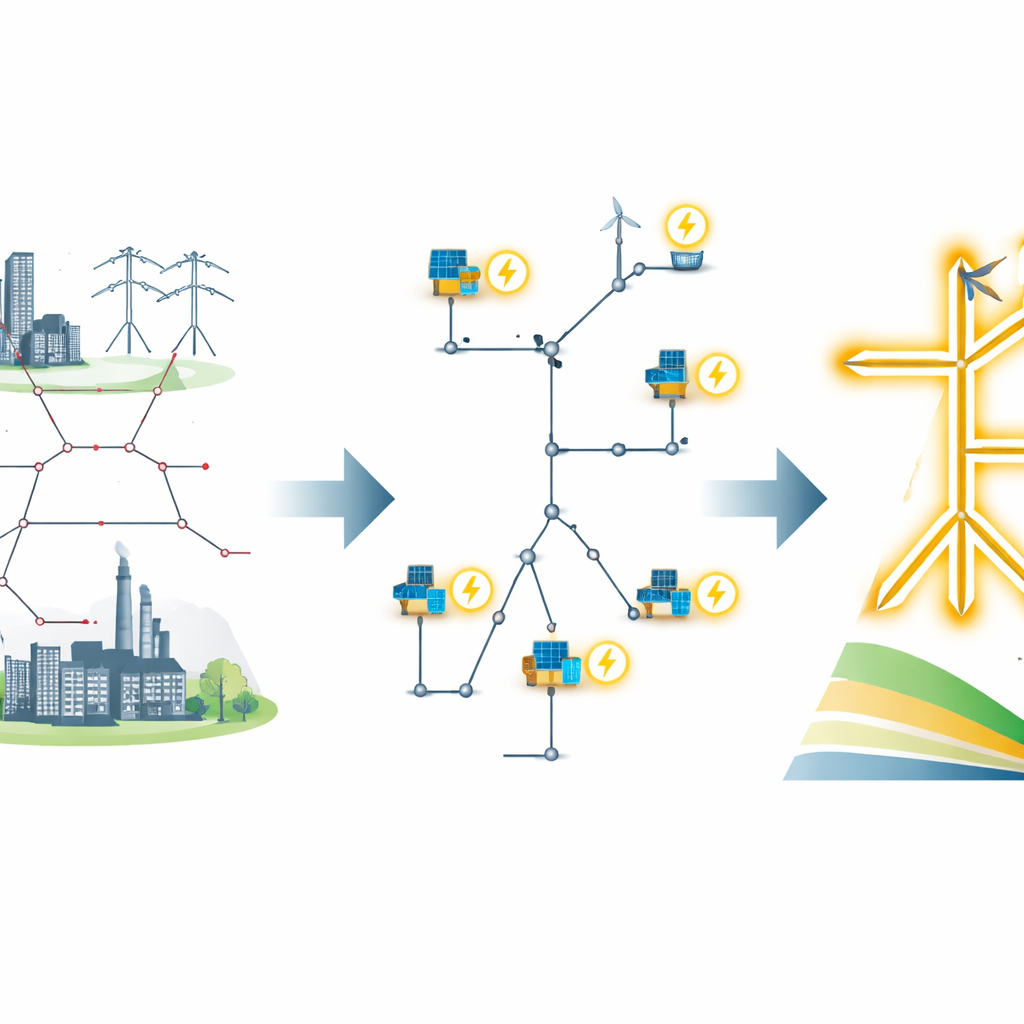
When you flip a light switch, you expect instant, steady power—but delivering that reliability is getting harder as electricity demand grows and more renewable sources connect to the grid. One promising idea is to scatter smaller power units, called distributed generators, throughout local networks instead of relying only on big distant plants. This study shows how a new computer-based planning method can decide where to place these smaller units and how big they should be so that the grid wastes less energy, keeps voltages steady, and saves substantial money each year.
Why Local Generators Matter
Traditional power systems push electricity over long distances from large plants to homes and factories. On the way, some of that energy is lost as heat in the lines, and the voltage can sag in distant neighborhoods, especially as demand rises. Installing distributed generators—such as small gas units or renewables like solar and wind—directly in local networks can relieve overloaded lines, cut losses, and improve voltage quality. But placing these units is not as simple as filling empty spots: each possible location and size affects the rest of the network, and decisions must also respect strict engineering limits. The planning task turns into a tangled puzzle mixing on/off choices (where to put units) with continuous choices (how large they should be), all while juggling several goals at once.
A Hybrid Digital “Search Party”
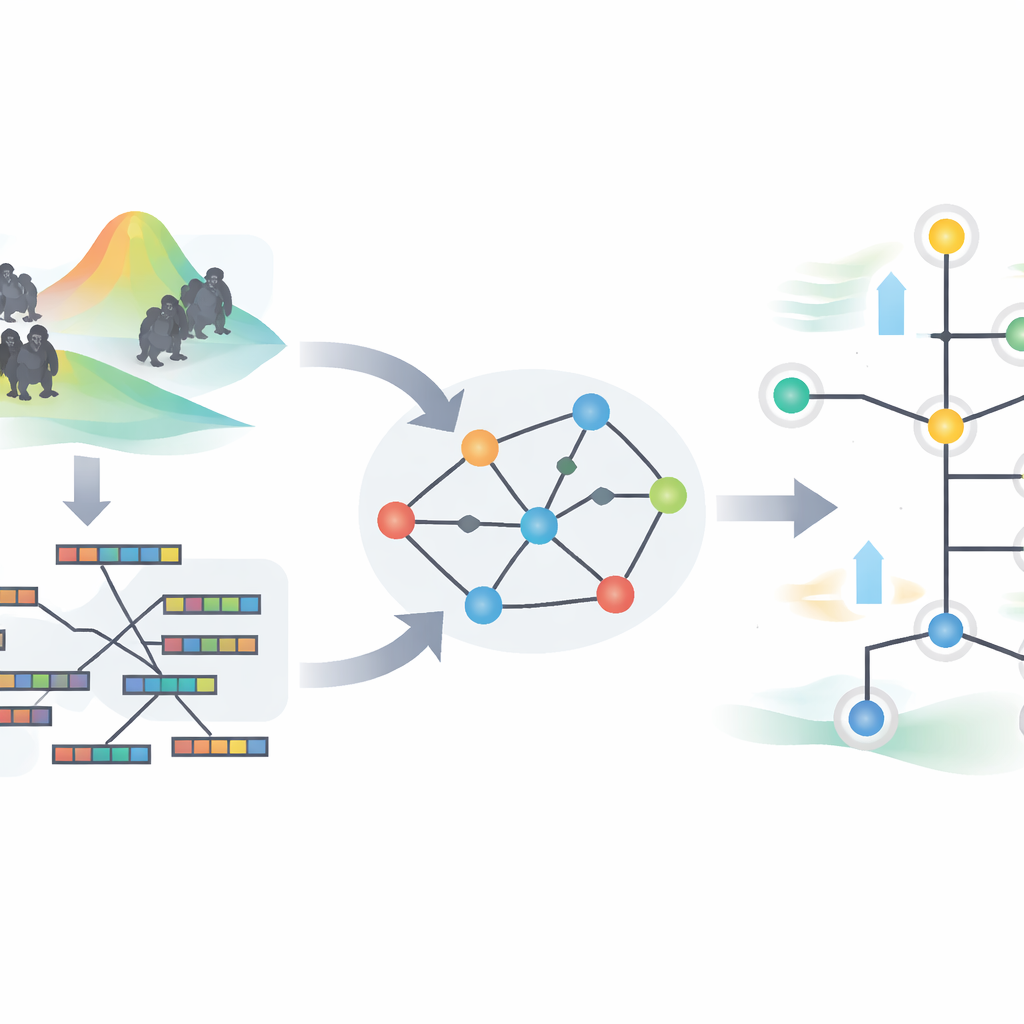
To tackle this puzzle, the authors designed a hybrid search method that combines two well-known families of optimization tools. One part is a genetic algorithm, inspired by evolution, which handles the yes–no and stepwise decisions—such as which network nodes should host new generators. The other part is the gorilla troops optimizer, a swarm-style method modeled on group movement and leadership in gorilla bands, which excels at exploring smooth ranges of values—such as the exact output of each generator. In each cycle, the two components propose candidate plans, join them into complete network layouts, and test how well they perform. Plans that cut energy loss and improve voltage are kept and refined, while weaker ones are discarded. By letting each method focus on what it does best, the hybrid approach can search a very complicated decision space more efficiently and avoid getting stuck in poor solutions.
Testing on Realistic Power Networks
The researchers first verified their hybrid tool on 23 standard mathematical test functions that are commonly used to judge how well optimization methods explore complex landscapes. The hybrid consistently found very good solutions and converged faster than several established techniques, including classic genetic algorithms and other swarm-based approaches. Then they applied the method to two electrical distribution networks: a widely used benchmark system with 33 connection points, and a much larger real-world network simplified to 143 points. In both cases, the tool explored different operating conditions for the distributed generators and examined single goals (only loss reduction or only voltage improvement) and combined goals (balancing both at once). The method not only found placements that sharply lowered losses and smoothed voltages, it also mapped out trade-off curves showing how much of one benefit must be sacrificed to gain more of the other.
Big Reductions in Waste and Cost
The gains reported are striking. In the 33-point test system, the best solutions reduced power losses by up to about 94% and improved voltage quality by nearly 100% compared with the original network without added generators. In practical financial terms, yearly economic losses in that system fell from roughly 92,000 dollars to about 14,000 dollars—a savings of more than 78,000 dollars per year. In the larger, real 143-bus network, losses dropped by nearly 94% and voltage problems were cut by almost 100%, turning a yearly loss of about 178,000 dollars into just over 32,000 dollars, for savings above 145,000 dollars. The analysis also revealed which specific parts of the networks were most sensitive, giving planners concrete targets for upgrades.
What This Means for the Future Grid
For non-specialists, the key message is that smarter planning tools can unlock much more value from local power sources that are already becoming common, such as rooftop solar, community-scale batteries, and small generators. Rather than placing these units by trial and error or by simple rules, the hybrid approach described here searches through countless possibilities to find layouts that waste far less energy, stabilize voltages, and significantly cut operating costs. As electric grids absorb more renewables and serve growing demand, such intelligent, automated planning could help make local networks more efficient, more reliable, and more ready for a cleaner energy future.
Citation: Gacem, A., Romdhane, M., Kechida, R. et al. Multi-objective sizing and location of DG in distribution network by hybrid gorilla troops optimization-genetic algorithm: a real case study. Sci Rep 16, 11334 (2026). https://doi.org/10.1038/s41598-026-41868-7
Keywords: distributed generation, power distribution networks, optimization algorithms, voltage stability, energy loss reduction