Clear Sky Science · en
A cross-sectional quality assessment of panic attacks information on Douyin in China
Why these videos matter for everyday health
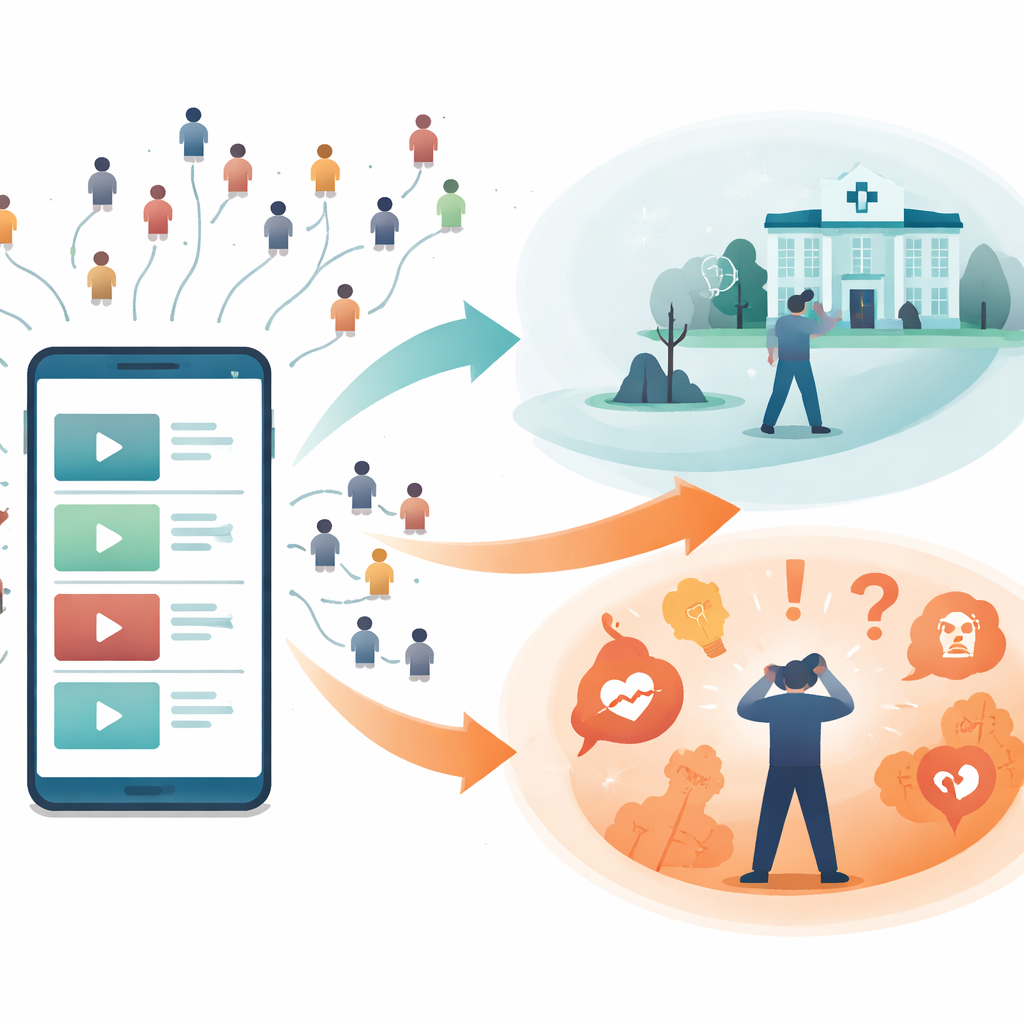
Many people first hear the term “panic attack” not from a doctor, but from a short video on their phone. In China, the short‑video app Douyin reaches hundreds of millions of viewers and has become a go‑to source for health information, especially on mental health. This study asks a simple but crucial question: when someone frightened by sudden racing heart or breathlessness turns to Douyin for answers, how good is the information they actually find?
What the researchers set out to check
The team focused on videos about panic attacks, brief surges of intense fear and physical symptoms that affect over a quarter of adults at some point in life. Because such episodes are terrifying, people often rush to search online before they ever see a psychiatrist. The researchers searched Douyin using the standard Chinese term for panic attacks and collected the 150 most‑viewed clips. After filtering out ads, silent clips and off‑topic material, they closely examined 126 videos. They noted who made each video, how popular it was, and then rated its medical reliability and how completely it covered key topics such as what a panic attack is, what causes it, how it is diagnosed, how it can be managed and what it means for the future.
Who is talking about panic attacks
Most of the panic‑attack videos—about three in five—were posted by people with health‑related credentials, especially psychiatrists and psychological counselors. The rest came from ordinary users, media outlets and other organizations. A relatively small number of professional accounts produced a large share of the content, meaning that a few voices strongly shape what viewers see. Videos varied widely in length and popularity: some were just a few seconds long, while others ran for many minutes and attracted hundreds of thousands of likes, comments, saves and shares.
What the videos say—and what they leave out
Despite this apparent richness, the information itself was often thin. Most videos emphasized the dramatic signs and feelings of a panic attack, such as pounding heart, dizziness or a sense of doom. Yet nearly two‑thirds failed to clearly define what a panic attack is, and more than three‑quarters said almost nothing about who is at risk, how doctors confirm the diagnosis, how to manage attacks or what happens if they keep recurring. In other words, the clips tended to capture the frightening moment but not the bigger picture: why it happens, how it links to other mental health conditions and when to seek professional help. This pattern held across videos from both experts and non‑experts.
How quality compares with popularity
To judge quality, the researchers used three established scoring systems that reward clarity about who created the content, how up‑to‑date it is and how well it guides viewers toward sound decisions. On all three scales, the average scores were modest at best. Videos from health professionals were somewhat more reliable and better organized than those from general users, but even their median ratings did not reach levels most doctors would consider strong patient education. Perhaps most striking, the usual signs of success on social media—likes, comments, saves and shares—were tightly linked to one another but showed virtually no connection to quality scores. Highly engaging videos were just as likely to be incomplete or shallow as less popular ones.
What this means for people seeking help
Together, these findings paint a sobering picture. For a viewer in the midst of a panic attack, Douyin offers many clips that can provide emotional resonance and recognition, but far fewer that deliver well‑rounded, trustworthy guidance. Professional creators do improve the odds of encountering better information, yet they too are constrained by short formats and rarely cover definitions, causes, treatment options and long‑term risks in a single video. Because the usual cues of popularity do not signal accuracy, people who rely on Douyin alone may come away reassured in the moment but uninformed about when and how to get proper care. The authors conclude that both platforms and health professionals need to raise the bar for mental health content, and that viewers should treat short‑video advice as a starting point—not a substitute—for consulting qualified clinicians.
Citation: Zhu, Z., Xi, W., Wang, J. et al. A cross-sectional quality assessment of panic attacks information on Douyin in China. Sci Rep 16, 11296 (2026). https://doi.org/10.1038/s41598-026-41836-1
Keywords: panic attacks, Douyin, mental health information, social media videos, health communication