Clear Sky Science · en
Whole genome analysis of selection associated with resistance to heat stress in chickens
Why heat‑tough chickens matter
As the planet warms, keeping farm animals comfortable is becoming both a scientific puzzle and an economic necessity. Chickens are especially vulnerable to hot, humid weather: they wear feather "coats," lack sweat glands, and are often raised in crowded barns. This study asks a simple but powerful question: what is different in the DNA of chickens that thrive in hot climates compared with a popular commercial breed that struggles in the heat? The answers could help protect food supplies and animal welfare in a warming world.
Chickens around the world under rising heat
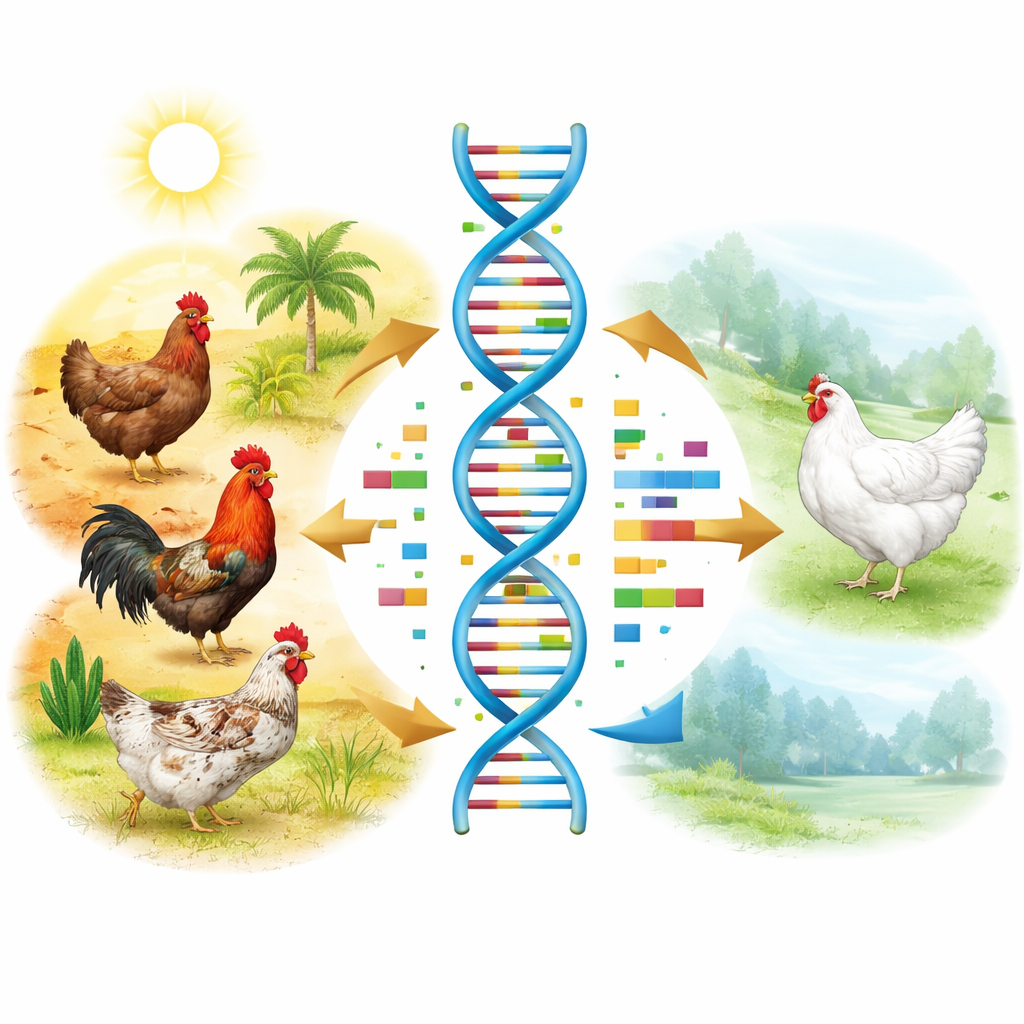
The researchers drew on a large international DNA database to compare 152 indigenous chickens from Afghanistan, Iran, Pakistan, Indonesia, and several regions of southern China with 49 commercial White Leghorn chickens, a high‑producing egg breed known to be heat‑sensitive. The local birds live in places where a standard measure of heat and humidity, the Temperature‑Humidity Index, regularly exceeds the level at which heat stress begins to harm poultry. Over generations, these village and backyard flocks have adapted naturally to their hot surroundings, making them an ideal contrast to the more sheltered, intensively bred Leghorns.
Hunting for adaptation signals in the genome
To see where heat has left its mark in the genome, the team scanned millions of genetic markers across all chromosomes. They used several complementary statistical tools to spot “selective sweeps” – regions where helpful variants have become common because they boost survival or reproduction. Some methods looked at how different the local breeds were from Leghorns at each spot in the genome, while others measured how much genetic variety had been lost within each group or how unusually long stretches of identical DNA had become. Only regions that showed strong signals in multiple tests and in at least half of the indigenous populations were kept, greatly reducing the chance of chasing random noise.
Core heat‑hardiness genes revealed
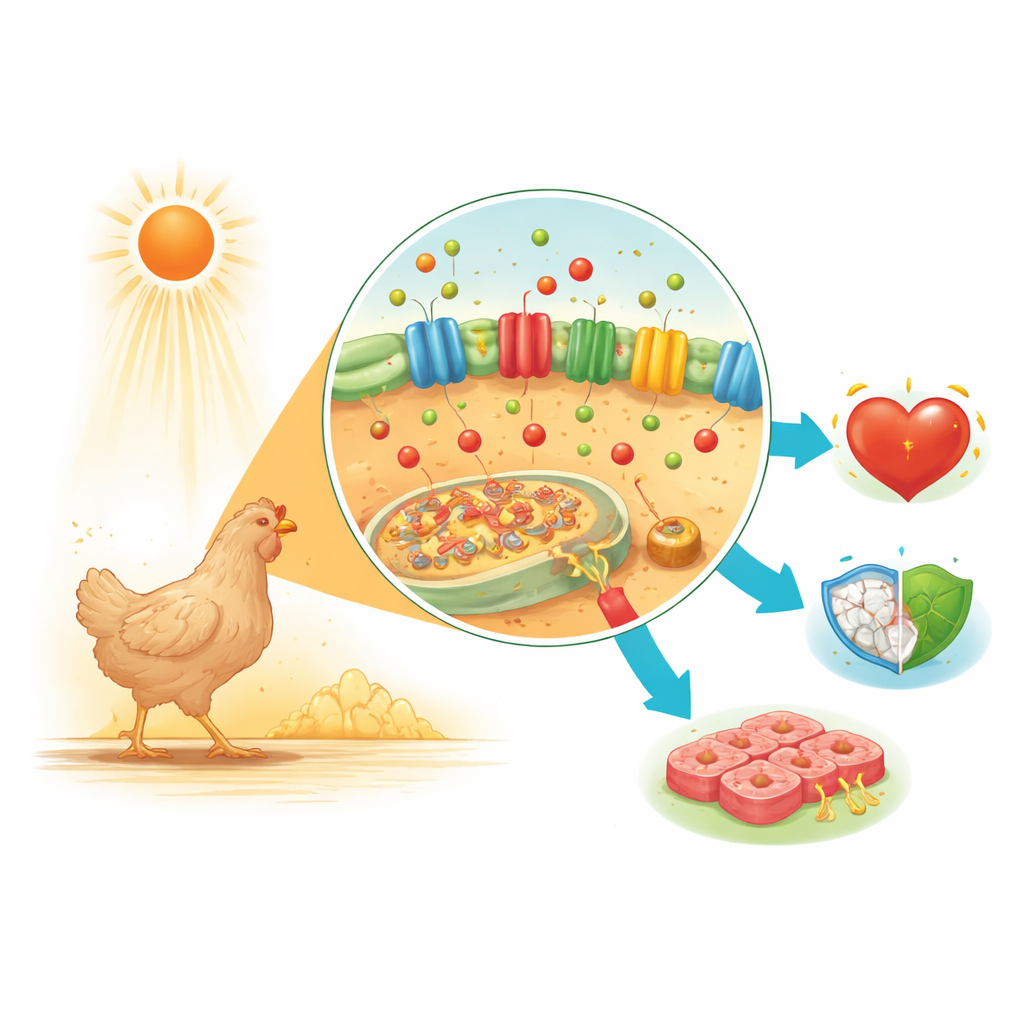
This rigorous search produced 267 suspect genes, then a tighter list of 113 high‑confidence candidates, many of which had already been linked to heat responses in other studies. From these, 14 genes stood out as repeatedly shaped by selection in hot‑climate chickens and clearly tied to heat tolerance. Several of them code for molecular "sensors" that detect temperature or move calcium in and out of cells. Others help nerve cells adapt, maintain heart function, or remodel the cell’s internal scaffolding under stress. Together they form a connected network that helps cells cope with the chaos caused by high temperatures.
Calcium signals as the body’s heat alarm system
A central theme was calcium, a charged mineral that cells use as an internal alarm and control knob. Genes such as TRPV1, TRPV2, and TRPV3 encode heat‑sensitive channels that open when temperatures climb, allowing calcium to rush into cells. MCU and ATP2B4 help manage where that calcium goes, shuttling it into and out of mitochondria and the cell interior, while CALM1 and CACNB2 help translate calcium pulses into changes in gene activity, metabolism, and nerve signaling. Other genes, including BDNF, PRKD1, TRAT1, SCIN, WIPF3, CDH23, and NPSR1, tie these calcium cues to brain plasticity, immune defenses, and the stability of blood vessels and tissues. Many of the key differences between indigenous and Leghorn chickens lie not in the protein‑coding sections of these genes, but in the non‑coding introns and nearby regulatory regions that influence how strongly and when the genes are switched on.
Hidden switches and future chickens
The study suggests that natural selection in hot regions has tuned a shared set of "hidden switches" in the chicken genome, especially in non‑coding segments that control RNA splicing and other layers of gene regulation. In contrast, decades of breeding Leghorns for egg output seem to have fixed different versions of many stress‑related variants, possibly reducing their heat resilience. For a general reader, the takeaway is that tiny changes in how genes are regulated – not just in the genes themselves – can make the difference between a bird that wilts in the heat and one that keeps laying. Understanding these genetic levers opens the door to breeding commercial chickens that combine high productivity with built‑in heat tolerance, a crucial goal as climates continue to warm.
Citation: Hosseinzadeh, S., Rafat, S.A., Javanmard, A. et al. Whole genome analysis of selection associated with resistance to heat stress in chickens. Sci Rep 16, 11726 (2026). https://doi.org/10.1038/s41598-026-41813-8
Keywords: heat stress, chicken genetics, climate adaptation, calcium signaling, livestock breeding