Clear Sky Science · en
Synthesis, characterisation, computational study, amelioration of ruthenium kesar nanoparticle, antioxidant and glycolytic enzyme activity alterations in cirrhotic liver extract
Why Tiny Particles Could Matter for a Sick Liver
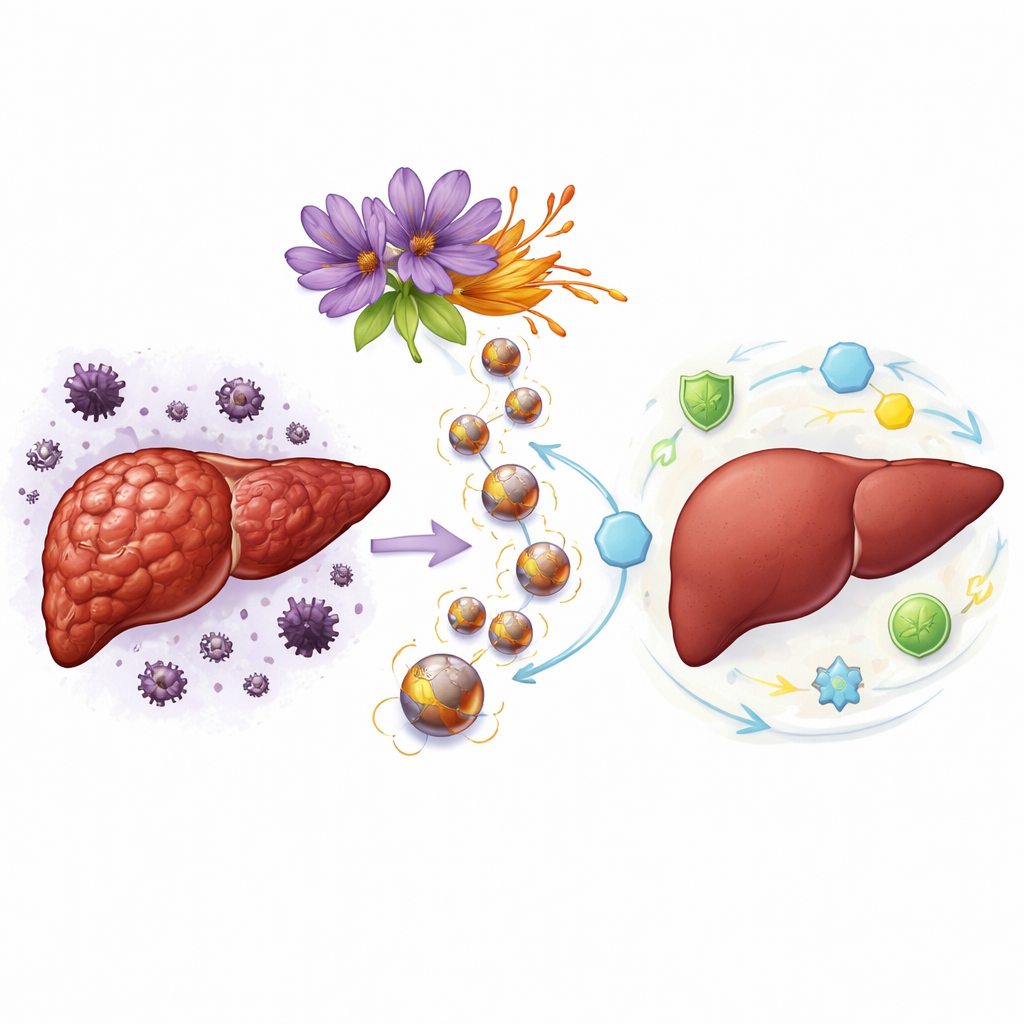
Liver cirrhosis is a life‑threatening condition that often leaves transplantation as the only cure. This study explores a very different idea: using tiny, carefully engineered metal particles, made with help from saffron, to calm the chemical chaos inside a damaged liver. By combining materials science, computer modeling, and tests on rat liver samples, the researchers ask whether these “ruthenium–kesar” nanoparticles can help restore the liver’s internal defenses and energy metabolism.
How the Liver Gets into Trouble
The liver filters toxins, processes nutrients, and even regenerates itself after injury. But years of viral infection, alcohol use, or fatty liver disease can overwhelm these abilities and lead to cirrhosis. In cirrhosis, normal tissue is replaced by scarred, nodular patches, blood flow is distorted, and pressure in the portal vein rises. Deep inside the cells, chemical imbalances appear: reactive oxygen species build up, antioxidant defenses weaken, and core energy‑producing pathways such as glycolysis become disturbed. Together, these changes push the liver toward failure and leave few treatment options beyond replacing the organ.
Building a Saffron‑Assisted Metal Nanoparticle
To tackle this biochemical turmoil, the team first had to build a precise material. They synthesized ruthenium dioxide nanoparticles on a glass surface using a sol–gel process, with saffron (kesar) extract acting as a natural reducing and stabilizing agent. X‑ray measurements showed that the particles formed a well‑ordered crystalline phase only a few nanometers across, while electron microscopy revealed small, mostly spherical grains that tended to clump together, creating rough clusters. Infrared data confirmed the expected ruthenium–oxygen bonds and surface hydroxyl groups, while also checking for leftover organic impurities. These structural tests showed that the researchers had reliably produced nanocrystals with a high surface area, a key feature for interacting with biological molecules.
Testing Molecular Friendliness by Computer
Before exposing liver tissue to the new material, the researchers used computational chemistry to ask whether the saffron‑derived bioactive component, safranal, could interact safely and effectively with proteins. They mapped how electrical charges are distributed over the safranal molecule, identifying negative and positive regions where other molecules might bind. Additional calculations of non‑covalent interactions and electron localization helped reveal where electrons cluster and how stable the molecule is. Docking simulations then virtually “fitted” safranal into the pocket of a liver enzyme involved in sugar breakdown. The molecule nestled into place with relatively strong binding energy and a short hydrogen bond distance, suggesting it could form stable, biologically relevant contacts without needing harsh conditions.
What Happened in Cirrhotic Liver Samples
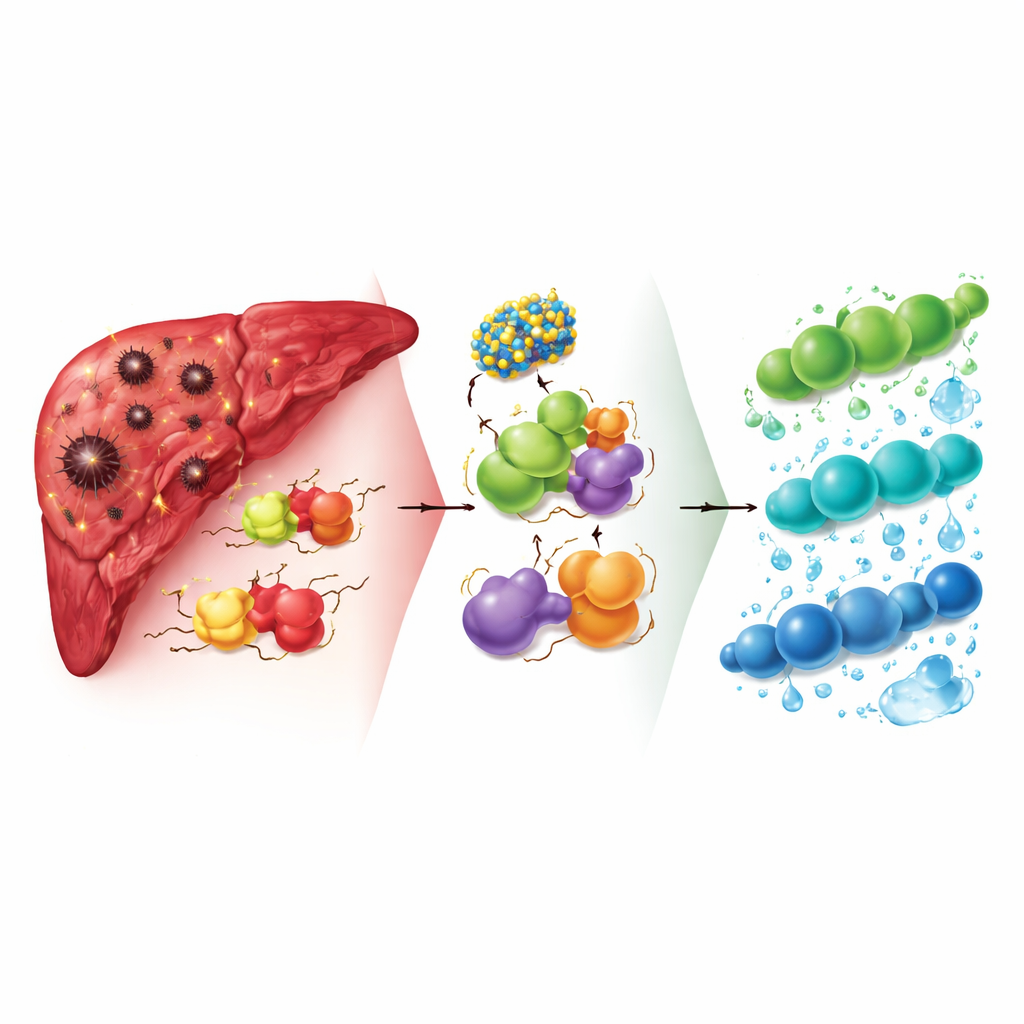
The biological heart of the study used liver homogenates from normal rats and rats with cirrhosis. The researchers measured a panel of antioxidant enzymes—superoxide dismutase, catalase, glutathione peroxidase, glutathione reductase, and glutathione S‑transferase—alongside lactate dehydrogenase, a key glycolytic enzyme and a common marker of tissue damage. In cirrhotic samples, most protective enzymes were depressed, while certain detoxifying and energy‑related activities, including glutathione S‑transferase and lactate dehydrogenase, were abnormally high, reflecting both oxidative stress and a shift toward emergency energy production. When cirrhotic liver extracts were incubated with the ruthenium complex, antioxidant enzymes largely rebounded toward normal activity, and the overshooting enzymes moved back toward healthier levels. In gel‑based assays, the intensity of enzyme bands visually mirrored these improvements.
Why This Matters for Future Liver Therapies
Taken together, the physical, computational, and biochemical results suggest that ruthenium–kesar nanoparticles are not just well‑formed crystals; they can also dial down the chemical stress inside cirrhotic liver tissue and rebalance how the liver handles both oxidants and energy. While this work was done on rat liver extracts rather than living patients, it points to a promising direction: metal‑based nanomaterials, tuned and softened by plant compounds like saffron, might one day complement or delay the need for liver transplantation by protecting remaining liver cells from further damage.
Citation: Kanaoujiya, R., Dash, D., Koiri, R.K. et al. Synthesis, characterisation, computational study, amelioration of ruthenium kesar nanoparticle, antioxidant and glycolytic enzyme activity alterations in cirrhotic liver extract. Sci Rep 16, 13714 (2026). https://doi.org/10.1038/s41598-026-41812-9
Keywords: liver cirrhosis, nanoparticles, ruthenium complex, oxidative stress, antioxidant enzymes