Clear Sky Science · en
Abnormal elevated PANX1 expression hampers endometrial decidualization by upregulating extracellular ATP concentration in patients with recurrent implantation failure
Why this matters for hopeful parents
Many couples who turn to in vitro fertilization (IVF) endure the heartbreak of seeing good-quality embryos transferred to the womb, only for pregnancy not to take hold. This study digs into one hidden reason why that happens. The researchers focus on how the lining of the uterus prepares itself to welcome an embryo, and how a tiny channel protein called PANX1 and a common energy molecule, ATP, can quietly sabotage this process when they are out of balance.
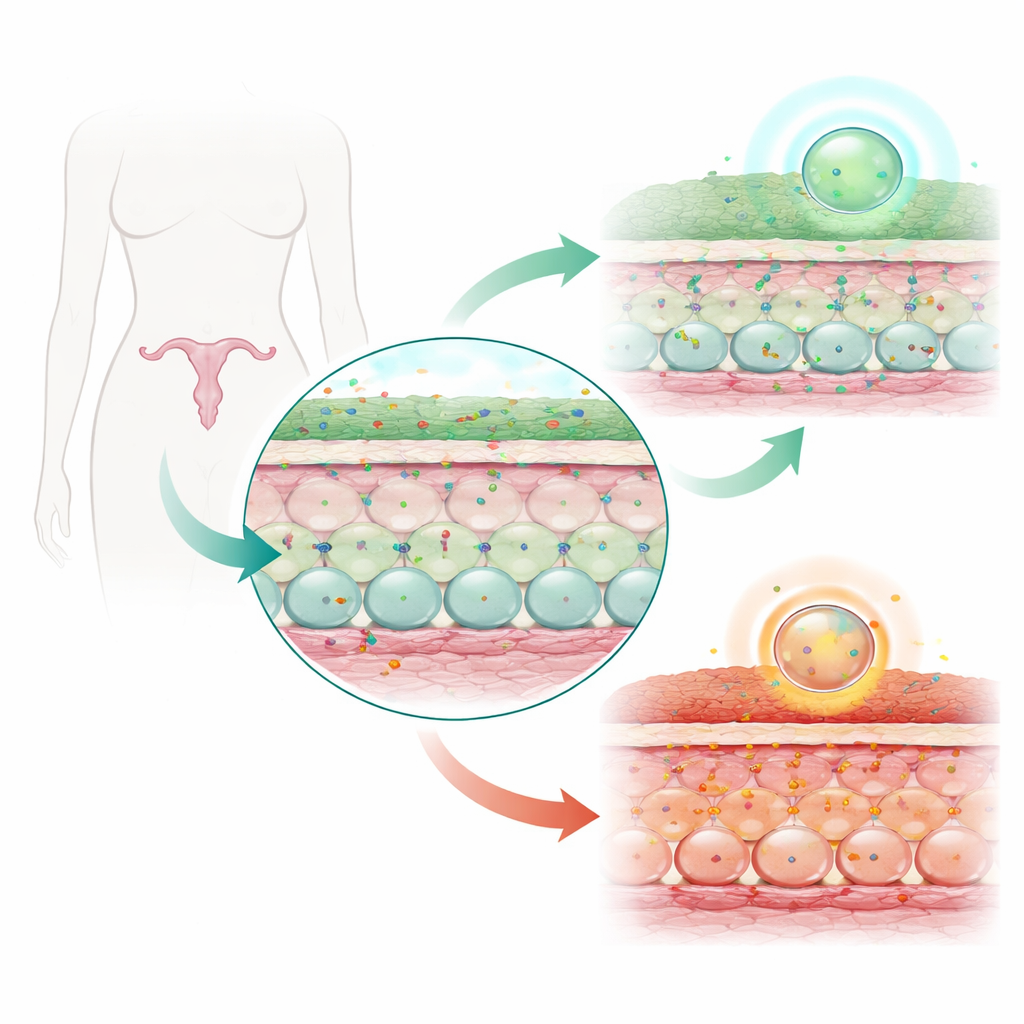
The womb’s monthly makeover
Before an embryo can implant, the inner lining of the uterus—the endometrium—undergoes a dramatic monthly makeover known as decidualization. During this window, long, thin support cells in the lining reshape themselves into round, nurturing cells that can cradle an embryo. This transformation is guided by hormones like estrogen and progesterone and by chemical messengers inside the tissue. If this reshaping is incomplete or mistimed, even the healthiest embryo may not be able to settle in and grow, leading to what doctors call recurrent implantation failure, when multiple IVF attempts with good embryos still do not result in pregnancy.
A signaling channel under suspicion
The team turned its attention to PANX1, a protein that forms tiny channels in cell membranes and allows ATP—best known as the cell’s energy currency—to leak out into the space between cells. Outside the cell, ATP acts as a powerful signal that can switch cellular behaviors on or off. Previous work had shown that outside-the-cell ATP can help trigger the uterine lining’s transformation, but only when present at the right dose and for the right amount of time. The researchers wondered whether too much ATP, driven by too much PANX1, might disturb the delicate choreography of decidualization and contribute to failed implantation.
Comparing women and cells in the lab
First, the scientists examined uterine samples from women undergoing fertility treatment. Some had a history of recurrent implantation failure, while others became pregnant after their first embryo transfer. Staining the tissue revealed that women with repeated failures had noticeably higher levels of PANX1 in their endometrial cells. To probe cause and effect, the team then used human endometrial stromal cells grown in dishes and coaxed them to undergo a decidualization-like change using hormone-like chemicals. As the cells began this transformation, PANX1 and outside ATP rose briefly, then fell, and classic decidualization markers increased—suggesting that a short burst of ATP is helpful at the start of the process.
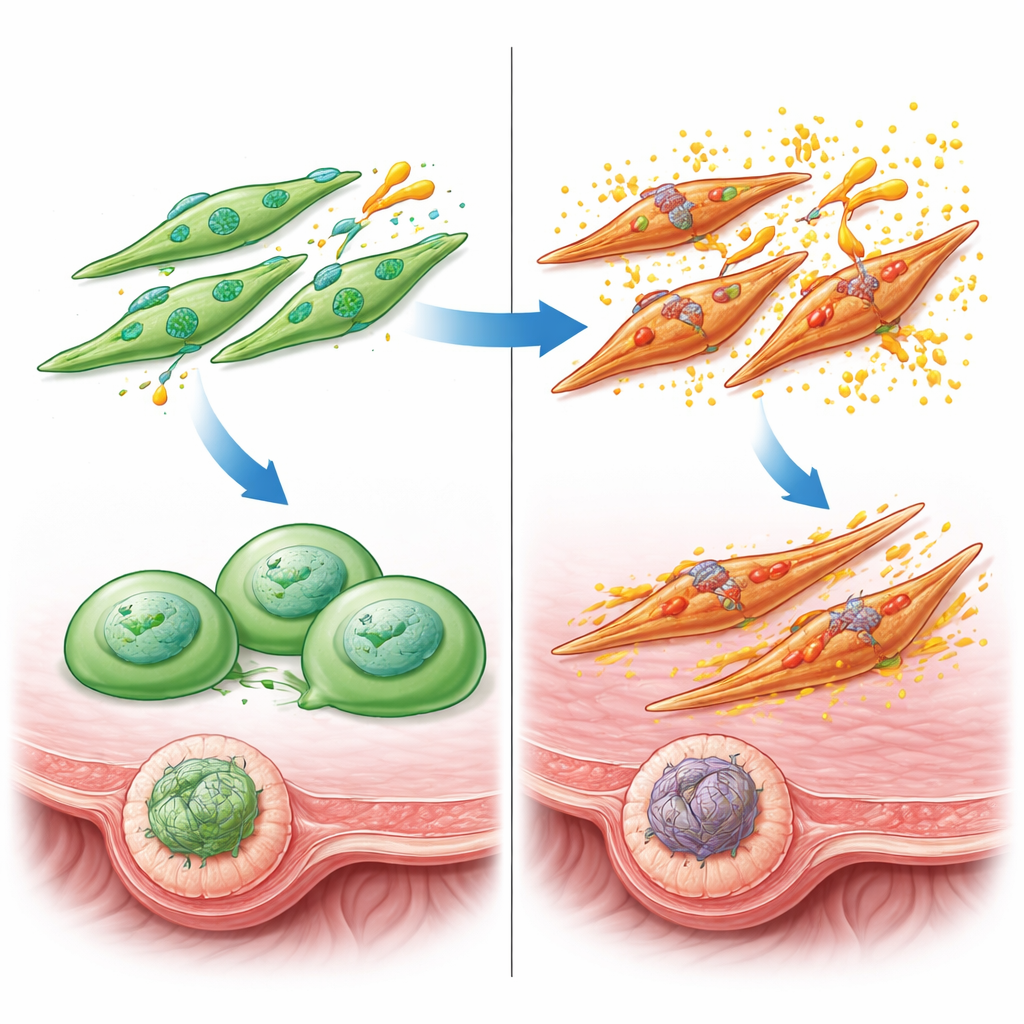
Too much or too little disrupts the change
When the researchers artificially boosted PANX1 in these cells, the amount of ATP outside the cells stayed abnormally high. Under these conditions, the cells failed to fully round up, and the molecular hallmarks of a receptive lining dropped. In other words, overactive PANX1 seemed to hold the cells back from completing their welcoming makeover. Surprisingly, dialing PANX1 down too far with genetic tools also harmed the transformation: cells again showed poor decidualization. This suggests that the uterine lining needs PANX1 and ATP to sit in a narrow “just right” range—both excess and scarcity can be harmful.
Evidence from a mouse model
To see whether this pattern holds in living animals, the team created a mouse model of implantation problems using a drug that interferes with progesterone. These mice had fewer implantation sites, thinner uterine linings, and signs of inflammation. In their endometrium, PANX1 levels were again higher than in healthy controls. Together with the cell experiments and human samples, these findings paint a consistent picture: elevated PANX1 goes hand in hand with implantation failure and a poorly prepared uterine lining.
What this means for future treatments
For patients, the study’s message is that not only embryo quality but also the fine-tuned chemistry of the uterine lining determines whether pregnancy can begin. The authors propose that abnormally high PANX1, by driving up outside-the-cell ATP for too long, blocks the lining’s transformation and leads to failed implantation. Because both PANX1 channels and ATP signaling are potentially druggable, this work points to new diagnostic markers and treatment targets that might one day help more IVF embryos find a stable home in the womb.
Citation: Liu, XL., Yang, Q., Liu, PP. et al. Abnormal elevated PANX1 expression hampers endometrial decidualization by upregulating extracellular ATP concentration in patients with recurrent implantation failure. Sci Rep 16, 11904 (2026). https://doi.org/10.1038/s41598-026-41800-z
Keywords: recurrent implantation failure, endometrial decidualization, PANX1, extracellular ATP, IVF infertility