Clear Sky Science · en
Spherical bipolar fuzzy decision model for green infrastructure selection
Greener Cities, Smarter Choices
As cities grow denser and hotter, urban residents are increasingly asking which green features—like street trees, green roofs, or rain gardens—will actually make their neighborhoods cooler, cleaner, and safer from floods. This study tackles that question head‑on. It introduces a structured way to choose among different types of green infrastructure so that limited public money goes to the options that deliver the greatest overall benefit for people, nature, and city budgets.
Why City Greenery Is a Complex Decision
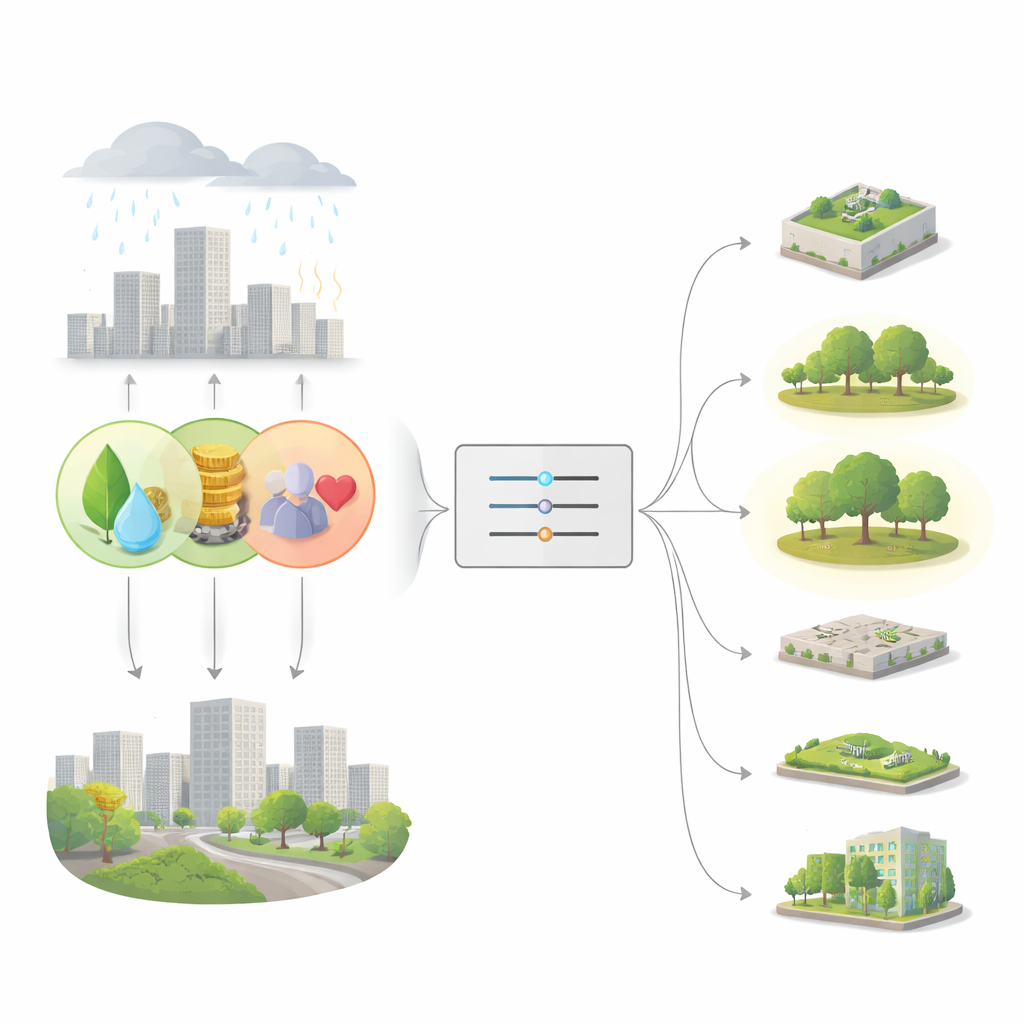
Urbanization replaces soil and vegetation with concrete and asphalt, which intensifies flooding, traps heat, and degrades air and water quality. Green infrastructure—features such as vegetated roofs, rain gardens, urban forests, permeable pavements, grass swales, and green walls—can soften these impacts. Yet each option comes with its own mix of costs, land needs, maintenance demands, and social acceptance. A rain garden may manage stormwater effectively but require space at ground level; a green roof saves ground space but can be expensive to install. Because no single option is best on every front, planners need a careful way to compare trade‑offs instead of relying on intuition or one‑size‑fits‑all rules.
Turning Expert Judgement into Usable Numbers
The authors build a decision model that translates the nuanced opinions of experts into a systematic ranking of options. They ask three specialists—an environmental engineer, a landscape architect, and an urban planner—to rate six types of green infrastructure against fourteen criteria grouped into environmental, economic, and social dimensions. These criteria include stormwater management, heat reduction, biodiversity, air and water purification, energy savings, cost, space demands, durability, ease of installation, beauty, health benefits, public risk, and public acceptance. Because real‑world judgement is often uncertain or mixed—an option can have both strong strengths and notable drawbacks—the study uses an advanced "fuzzy" description that allows experts to express positive aspects and negative aspects at the same time, instead of forcing simple yes‑or‑no scores.
Weighing What Matters Most
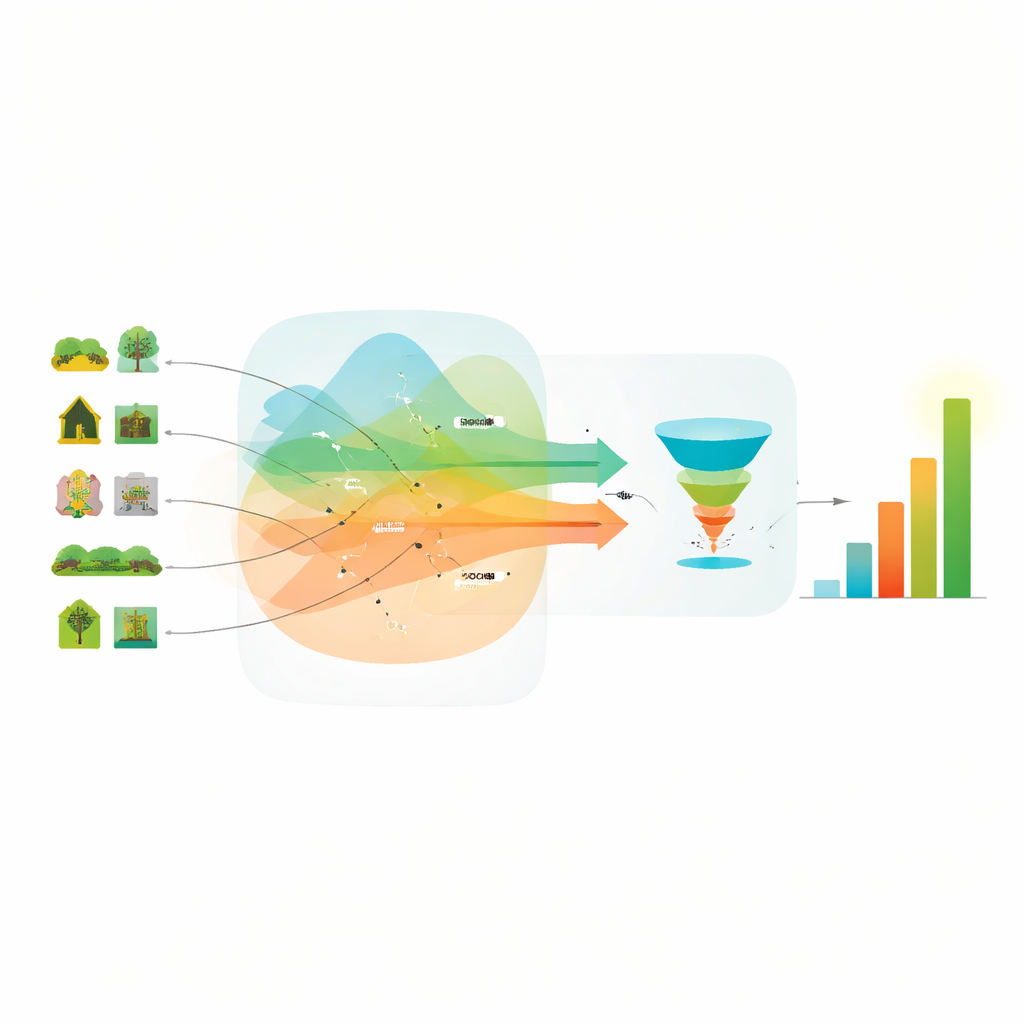
Not all criteria are equally important. To find out which ones carry the most weight, the authors apply a mathematical tool that looks at how each criterion varies across the options and how strongly it is related to the others. Unlike simple correlation measures that only detect straight‑line relationships, this tool captures more complex connections, giving a richer picture of how the criteria interact. The result is a set of importance scores: stormwater management emerges as the single most critical factor, followed closely by how long a green installation lasts and how willing people are to accept and support it. Water purification and biodiversity also receive strong emphasis, while space efficiency and energy savings, though still relevant, are found to be less decisive in the final choice.
From Many Options to a Clear Ranking
Once each criterion has a weight, a second method combines those weights with the expert ratings to compare all six green infrastructure types at once. This method checks how close each option is to a bundle of ideal outcomes and how far it is from the worst possible combinations, averaging across many possible "best" scenarios instead of relying on a single perfect benchmark. Applied to the case study, this process ranks rain gardens first, followed by urban forests, green roofs, permeable pavements, green walls, and grass swales. The top three options end up with very similar scores, suggesting they are all strong candidates and that local context—such as available space or visual goals—should guide the final choice among them.
What the Findings Mean for Everyday Life
For residents and decision‑makers, the study’s message is straightforward: thoughtfully designed rain gardens are one of the most efficient and broadly beneficial ways to green a city, especially where flooding and water quality are major concerns. They can be tucked into parking lots, streetsides, and yards, filter polluted runoff, support local wildlife, cool surrounding areas, and improve neighborhood appearance at relatively low cost and risk. Urban forests and green roofs also offer powerful benefits, particularly for shade, cooling, and multi‑use space. Most importantly, the work shows that cities can move beyond ad‑hoc greening by using transparent, evidence‑based tools to weigh environmental gains, economic realities, and community well‑being together, leading to greener streets that are both more resilient and more widely supported.
Citation: Aarthi, K., Narayanamoorthy, S., Devi, N.S.K. et al. Spherical bipolar fuzzy decision model for green infrastructure selection. Sci Rep 16, 12135 (2026). https://doi.org/10.1038/s41598-026-41794-8
Keywords: green infrastructure, urban sustainability, stormwater management, multi-criteria decision-making, rain gardens