Clear Sky Science · en
Predicting the global distribution of Coffee Bee Hawk Moth (Cephanodes hylas L.) under climate change using MaxEnt
A Tiny Moth with a Big Reach
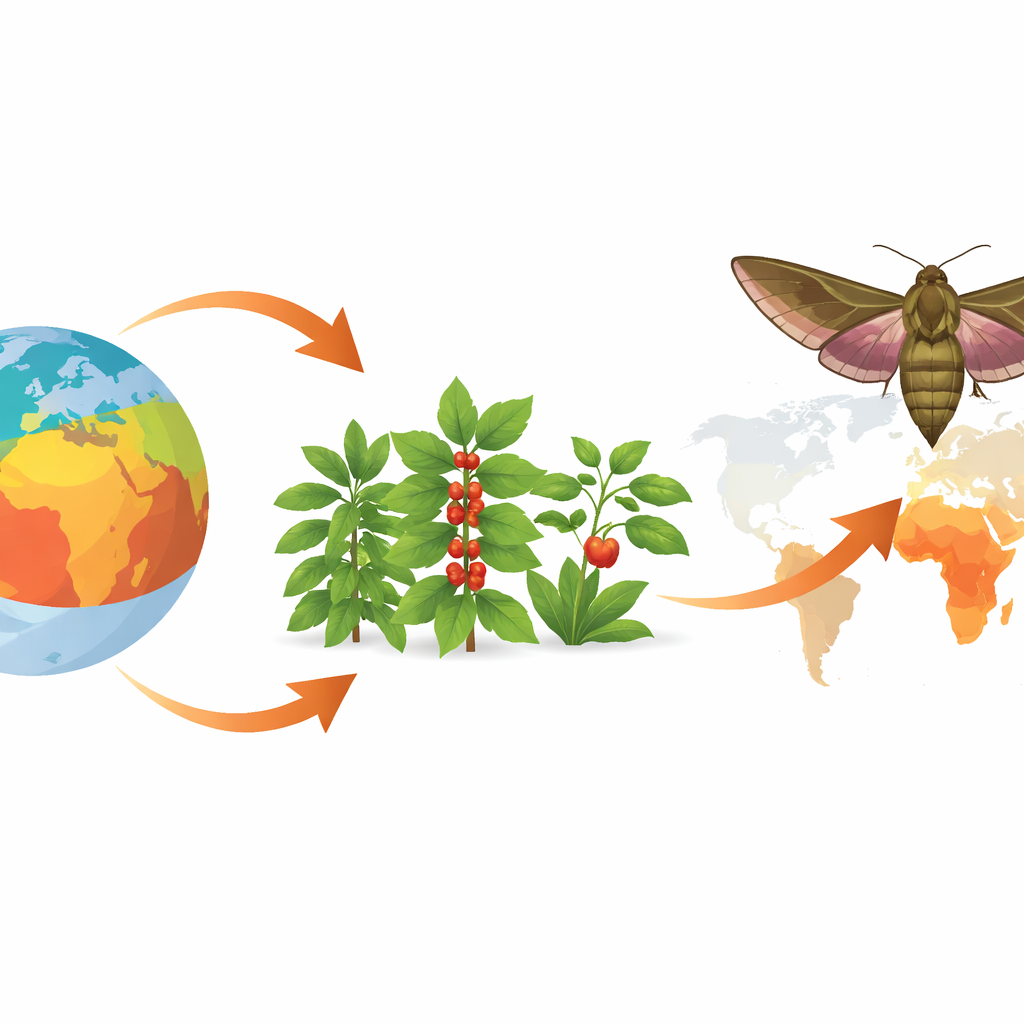
The coffee in your morning cup, and the glossy shrubs in your garden, may share a hidden threat: a small, fast-flying insect called the Coffee Bee Hawk Moth. Its caterpillars feed on coffee and many ornamental plants, and as the climate changes, the places where this pest can thrive are shifting. This study asks a practical question with global stakes: where in the world will this moth find a welcoming home in the coming decades, and what does that mean for farmers and landscapes?
Why This Moth Matters to Farms and Gardens
The Coffee Bee Hawk Moth is already widespread across Asia, parts of Africa, the Middle East, and Australia. Its young feed on coffee plants and a wide range of other shrubs and trees, including popular garden species such as gardenias. Because it can live on many different host plants, the moth is highly adaptable and has the potential to spread further as climates warm and rainfall patterns change. It also visits flowers and may sometimes act as a pollinator, which makes its overall role in ecosystems complicated: it can be both a crop pest and a possible helper, depending on the setting.
Using Data and Maps to Predict Future Hotspots
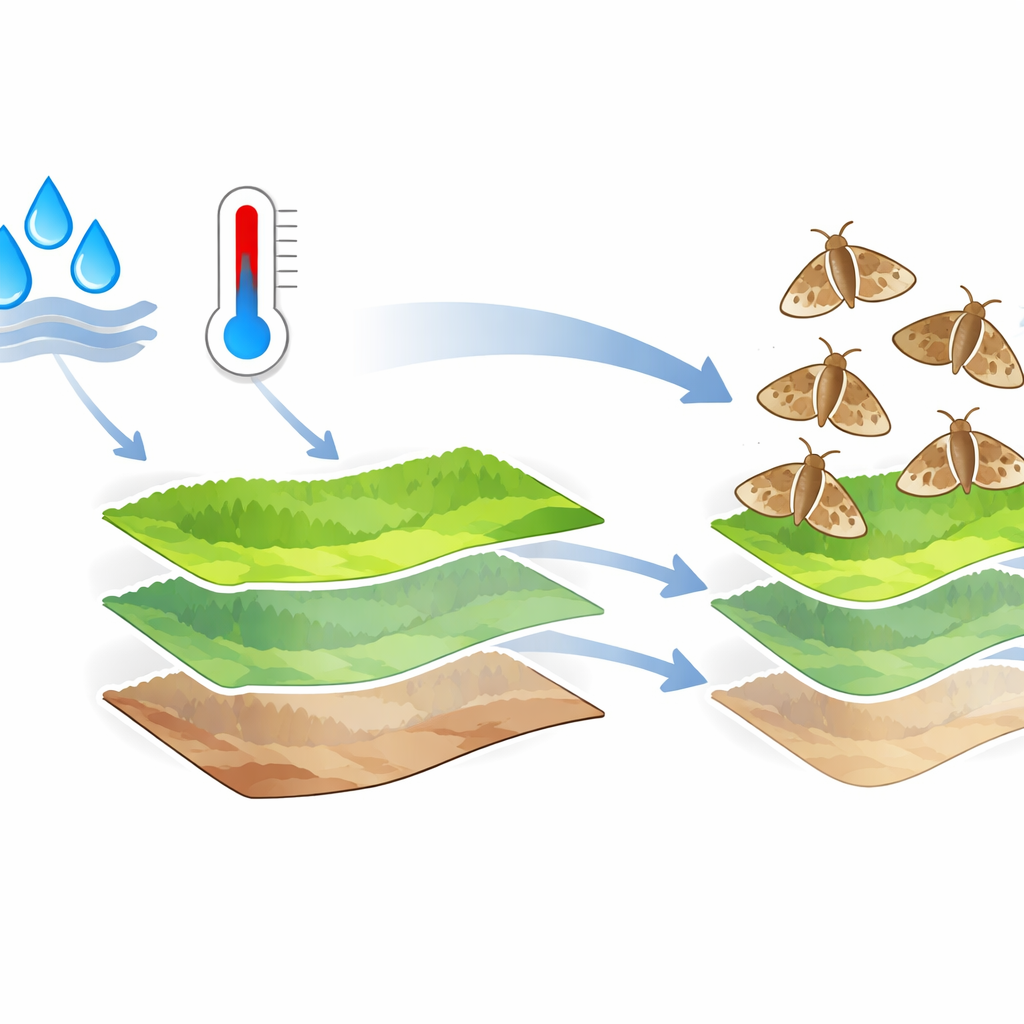
To understand where the moth could live now and in the future, the researchers turned to a computer tool called MaxEnt, which looks at known sightings of a species and combines them with climate data to predict other places that offer similar conditions. The team gathered more than 1,700 worldwide records of the moth from biodiversity databases and paired them with global maps of temperature and rainfall. They then ran the model under three different future climate scenarios, from a relatively low-emission pathway to a more extreme high-emission pathway, for mid-century and late-century time periods.
Rain, Temperature, and the Moth’s Comfort Zone
The analysis revealed that rainfall patterns are especially important in determining where the Coffee Bee Hawk Moth can thrive. In particular, the amount of rain during the wettest month and how much rainfall varies through the year emerged as the strongest influences on habitat suitability. Measures of how stable temperatures remain over day–night and seasonal cycles also played a key role. Under today’s climate, the model suggests that suitable conditions for the moth exist on every continent except Antarctica, with especially high suitability across parts of Africa and Asia. Subtropical and warm temperate regions often offer the best conditions, while some very wet or very dry areas are less favorable.
How the Moth’s Range Could Shift with Climate Change
Looking ahead, the model predicts that climate change will reshuffle where the Coffee Bee Hawk Moth can find suitable habitat. Under a low-emission future, the total area of highly suitable habitat is projected to expand slightly—by about 6.5 percent by 2080—particularly in parts of West Africa, East Asia, and southeastern Australia. Under a high-emission future, however, the picture changes sharply: the most suitable areas shrink by more than half, with strong losses in the Americas and parts of the tropics. Europe may see some increased suitability in its eastern and southern regions under milder warming, but almost complete loss of suitable habitat in more intense scenarios. These shifts reflect how changes in temperature and rainfall can both open new regions to invasion and render former strongholds less hospitable.
What This Means for Farmers and Policy Makers
The study also highlights economic and management concerns. Regions that gain suitable habitat in the future, especially those with valuable crops like coffee or dense ornamental horticulture, may face new pest pressures. Because the moth can hitchhike through trade and transport, human activity can help it leap across oceans and establish in new places faster than natural spread alone would allow. The authors recommend targeted monitoring in high-risk regions, improved screening of plants and shipments, and simple reporting channels so farmers and extension workers can flag suspected sightings early.
A Warning and a Planning Tool
In plain terms, this research offers a global early-warning map for a small but potentially costly insect. It shows that the fate of the Coffee Bee Hawk Moth is tightly tied to how much and where it rains, and how temperatures fluctuate, and that future climate choices will strongly shape its spread. Under modest warming, new regions may need to prepare for its arrival; under more extreme warming, some current hotspots may fade while others emerge. By combining broad-scale climate projections with detailed occurrence records, the study gives farmers, scientists, and policy makers a head start in planning surveillance and control strategies to protect coffee and other vulnerable crops in a warming world.
Citation: Omanakuttan, K., Pandey, T., Chettri, A. et al. Predicting the global distribution of Coffee Bee Hawk Moth (Cephanodes hylas L.) under climate change using MaxEnt. Sci Rep 16, 11258 (2026). https://doi.org/10.1038/s41598-026-41791-x
Keywords: coffee pests, climate change, species distribution, invasive insects, MaxEnt modeling